
Horticultural Products That Actually Earn Their Spot in an Urban Garden
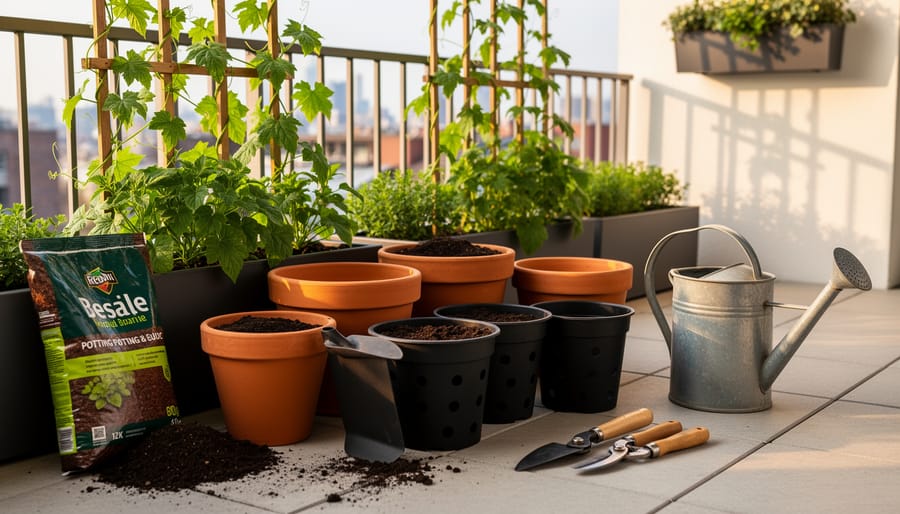
Horticultural products are the supplies you use to grow plants, from soil and pots to fertilizer, trellises, and pruning shears. If you garden on a balcony, patio, or small Austin yard, you only need a handful of them to get started, and the rest can wait.
Most gardening shops sort their shelves into three groups. Essentials are the basics every plant needs: potting mix, containers with drainage holes, and a steady source of nutrients. Vertical gardening supplies, like wall planters and tiered racks, stretch a tiny footprint into a surprisingly productive garden. Care tools handle the upkeep, from a good watering can to a sturdy pair of snips.
Austin adds its own twist. Our summer heat dries pots out fast, and clay-heavy native soil rarely works in containers, so what you buy matters more here than in milder climates.
Below, you’ll learn what each category does, which items are worth your money first, and how to shop without ending up with a garage full of gadgets.
What Counts as a Horticultural Product, Anyway?
“Horticultural products” sounds fancy, but it just means the stuff you buy to grow and care for plants. And it’s a lot more than plants themselves. Think of it as everything between a bare patch of balcony and a thriving garden: soil, containers, plant food, supports, tools, and watering gear.
When you walk into a gardening shop, you’ll usually meet products in a few groups. There’s the stuff plants grow in, the stuff that feeds them, the stuff that holds them up or holds them in, and the gear that makes daily care easier. Once you see those groups, a crowded shelf starts to make sense. You can ignore whatever doesn’t match the plants you actually have.
A few terms pop up on labels all the time, so here’s a quick decoder:
- Potting mix
- A light, fluffy blend made for containers. It drains well and holds just enough moisture, unlike garden dirt, which turns to brick in a pot.
- Amendment
- Something you mix into soil to improve it, like compost or perlite. It changes the soil’s texture or nutrients rather than feeding plants directly.
- Slow-release fertilizer
- Small pellets that feed plants gradually over weeks or months, so you don’t have to remember to fertilize constantly.
- Mulch
- A layer of bark, straw, or similar material spread over soil to hold in moisture and keep roots cooler.
- Trellis
- A frame that gives climbing plants something to grab, so they grow up instead of out.
Keep these five in your back pocket and most product labels will feel a lot less intimidating.
The Essentials Every Urban Gardener Should Start With
Soil and Potting Mixes: The Foundation of Everything
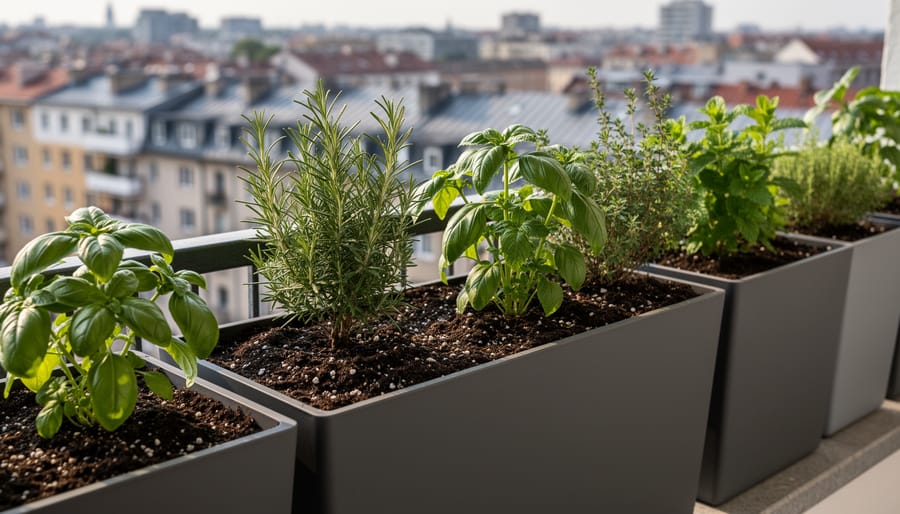
Here’s the thing about yard dirt: it doesn’t belong in a pot. Scoop it into a container and it compacts, drains poorly, and suffocates roots. Potting mix is built for the job, with a light, fluffy structure that holds moisture while still letting air and extra water move through.
When you’re comparing bags, look for ingredients like peat moss or coco coir (for moisture), perlite or pumice (for drainage), and compost (for gentle nutrition). Skip anything labeled “topsoil” or “garden soil” for containers. If a bag feels heavy and dense, it’ll behave that way in your pot too.
Matching the mix to the plant helps. Herbs like rosemary and thyme prefer a faster-draining blend, so look for extra perlite or a cactus-style mix. Veggies and flowers are hungrier, so a compost-rich all-purpose mix suits tomatoes, peppers, and petunias well. Our urban gardening essentials guide covers more starter picks if you want a fuller shopping list.
A quick Austin note: much of our native soil is heavy clay that bakes hard in summer and turns to sticky mud after a storm. That’s why containers and raised planters are such a smart workaround. You control exactly what goes in, no digging required. It also helps to know your Austin gardening zone so you pick plants that suit our climate.
Containers, Planters, and Pots That Fit Your Space
Picking a pot is mostly about three things: size, drainage, and what it’s made of. Get those right and half your watering headaches disappear.
Start with size. A pot that’s too small dries out fast and cramps roots, while one that’s far too big holds soggy soil. Herbs are happy in 8 to 10 inch pots, but tomatoes and peppers want something closer to 5 gallons. Drainage matters even more. Every pot needs holes in the bottom, and if a pretty planter has none, use it as a sleeve and set a plain nursery pot inside.
Material is where Texas heat comes in. Dark plastic can bake roots in an Austin August, and terracotta wicks moisture so you’ll water more often. Here’s a quick comparison:
| Material | Heat performance | Weight | Best use |
|---|---|---|---|
| Terracotta | Stays cooler, but dries out quickly | Heavy | Herbs and succulents that like drier soil |
| Glazed ceramic | Holds moisture well, moderate heat | Heavy | Patio displays and thirsty flowers |
| Fabric | Breathes and keeps roots cool | Very light | Veggies and balcony beds |
| Plastic | Heats up fast, especially dark colors | Light | Hanging pots and budget starters |
For apartment balconies, weight is the deciding factor. Fabric and lightweight plastic are easy to move and kind to railings and floors. If you love the look of ceramic, save it for one or two statement pots near the door rather than lining the whole balcony with them.
Fertilizers and Plant Foods Without the Confusion
Those three numbers on a fertilizer bag, like 10-10-10 or 3-1-2, are just nutrient ratios. The first is nitrogen (N), which fuels leafy growth. The second is phosphorus (P), which supports roots and blooms. The third is potassium (K), which helps overall plant toughness. Leafy greens and herbs usually like more nitrogen, while tomatoes and flowers do well with a bit more phosphorus and potassium once they start setting buds.
Next comes the type of feed. Slow-release granules are mixed into potting mix or sprinkled on top, and they trickle nutrients out over weeks. They’re great for busy people because you feed once and mostly forget it. Liquid feeds work faster since you dilute them in your watering can, which makes them handy for a hungry tomato in midsummer or a plant that looks pale. Many container gardeners use both: granules as the base, a liquid boost when needed.
Here’s the part that trips up beginners: more is not better. Too much fertilizer can burn roots and leave crusty white salt on pot rims, a common problem in hot Austin summers when pots dry out fast. Follow the label, and when in doubt, use a half dose more often. Flush the pot with plain water now and then to rinse out buildup.
If you lean sustainable, look at organic products like compost, worm castings, and fish emulsion. They feed plants gently and improve your soil at the same time.
Vertical Gardening Supplies for Small Spaces
Wall Planters, Trellises, and Hanging Systems
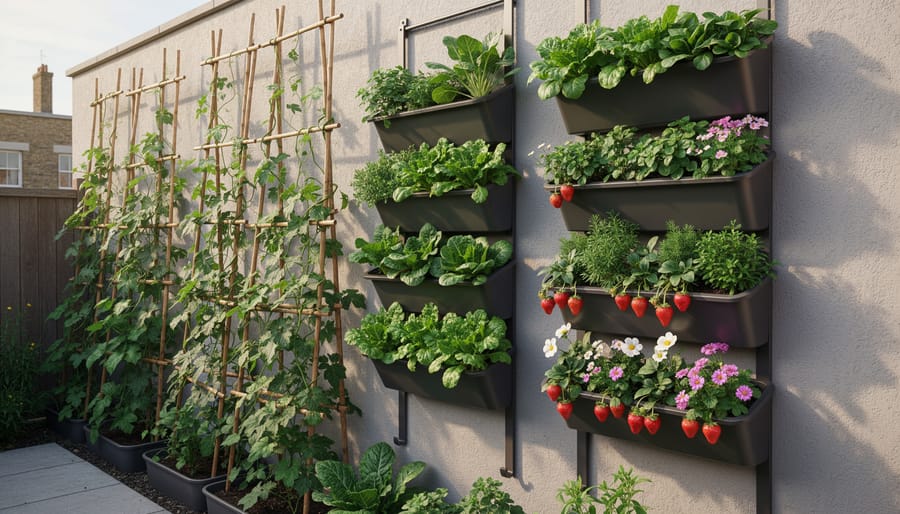
Vertical gardening comes down to three product types, and each suits different plants.
Wall planters, whether pocket-style felt panels or modular pots that clip onto a frame, work best for shallow-rooted plants like herbs, lettuce, strawberries, and trailing flowers. Trellises are for climbers. Think pole beans, cherry tomatoes, sweet peas, or a jasmine vine. They give plants something to grab so the vine grows up instead of sprawling across your patio. Hanging systems, like baskets and tiered rail planters, suit cascading plants such as petunias, thyme, and sweet potato vine.
Before you buy, think through three things. Weight comes first: a wet planter is much heavier than a dry one, so check what your wall, fence, or railing can actually hold. Watering is next, because vertical planters hold less soil and dry out fast. Sun exposure matters most here in Austin, where a west-facing wall can bake delicate herbs in July. Rosemary and oregano can handle it, while basil and lettuce will want afternoon shade.
Pros
- You can grow a surprising amount of food or flowers on a blank wall or fence.
- Plants sit at eye level, which makes them easier to tend and enjoy.
- A living wall adds color and privacy to a bare balcony.
Cons
- Small soil volumes dry out faster, especially in Texas heat.
- Mounting takes planning, particularly in rentals where drilling isn’t allowed.
- Heavy, fully watered planters can strain weak walls or railings.
If dry-out worries you, start with a trellis and a large container, since the bigger root zone holds moisture longer.
Building Your First Vertical Garden Kit
Ready to build your first vertical garden? Think of it as a simple weekend project, and gather these pieces before you start.
The frame or planter. Pick one anchor piece: a pocket planter, a stackable tower, or a wall-mounted rail with pots. Starting with a single unit keeps the budget and the learning curve friendly.
Lightweight potting mix. Wet soil is heavy, and your wall or fence has to carry it. Choose a mix with perlite or coco coir so it drains well without weighing a ton.
Plants that match your light. Herbs like basil, mint, and thyme are forgiving starters. In Austin, a spot that gets bright morning sun and afternoon shade keeps leaves from scorching in July.
Irrigation extras. Vertical planters dry out faster than ground beds, so plan for water from day one. A small drip kit or a self-watering insert saves you from daily hauling, and a layer of mulch on top slows evaporation.
Basic hardware. Grab sturdy anchors or hooks rated for more than your planter’s wet weight, plus a level so everything hangs straight.
A catch tray or saucer. Drips from the top row will find their way down, so put something underneath to protect your patio or neighbor’s balcony.
Saturday morning, hang the frame and fill it with soil. Saturday afternoon, plant and water. By Sunday, you have a wall that’s actually growing.
Tools, Watering Gear, and Plant Care Extras
You don’t need a shed full of gadgets to keep a small garden happy. A lean toolkit does most of the work, and it’s easier to store on a balcony or in a patio corner.
Start with four hand tools: a hand trowel for planting and repotting, a pair of sharp pruning snips for deadheading and harvesting herbs, a small hand fork for loosening compacted soil in containers, and a pair of snug gloves. Choose tools with a comfortable grip and a solid, one-piece metal head, since cheap ones bend the first time they meet a root ball. A watering can with a long spout reaches under leaves and into crowded planters without splashing.
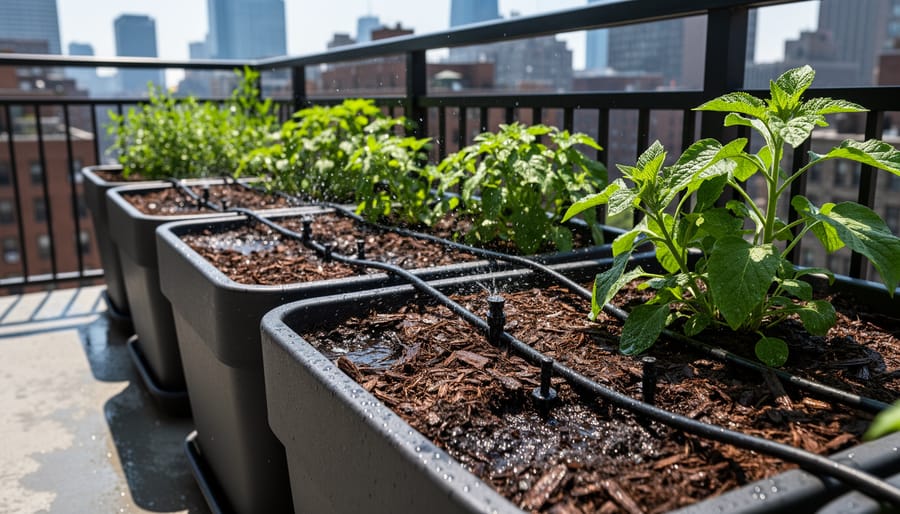
Watering is where Austin gardeners really feel the difference. When the summer heat settles in, a quick sprinkle in the morning often isn’t enough, and a tired hose can waste more than it delivers. A few easy upgrades help:
– Drip lines or soaker hoses: these deliver water slowly at the base of plants, so less evaporates. A simple kit with a timer can run a whole row of pots or a vertical garden for you.
– Self-watering planters: a built-in reservoir lets the plant drink as needed, which is a lifesaver on busy weeks or when you travel.
– Mulch: a two-inch layer of shredded bark, straw, or compost over the soil keeps roots cooler and slows evaporation. It costs little and works on nearly everything.
A moisture meter is a nice extra if you tend to guess. Push it into the soil and you’ll know whether to water or wait, which prevents both drought stress and soggy roots.
Add a small watering wand or gentle spray nozzle, and you’ve covered nearly everything a small-space garden needs.
How to Shop Smart (and Skip the Impulse Buys)
Impulse buys are the fastest way to end up with a balcony full of gadgets and no tomatoes. A few simple habits keep your cart honest.
Start with the plants you actually have. Buy for the herbs, peppers, or flowers already on your patio, not the ones you might grow someday. Every product should answer a real need today.
Know your light and space first. Before you shop, note how many hours of sun your spot gets and measure the wall, rail, or corner you want to fill. A gorgeous trellis is no help if it won’t fit or the plants it suits would sit in shade all day.
Read the label basics. Check what a potting mix is made of, look at the three-number ratio on fertilizer, and confirm a planter has drainage holes. Those few seconds save you from returning things later.
Start small. One good pot, a bag of quality mix, and a couple of plants will teach you more than a cart overflowing with extras. Add products as you learn what your garden really asks for. In Austin’s heat, you’ll quickly discover which things (shade cloth, mulch, a drip line) truly matter.
Test ideas before spending more. The Gardening Product Shop at Gardens Austin Designers is handpicked for small spaces, so you aren’t wading through filler. Our blog is full of step-by-step ideas to try first, and if you’d like hands-on practice, our beginner classes in Austin let you see what works before you invest in a full setup.
Quick Answers to Common Questions
Q: Do I really need potting mix, or can I scoop soil from my yard?
Use potting mix. Yard soil, especially Austin’s heavy clay, packs down in containers, drains poorly, and can suffocate roots. A good potting mix stays light and drains well, so plants can breathe.
Q: How big should my pots be?
Bigger than you’d think. Herbs like basil and thyme do fine in 8 to 10 inch pots, while tomatoes and peppers want something closer to 5 gallons. Small pots dry out fast in a Texas summer, so a little extra room means less watering stress.
Q: Is every pot okay as long as it looks nice?
Not quite. Drainage holes are non-negotiable. Without them, water pools at the bottom and roots rot. If you love a pot without holes, use it as a decorative sleeve and keep the plant in a plain nursery pot inside.
Q: How often should I fertilize?
Less often than the label-happy marketing suggests. A slow-release fertilizer mixed in at planting can feed a container for weeks, and liquid feeds are best used every couple of weeks during active growth. When in doubt, go lighter. Too much food burns roots.
Q: What’s the easiest vertical garden to start with?
A simple wall planter or a trellis with a climbing plant. Both take up almost no floor space and are forgiving for beginners.
Q: What’s the one product worth splurging on?
Quality potting mix. Everything else in your garden depends on it, and cheap, soggy mixes cause the most beginner headaches.
You don’t need a shed full of gear to start growing. A good potting mix, a few well-sized containers, a simple feeding plan, and one or two tools will carry you further than you’d think. Start small, pay attention to how your plants respond to the Austin sun, and add things only when you truly need them.
When you’re ready to shop, browse the Gardening Product Shop for handpicked supplies that suit balconies, patios, and small yards. And keep learning along the way: Gardens Austin Designers’ classes and blog are here to help you grow with confidence.