
8 Creative Potting Station Ideas to Transform Your Garden Workspace
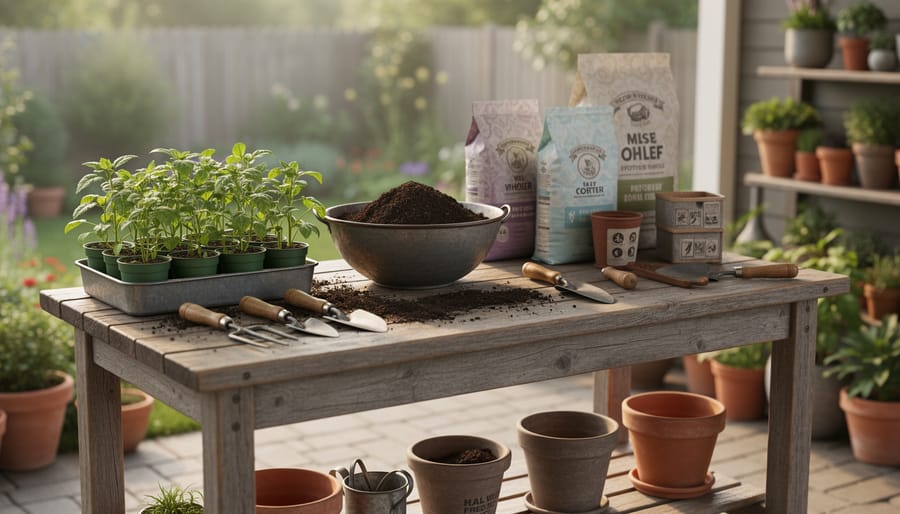
A potting station transforms gardening from a messy floor operation into an organized, ergonomic workspace where you can transplant seedlings, mix soil, and prep containers without wrecking your back or your patio. Whether you’re working with a narrow apartment balcony or a full backyard corner, the right setup keeps supplies within arm’s reach and saves you from hunting for trowels every time you need to pot up tomatoes.
The best potting stations balance three priorities: work surface height (typically 36 inches to avoid hunching), smart storage for soil and tools, and weather resistance if you’re keeping it outdoors year-round in Austin’s heat and humidity. You don’t need a custom-built unit. Some of the most functional stations come from repurposed furniture, wall-mounted fold-down tables, or simple shelving units fitted with hooks and bins.
Urban gardeners especially benefit from dual-purpose designs. A potting bench that doubles as a display shelf for houseplants or integrates vertical growing space below the work surface makes every square foot count. The ideas ahead cover temporary setups you can break down when guests arrive, budget DIY builds using reclaimed materials, and more permanent structures that anchor your gardening routine. Each option offers practical solutions for keeping soil contained, tools organized, and your planting process efficient.
What Makes a Great Potting Station
Before diving into specific potting station ideas, it helps to understand what separates a truly functional workspace from a cluttered corner that frustrates more than it helps. The eight ideas featured here were selected based on criteria that matter most to urban gardeners working within real-world constraints.
Each station idea addresses specific challenges Austin gardeners face: limited square footage on balconies and patios, intense summer heat that degrades certain materials, and the need to move between indoor seedlings and outdoor vertical gardens. The best potting stations don’t just look organized, they make your gardening tasks genuinely easier.
Here’s what went into choosing these ideas:
- Space efficiency: works in compact urban settings without sacrificing functionality
- Weather resistance: stands up to Austin’s heat, UV exposure, and occasional heavy rain
- Storage capacity: keeps soil, pots, and tools accessible but contained
- Ease of setup: achievable without advanced carpentry skills or permanent modifications
- Austin-climate suitability: accommodates year-round gardening and outdoor living
Some ideas prioritize portability for renters, while others offer permanent solutions for homeowners with dedicated outdoor space. You’ll find options across different budgets and skill levels, from repurposed furniture to purpose-built workbenches. The common thread is that each one transforms chaotic potting tasks into streamlined, enjoyable work.
1. Fold-Down Wall-Mounted Station for Tiny Balconies
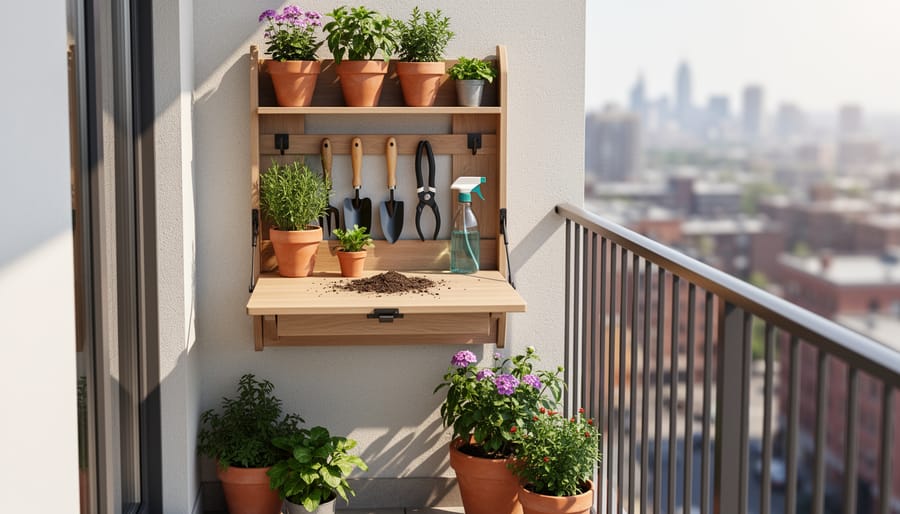
When you’re gardening on a compact Austin balcony where every square foot counts, a fold-down wall-mounted station solves your workspace problem without eating up precious floor space. This clever setup attaches directly to your balcony wall and hinges down to create a sturdy work surface only when you need it.
The basic design uses a simple plywood board (around 24 by 18 inches works well for most balconies) mounted with heavy-duty folding shelf brackets. When you’re done potting, the whole surface folds flat against the wall, completely out of the way. Add a few small shelves above the fold-down surface to keep seed packets and plant labels organized, and install hooks along the sides for hanging trowels, pruning shears, and watering tools.
For materials, choose weather-resistant plywood or cedar that can handle Austin’s intense summer heat and occasional rain. A coat of outdoor sealant extends its life significantly. Mount everything to wall studs or use heavy-duty masonry anchors if you’re attaching to concrete balcony walls, since the station needs to support the weight of soil bags and pots during use.
This setup transforms a blank wall into functional gardening space, making it perfect for renters who need a temporary solution that won’t damage their lease agreement.
2. Repurposed Dresser Potting Bench
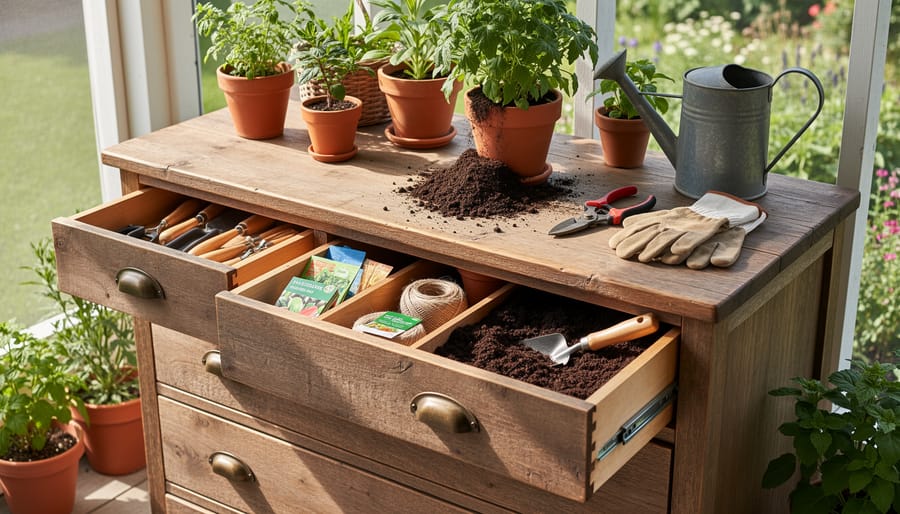
Transform that old wooden dresser gathering dust in your garage into a charming potting bench with surprising functionality. The dresser’s sturdy top becomes your prep surface, sand it down and seal it with weatherproof finish to handle soil and water. Those drawers that once held clothes now organize seed packets, hand tools, twine, and bags of potting mix, keeping everything sorted and within arm’s reach.
The real magic happens when you remove the dresser’s mirror backing (if it has one) and mount pegboard in its place. Suddenly you’ve got vertical storage for trowels, pruning shears, and gloves hanging right above your workspace. You can outline each tool’s spot with paint markers so returning items becomes second nature.
Position your dresser station under a covered patio or carport. Austin’s intense summer sun will crack unsealed wood and fade finishes quickly, while afternoon thunderstorms can soak exposed stations. A roof overhead extends your dresser’s life and gives you a comfortable workspace even during those surprise rain showers that pop up during growing season.
Choose dressers with lower profiles, around counter height, so you won’t strain your back during transplanting sessions. Solid wood holds up better than particleboard, which crumbles when wet. Check estate sales and thrift stores for sturdy candidates.
3. Rolling Cart Station for Multi-Space Gardening
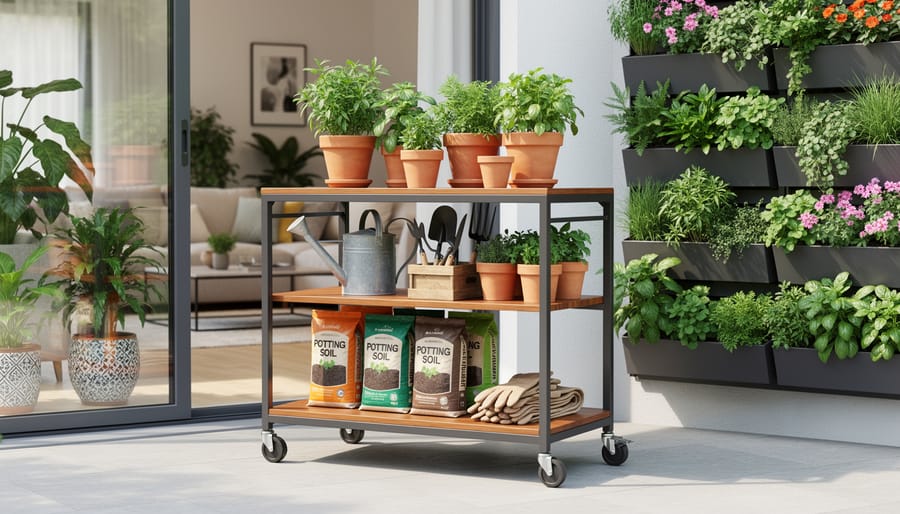
A rolling cart transforms your potting workflow when you’re juggling indoor houseplants, balcony containers, and vertical garden systems across different spaces. Metal utility carts with three or four tiers work exceptionally well, the top shelf becomes your active work surface, while lower levels store potting mix bags, hand tools, watering cans, and plant labels. Look for carts with lipped edges to prevent soil spills during transport, and prioritize models with locking wheels so the station stays stable while you work.
Wooden rolling carts offer a warmer aesthetic if your potting station doubles as indoor décor, though they need a protective sealant if you’re moving them between Austin’s humid outdoor mornings and air-conditioned interiors. Bar cart styles with removable trays make cleanup easier, you can lift out the soil-covered tray and hose it down outside.
The real advantage for renters is portability without permanent installation. Roll your cart to the sunny kitchen window for seed starting, then wheel it to the patio for repotting succulents in your vertical wall planters. When you move apartments, your entire potting setup moves with you intact. Add a small tool caddy or magnetic strip on the side to keep pruners and trowels within arm’s reach as you shift locations.
4. Cedar Potting Table with Built-In Sink
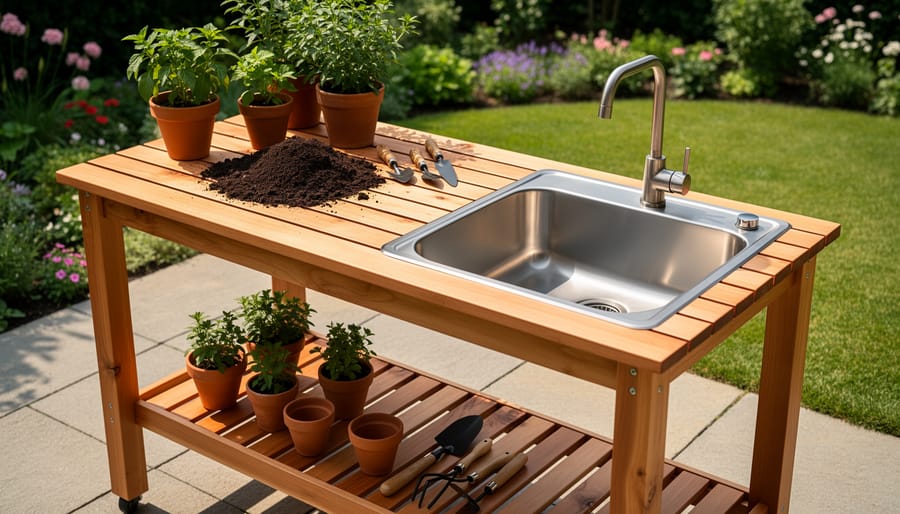
A cedar potting table with a built-in sink represents a significant upgrade for gardeners ready to invest in a permanent outdoor workspace. This setup transforms routine potting tasks by adding running water right where you need it, no more trips inside to rinse tools or water freshly potted plants.
Cedar handles Austin’s intense summer heat remarkably well. The wood naturally resists rot and insect damage, even when exposed to our occasional downpours and high humidity. You’ll want a table that’s at least 24 inches deep and 48 inches wide, giving you ample room to spread out soil bags, pots, and seedlings without crowding your work area.
The sink doesn’t need to be elaborate. A shallow basin about 6-8 inches deep works perfectly for rinsing hands, cleaning tools, and watering plants. Many DIYers retrofit an old farmhouse sink or stainless steel basin, then connect it to a garden hose with a simple valve system. Some models include a drainage hole that empties onto surrounding plants or into a bucket for reuse during our drier months.
Position your cedar table under a pergola or large umbrella to extend the wood’s lifespan and create a shaded workspace during peak summer heat. The combination of durability and functionality makes this station ideal for gardeners who pot plants weekly and want their workspace to last years.
5. Vertical Pegboard and Shelf Combo
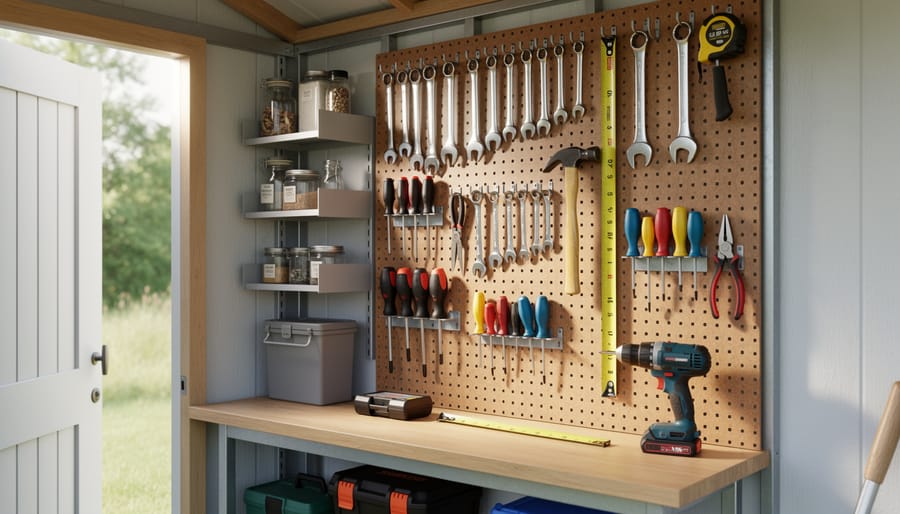
A vertical pegboard and shelf combo turns any awkward corner or narrow wall into a surprisingly efficient potting station. Mount a large pegboard panel (painted or sealed to protect against moisture) at a comfortable height above a basic work surface, this could be a simple butcher block counter, a wall-mounted fold-down shelf, or even a sturdy plank supported by brackets. The pegboard holds all your small hand tools, gloves, twine, plant markers, and scissors right at eye level where you can grab them without rummaging through drawers.
Install two or three floating shelves above the pegboard to store seed packets, soil amendments, fertilizers, and spare pots. This setup keeps your most-used supplies visible and within arm’s reach while freeing up the work surface below for actual potting tasks. It’s particularly clever in garage or shed corners where floor space is tight but wall space goes unused.
This vertical station pairs beautifully with vertical gardening projects since you’re already thinking upward, many gardeners use the same wall system to hold propagation trays or hanging plant labels. The entire setup costs roughly $60-$100 in materials if you DIY it, and it adapts easily as your gardening needs change by simply rearranging hooks and shelves.
6. Stackable Crate System for Renters
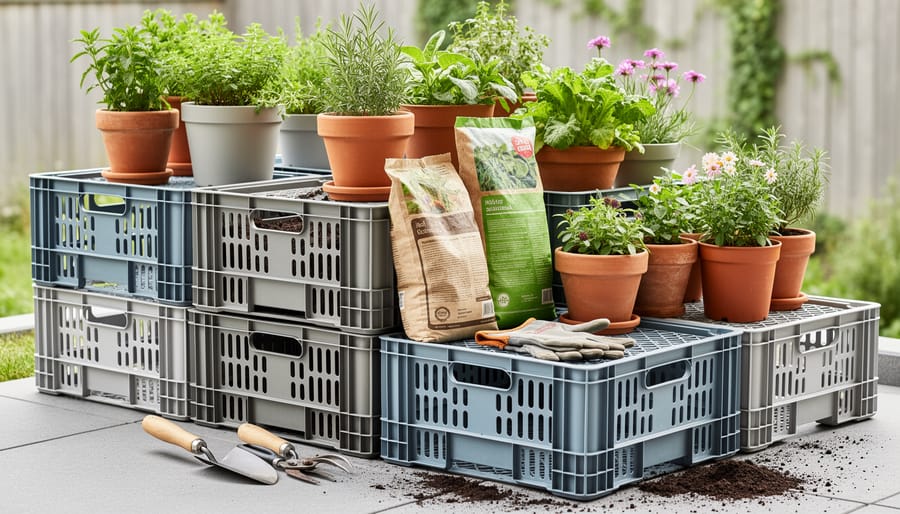
Renters and frequent movers need gardening solutions that won’t leave holes in walls or require permanent installations. A stackable crate system delivers a fully functional potting station you can set up in minutes and take with you when you leave.
Start with four to six wooden or plastic crates from thrift stores, hardware shops, or even curbside finds. Stack two crates on their sides as the base, creating open-front storage cubbies for soil bags, pots, and watering cans. Place a sturdy piece of plywood or a butcher block across the top to form your work surface at a comfortable height, usually around 36 inches works well for most people.
Add another layer of crates above the work surface if you want overhead storage for hand tools, seed packets, or small containers. The open design keeps everything visible and within reach, eliminating the drawer-digging that slows down potting sessions.
This setup costs under fifty dollars if you source crates secondhand, requires zero tools or assembly skills, and breaks down in under five minutes when it’s time to move. You can adjust the configuration as your needs change, swap crates for different sizes, or even spray paint them to match your balcony aesthetic. It’s the ultimate commitment-free potting solution for Austin’s renter-heavy neighborhoods.
7. Corner Greenhouse Potting Nook
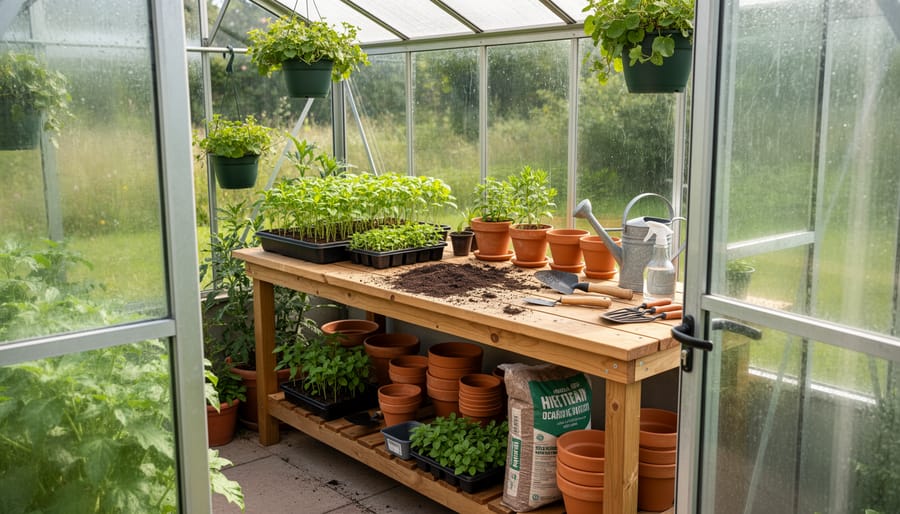
A corner greenhouse or enclosed patio transforms into an incredibly efficient potting workspace when you dedicate just a small slice of it to this purpose. The built-in humidity control and protection from Austin’s intense afternoon sun make these spots ideal for seedling work and delicate transplanting tasks.
Start with a narrow shelf at comfortable working height, 18 to 24 inches deep is plenty for most potting tasks without eating up valuable growing space. Mount it securely across the corner at waist height, creating a triangular work surface that feels surprisingly roomy. Below, add moisture-resistant plastic bins or metal shelving to store soil, perlite, and vermiculite where occasional spills won’t create a mess.
Overhead LED grow lights serve double duty here: they illuminate your potting work and provide supplemental light for freshly potted seedlings sitting on the shelf. Position lights 12 to 18 inches above the work surface for comfortable visibility without glare.
Because greenhouses trap moisture, choose materials that won’t warp or rust. Sealed wood, plastic laminate, or powder-coated metal all hold up well. Keep a small hand broom and dustpan hanging nearby to sweep up soil quickly, this prevents tracking mess into the rest of your greenhouse and keeps things tidy for your Austin gardening zone seedlings.
8. Dual-Purpose Outdoor Bar Cart Station
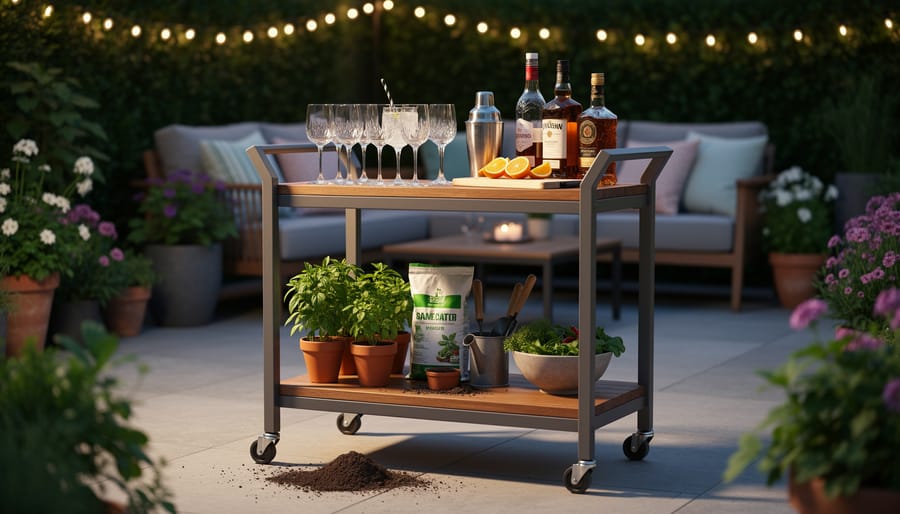
A sleek metal or wooden bar cart transforms into the ultimate multitasker for Austin gardeners who love to entertain. The top tier serves as your active potting surface, just lay down a plastic mat or tray to catch soil spills during transplanting sessions. The middle and lower shelves hold terra cotta pots, bagged soil, and your most-used hand tools. When you’re planning indoor veggies timing or prepping seedlings, everything you need rolls right to your workspace.
What makes this station brilliant for Austin’s outdoor lifestyle is its quick-change personality. On Friday afternoon, swap out the potting supplies for glasses, ice, and bottles. The cart wheels smoothly from your gardening corner to the patio dining area, looking stylish rather than utilitarian. After your gathering, it transitions back to garden duty in minutes.
Choose a cart with weather-resistant finishes, powder-coated metal or sealed wood stands up to our intense sun and humidity. Models with a handlebar make maneuvering easy, and raised edges on shelves prevent pots from sliding off. For under $150, you get functional garden storage that doesn’t scream “shed” when guests arrive.
Setting Up Your Potting Station: Quick Tips
Once you’ve chosen your potting station style, smart setup makes all the difference. Start by positioning your station where you’ll actually use it, east-facing spots work great in Austin since they catch morning sun without the brutal afternoon heat, and remember your zone affects sun needs for seedlings versus mature plants. If your station sits outdoors year-round, seal wooden surfaces with exterior-grade varnish and invest in a waterproof cover for those surprise summer storms.
Organize tools by frequency of use, hang trowels and pruners within arm’s reach on hooks or pegboard, while seasonal items can live in drawers or lower shelves. Store potting soil and amendments in sealed bins rather than leaving bags open; Austin’s humidity swings between bone-dry and surprisingly muggy, and you don’t want clumpy soil when you’re ready to pot. Clean your work surface after each session to prevent soil buildup and pests, and occasionally check for wasp nests if your station’s under an overhang.
Common Questions About Potting Stations
How much space do I really need for a potting station?
You can create a functional potting station in as little as two square feet with a fold-down or wall-mounted design. The key is vertical organization and keeping only essential tools within reach.
What materials hold up best in Austin’s heat?
Cedar, treated pine, and powder-coated metal work well in our intense sun and humidity. Avoid untreated wood and cheap plastics that warp or crack after a season outdoors.
How do I keep pests out of my potting station?
Store soil and amendments in sealed containers with tight lids, clean up spills immediately, and avoid leaving damp organic matter sitting out overnight. A quick wipe-down after each use prevents most pest problems.
Will a potting station work if I mostly do vertical gardening?
Absolutely, vertical gardens need regular repotting and maintenance just like traditional beds. A compact station at the base of your vertical setup makes it easier to choose plants by zone and refresh containers without hauling supplies across your space.
These questions come up constantly among Austin gardeners setting up their first workspace. The answers reflect real-world experience: you don’t need a sprawling shed, just smart use of whatever space you have. Weatherproofing matters here because our summer sun is relentless, and keeping things tidy prevents the fire ants and roaches that love damp potting mix.
Having an organized potting station transforms your gardening routine from chaotic to streamlined, saving time and protecting your plants during crucial transplanting moments. Whether you choose a fold-down wall mount for your balcony or a repurposed dresser for your patio, starting with one setup that matches your available space makes all the difference.
Professional potting services demonstrate how efficient workspaces improve plant care outcomes, and you can apply these same principles at home on any budget. Ready to enhance your urban garden beyond the potting bench? Explore our vertical gardening guides and Austin-specific growing tips to make the most of every square foot in your outdoor space.