Header Image - Gardens Austin Designers

Daily Archives

2 Articles

Herb Gardening For Beginners: Start Your Austin Kitchen Garden This Week

Herb Gardening For Beginners: Start Your Austin Kitchen Garden This Week

Starting an herb garden requires nothing more than a sunny spot, decent soil, and a handful of beginner-friendly plants like basil, mint, and rosemary. You can grow a thriving collection in containers on a balcony, a vertical wall planter, or even a sunny windowsill. Most herbs are remarkably forgiving, need minimal space, and deliver fresh flavor within weeks of planting.

If you’ve hesitated because you think gardening requires a yard or special skills, you’re not alone. Austin’s urban gardeners have proven that anyone can cultivate fresh herbs in tight quarters. The key is choosing the right plants for your space and understanding a few basic principles about water, light, and drainage.

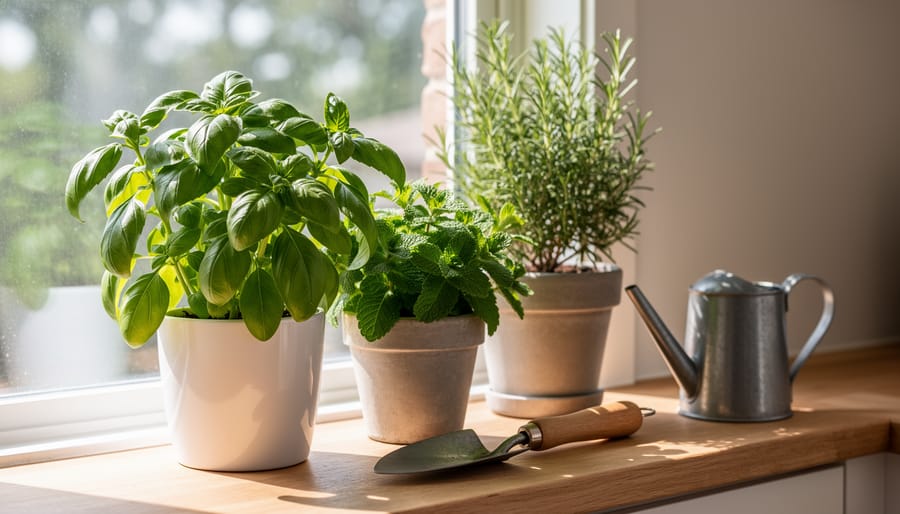
Container gardening solves most beginner challenges. You control the soil quality, move plants to follow the sun, and avoid the complications of Texas clay. A 10-inch pot is enough for most herbs, and vertical solutions like wall-mounted planters or tiered shelves multiply your growing area without claiming precious floor space.

The herbs you start with matter. Basil thrives in Austin’s heat and grows fast enough to keep new gardeners motivated. Mint is nearly indestructible but needs its own container because it spreads aggressively. Rosemary tolerates drought and adds structure to small gardens. These three give you versatility in the kitchen and build confidence before you expand to more temperamental varieties.

Summer 2026 brings intense heat, but herbs actually prefer warm weather as long as you water consistently. Start now, and you’ll be harvesting fresh oregano, cilantro, and thyme by late July.

Why Herbs Are the Perfect Starting Point

Herbs give you gardening success fast, which is exactly what you need when you’re starting out. While vegetables demand weeks of care before you see results, most herbs grow noticeably within days. Basil shoots up almost overnight in Austin’s heat, and you can snip usable leaves from your cilantro in just two to three weeks. That quick feedback loop keeps you motivated instead of wondering if you’re doing something wrong.

These plants also forgive your learning curve. Forget to water your tomatoes for a day in July and you’ll lose them, but most herbs bounce back from minor neglect. Overwater your rosemary once and it’ll sulk but usually recover. This resilience matters tremendously when you’re still figuring out what “moist but not waterlogged” actually feels like.

Space constraints won’t hold you back either. A single 6-inch pot on your apartment balcony can support a thriving basil plant that produces more than you’ll use. Three containers stacked vertically on a wall planter give you a complete kitchen herb collection without sacrificing your limited patio square footage. You don’t need a yard or even a big balcony to grow genuinely useful amounts of fresh herbs.

The immediate payoff keeps you engaged. Snip fresh basil for tonight’s pasta, grab mint for your iced tea, or harvest cilantro for taco Tuesday. You’re using what you grow within weeks of planting, which makes the whole endeavor feel practical rather than theoretical. That connection between planting, tending, harvesting, and eating builds real confidence. You’ll quickly realize that you actually can keep something alive and thriving, which naturally leads to trying more ambitious plants later.
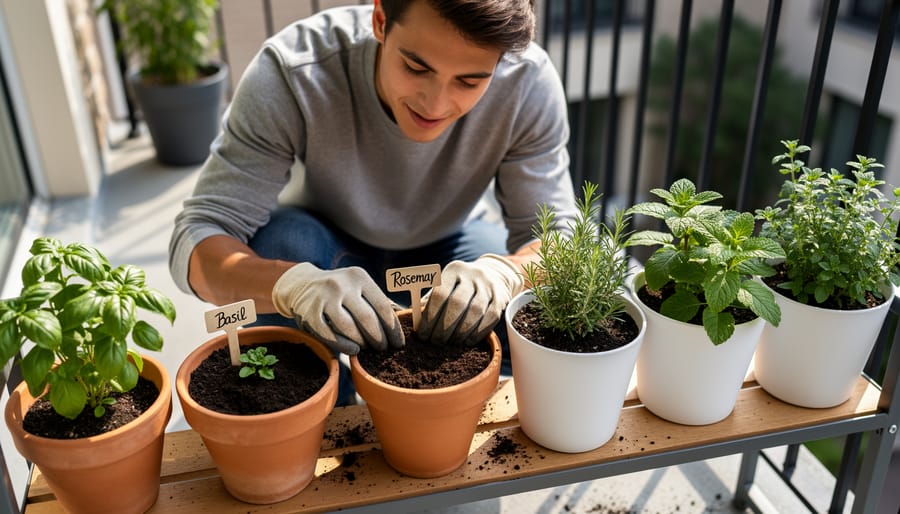
Beginner gardener placing herb seedlings into terracotta pots on a sunny balcony
A new gardener is getting started with a simple container setup for fresh herbs right at home.

Best Beginner Herbs for Austin’s Climate

Heat-Loving Heroes

Austin’s scorching summers create perfect conditions for basil, rosemary, and oregano. These three herbs thrive in heat that would stress other plants, making them your most reliable choices from June through September.

Basil loves full sun and actually produces more flavorful leaves in hot weather. Plant it after the last frost (typically mid-March in Austin) and harvest frequently to encourage bushy growth. Genovese and Thai basil varieties handle our heat exceptionally well.

Rosemary is nearly indestructible once established. This Mediterranean native tolerates drought, poor soil, and blazing sun without complaint. Plant it in a spot with good drainage and resist the urge to overwater, rosemary prefers to dry out between waterings.

Oregano thrives in Austin’s alkaline soil and hot, dry conditions. Greek oregano offers the most intense flavor and spreads readily in containers. Let it dry out completely between waterings, and harvest regularly to keep plants compact and productive. All three herbs actually develop stronger flavors when slightly stressed by heat, which means Austin’s climate naturally enhances your harvest.

Cool-Season Champions

Austin’s cooler months, roughly October through March, are prime time for herbs that struggle in summer heat. Cilantro tops this list and grows fast in fall and winter, giving you fresh leaves in just a few weeks. Plant it every three to four weeks for a steady supply, since it bolts quickly once temperatures climb above 75°F. Parsley thrives in the same window and tolerates light frosts, making it reliable through winter. Both prefer morning sun and afternoon shade during warmer stretches.

Chives and dill also excel in Austin’s mild season. Chives stay compact in containers and come back year after year if you protect them during the occasional hard freeze. Dill grows tall and feathery, perfect for pickling or adding to salads, but needs a deeper pot to accommodate its taproot. Start these cool-season herbs in late September or early October, and you’ll harvest fresh greens all winter while your heat-loving basil takes a break.

Setting Up Your First Herb Garden

Container and Vertical Options for Small Spaces

You don’t need a backyard to grow a thriving herb collection. Austin’s apartments and small patios are perfect for vertical and container setups that maximize every square inch you have.

Start with individual pots sized to each herb’s root system. Basil, cilantro, and parsley do well in 6 to 8-inch containers, while rosemary and oregano need 10 to 12-inch pots to spread out. Terra cotta breathes better in Austin’s heat, but plastic retains moisture longer between waterings. Pick what fits your schedule.

Vertical wall planters transform bare balcony walls into productive gardens. Pocket planters with felt pockets or modular grid systems work beautifully for shallow-rooted herbs like thyme and chives. Mount them where they’ll get at least six hours of sun, and you’ll harvest fresh herbs without sacrificing floor space.

Tiered plant stands give you three levels of growing area in the footprint of a single pot. Place taller herbs like rosemary on the bottom tier where they won’t shade smaller plants, and arrange basil and cilantro up top where you can reach them easily. These setups look sharp on patios and make watering a breeze since you can see every plant at once.

For more container gardening tips beyond herbs, you’ll find plenty of Austin-specific guidance that applies to balcony growing. The key is starting with just a few containers this week and adding more as you get comfortable with the rhythm of watering and care.
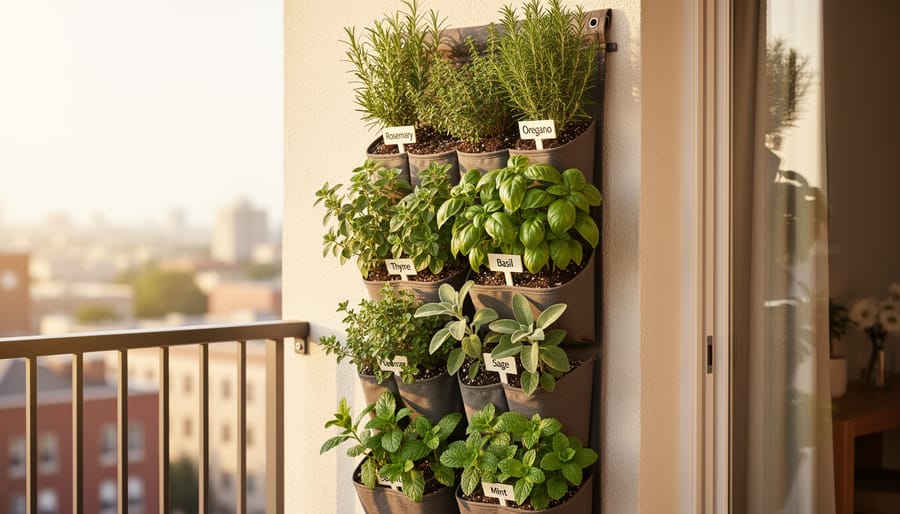
Basil, rosemary, and oregano growing in a tiered vertical planter in bright sunlight
Heat-friendly herbs fill a vertical container arrangement, showing how beginners can grow multiple varieties in limited space.

Soil and Drainage Basics

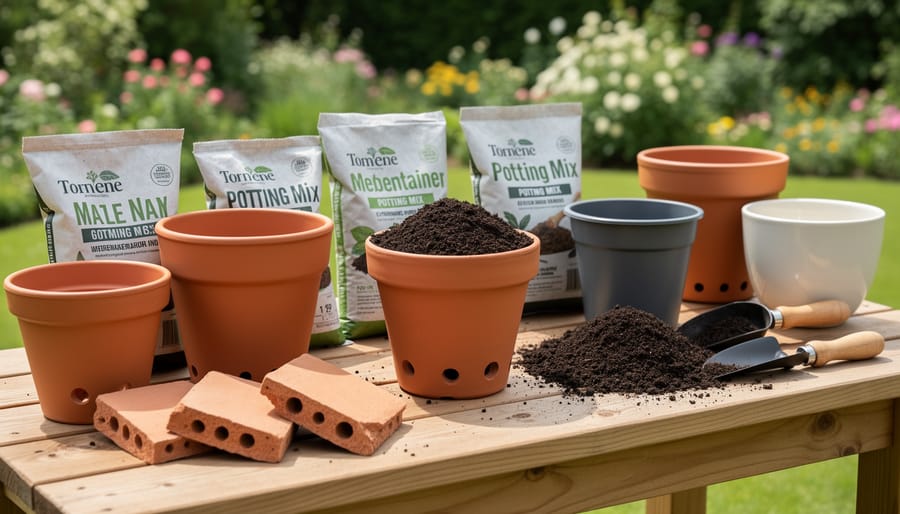
Good potting mix makes the difference between thriving herbs and sad, wilted ones. Skip garden soil, it’s too heavy for containers and compacts quickly. Look for bags labeled “potting mix” or “container mix” at any Austin garden center. These blends are lighter, hold moisture without getting soggy, and let roots breathe.

Drainage matters more than most beginners realize. Herbs hate sitting in water, which causes root rot faster than anything else. Every container needs drainage holes in the bottom, no exceptions. If you fall in love with a pot without holes, use it as a decorative outer sleeve for a plastic nursery pot that drains properly.

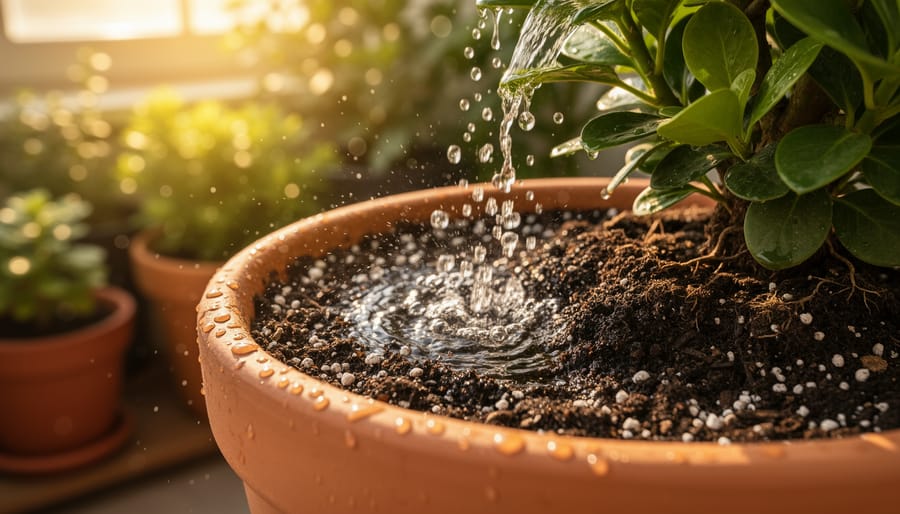
Here’s a simple test: water your potted herb and watch. If water pools on top instead of soaking in, or if it doesn’t drain out the bottom within a few seconds, you’ve got a problem. Add perlite to improve drainage, or start over with fresh mix. During Austin’s blazing summers, well-draining soil actually helps because you can water more frequently without risking soggy roots.

Daily Care Made Simple

Caring for herbs takes minutes a day once you understand their basic needs. The secret to keep plants alive is consistency, not complexity.

Water your herbs when the top inch of soil feels dry to the touch. Stick your finger in the soil before watering. During Austin’s brutal summer months (June through September), container herbs often need daily watering, especially on balconies and patios where heat radiates off concrete. In cooler months, you might water only twice weekly. Always water at the soil level rather than overhead to prevent fungal issues that thrive in our humidity.

Austin’s intense sun means location matters. Most herbs need 6-8 hours of sunlight, but afternoon shade during peak summer helps prevent stress. If your basil leaves look pale or your cilantro bolts immediately, they’re getting too much heat. Move containers to spots with morning sun and afternoon protection, or use shade cloth during July and August heat waves.

Feed your herbs lightly every 4-6 weeks with a balanced liquid fertilizer diluted to half strength. Container herbs need more frequent feeding than ground-planted ones since nutrients wash out with watering. Skip fertilizing in winter when growth naturally slows, even in our mild Austin gardening zone.

Harvest regularly, even if you don’t need the herbs immediately. Pinching off the top leaves and stems encourages bushier growth and prevents flowering, which makes most herbs taste bitter. Take no more than one-third of the plant at once.

Watch for sudden cold snaps in winter. When temperatures drop below 32°F (rare but possible in December and January), bring containers indoors overnight or cover them with frost cloth. Most culinary herbs handle brief cold, but basil dies at the first freeze. Your rosemary and oregano will bounce back; your basil won’t.
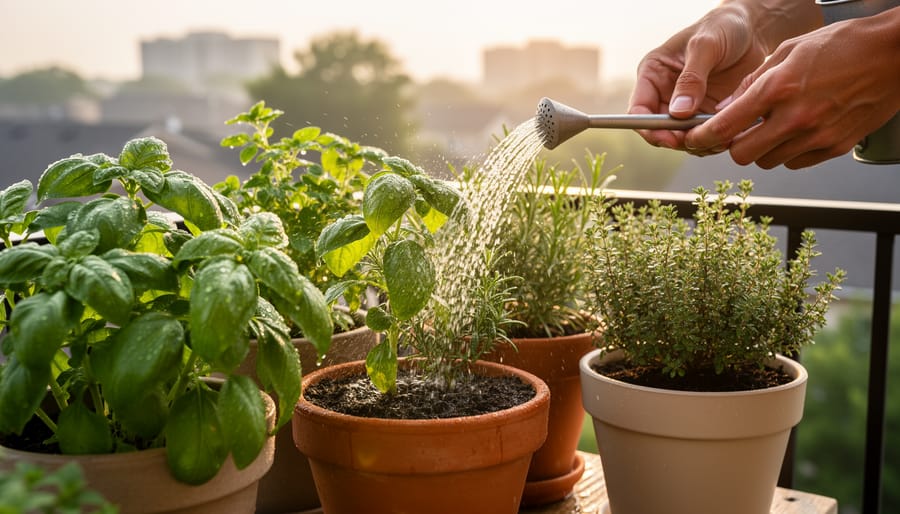
Watering jug pouring water into potted mint and cilantro soil in a container garden
Gentle watering helps container herbs stay healthy, especially during Austin’s hot stretches.

Common Beginner Mistakes (And How to Avoid Them)

Most new herb gardeners don’t fail because they lack a green thumb. They struggle because they’re too careful or too hands-off. Here’s what trips up beginners and how to fix it.

**Overwatering kills more herbs than drought.** Your instinct might tell you to water daily, but most herbs prefer their soil to dry out between waterings. Stick your finger an inch into the soil. If it’s damp, wait another day. Basil and mint like consistent moisture, but rosemary and oregano actually thrive on neglect. In Austin’s summer heat, containers dry faster, so check daily but don’t automatically water.

**Wrong light placement stunts growth.** Most herbs need six hours of direct sun, but in Austin’s brutal summer, afternoon shade prevents scorching. If your herbs look leggy and pale, they’re reaching for more light. Move them to a brighter spot. Conversely, wilting leaves in full afternoon sun mean they need shade during peak heat.

**Not harvesting enough makes plants weak.** This surprises beginners: the more you trim, the bushier your herbs grow. Harvest from the top, cutting just above a leaf node. If you’re waiting for your basil to “get bigger” before picking, you’re doing it backward. Regular trimming prevents flowering and keeps plants productive. Aim to use your herbs at least twice weekly.

**Crowding plants invites problems.** That cute three-herb combo pot at the nursery? It’s temporary. Give each herb its own container or space them 8-10 inches apart. Crowded plants compete for nutrients and airflow, making them susceptible to pests and disease. When you embrace organic gardening practices, proper spacing becomes even more important for preventing issues without chemicals.

These mistakes are fixable. Notice what your plants tell you and adjust.

Local Resources and Learning Opportunities

Learning alongside other beginners makes herb gardening less intimidating and way more fun. Austin’s gardening community offers plenty of hands-on opportunities to build your skills and connect with fellow urban gardeners who get the challenges of small-space growing.

Seed to Supper
An edible gardening program coming up June 16 at Thistle Cottage that covers everything from soil basics to harvesting. Sign up at https://mcplib.libnet.info/event/16043355 or call 270-338-4760 to reserve your spot.
Thyme to Grow: A Guide to Herb Gardening
This hands-on program happens Saturday, August 23 at LancasterHistory, 230 N. President Ave., Lancaster. Tickets are $10 for adults, $5 for children, and free for Friends of the Tanger Arboretum and American Horticultural Society Reciprocal Admission Program Members.
Local Extension Offices
Travis County AgriLife Extension offers free advice on growing herbs in Austin’s specific climate and can answer questions about pest problems, watering schedules, and variety selection. They’re an invaluable resource when you run into issues your online research can’t solve.

Beyond formal programs, Austin’s community gardens often welcome beginners who want to observe experienced gardeners at work. You’ll pick up practical tricks watching someone stake a sprawling basil plant or divide overgrown mint that no tutorial quite captures the same way.

You don’t need a sprawling garden or years of experience to grow fresh herbs. Start this week with just two or three containers, some potting mix, and a sunny spot on your balcony or windowsill. Pick heat-loving basil and rosemary if it’s summer, or cilantro and parsley when cooler months arrive. Austin’s climate makes herb gardening surprisingly forgiving once you understand your seasons.

Mistakes will happen. You’ll overwater something, forget to harvest, or watch a plant struggle in the wrong spot. That’s how you learn what works in your specific space. The local gardening community is welcoming and eager to share tips, whether you connect through neighborhood plant swaps or programs designed for beginners.

The hardest part is simply starting. Grab those first containers, plant your herbs, and give yourself permission to experiment. Within weeks, you’ll be snipping fresh leaves for dinner and planning which herbs to add next. Your kitchen garden begins now, not when conditions are perfect.
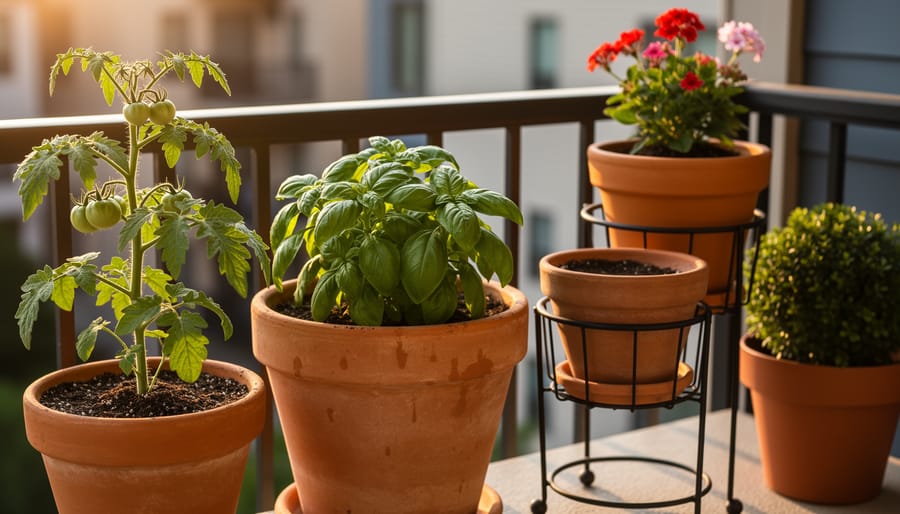
Container Gardening for Beginners: Start Your Austin Patio Garden This Week

Container Gardening for Beginners: Start Your Austin Patio Garden This Week

Container gardening transforms tiny Austin patios, balconies, and doorsteps into productive green spaces without needing a traditional yard. You’ll grow fresh herbs, vegetables, and flowers in pots that fit your available space, whether that’s a sunny apartment balcony or a shaded corner of your deck.

Start with just three to five containers in different sizes. A 14-inch pot works perfectly for tomatoes or peppers, while 6-inch pots handle herbs like basil and cilantro. Grab quality potting mix (never garden soil, which compacts in containers), and you’re already halfway there.

Austin’s intense summer heat actually makes container gardening easier in some ways. You can move pots to shadier spots during our brutal July and August afternoons, something impossible with in-ground beds. Choose heat-loving plants like cherry tomatoes, jalapeños, and Mexican bush sage for summer success, or switch to lettuce and kale when fall arrives.

The real advantage? Containers let you garden vertically when ground space runs out. Stack smaller pots on plant stands, hang baskets from hooks, or arrange tiered shelving to multiply your growing area. This vertical approach turns even the smallest balcony into a surprisingly productive garden.

Watering becomes your main task since containers dry out faster than ground soil, especially in our Texas heat. Check daily by sticking your finger an inch deep. If it feels dry, water thoroughly until it drains from the bottom. That’s the entire learning curve for most beginners.

Why Container Gardening Works Perfectly for Austin Beginners

Austin’s unique combination of rocky limestone soil, intense summer heat, and predominantly urban housing makes container gardening the smartest entry point for beginners. If you’ve ever tried digging into the caliche-heavy ground around here, you know exactly why containers skip that headache entirely, you control the soil from day one.

For apartment dwellers and renters (which describes much of central Austin), containers offer genuine gardening without landlord restrictions or permanent installations. You can start on a balcony, patio, or even a sunny front step, then take everything with you when you move. That mobility matters in a city where the average renter stays two years.

Austin’s climate poses real challenges: triple-digit summers, unpredictable spring freezes, and drought cycles. Containers actually help beginners manage these extremes better than in-ground gardens. You can move pots into shade during July’s worst heat, bring tender plants indoors when a late freeze threatens, and water strategically without fighting compacted soil that sheds moisture.

The learning curve flattens considerably, too. With containers, you’re managing a controlled environment, one pot, one plant, clear results. When something goes wrong, you’re troubleshooting a five-gallon container, not a whole garden bed. Success builds confidence fast.

Limited space stops being a limitation. A 4×6 balcony can hold a dozen productive containers. Vertical arrangements (we’ll cover those later) multiply your growing area without expanding your footprint, perfect for Austin’s space-starved neighborhoods like East Austin or South Congress.

Bottom line: containers eliminate the barriers that stop most Austin beginners before they start. No land required, no soil amendments, no expensive tools, just pots, plants, and a spot that gets some sun.

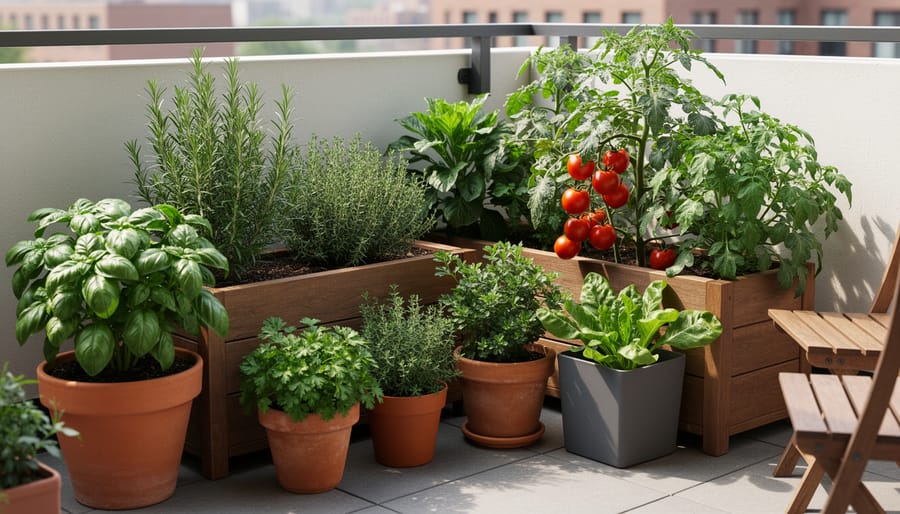
Assorted herb and tomato containers on an Austin patio with a watering can and gardening gloves nearby.
A thriving mix of herbs and patio vegetables shows how simple container gardening can look on a small space.

What You Actually Need to Get Started

Choosing the Right Containers

The container itself matters more than most beginners realize. Size is your first decision: herbs need at least 6-8 inches of depth, leafy greens 8-10 inches, and tomatoes or peppers 12-18 inches. A container that’s too shallow forces roots to crowd, which means constant watering and stunted growth.

Drainage holes are critical without them, water pools at the bottom and roots rot within days. If you find a container you love without holes, drill them yourself or use it as an outer decorative pot with a draining liner inside.

Material affects how often you’ll water. Terra cotta looks classic but dries out fast in Austin’s heat, sometimes needing daily watering. Plastic and resin hold moisture longer and work better for busy beginners. Fabric grow bags breathe well and prevent root circling, though they’re less stable on windy balconies.

Start with containers at least 10-12 inches wide. Bigger pots hold more soil, which buffers against drying out and temperature swings, both helpful when you’re learning to read your plants’ needs.

Pots and potting mix set up on a balcony floor with a container showing drainage holes and a tray underneath.
A clear view of containers, potting mix, and proper drainage highlights the practical basics that make container gardening succeed.

The Soil Mix That Makes Everything Easier

Garden soil seems like the obvious choice, but it’s actually the worst thing you can put in a container. Regular dirt compacts when watered repeatedly, choking out air pockets your plant roots desperately need. Within weeks, you’ll have a dense, waterlogged brick that kills even the toughest plants.

Potting media for containers is specifically engineered to stay loose and fluffy. It’s lighter, drains excess water quickly, yet holds enough moisture so you’re not watering three times a day in Austin’s brutal summer heat. The mix typically contains peat moss or coir, perlite or vermiculite for drainage, and sometimes a bit of compost.

When you’re shopping at Austin garden centers, look for bags labeled “potting mix” or “container mix.” Avoid anything that says “garden soil” or “topsoil.” A quality mix feels light when you pick up the bag and springs back when you squeeze it. Brands like FoxFarm Ocean Forest or Miracle-Gro Potting Mix work well for beginners, but local nurseries often carry their own blends formulated for Central Texas conditions. Expect to pay around $12-$18 for a bag that fills several containers.

Best Plants for Your First Container Garden in Austin

Herbs That Practically Grow Themselves

Basil thrives in containers with minimal fuss, just give it six hours of sun and consistent moisture. Mint grows so aggressively you’ll actually want it confined to a pot; it tolerates partial shade and forgives occasional neglect. Rosemary handles Austin’s heat like a champ and needs surprisingly little water once established, making it perfect for forgetful beginners. Cilantro prefers cooler months (plant it in fall or early spring), but during those windows it practically explodes in containers. Parsley fills in gaps beautifully and keeps producing if you harvest outer leaves first. Start with these five, and you’ll have fresh herbs for months without drama.

Easy Vegetables for Patio Containers

Cherry tomatoes top the beginner-friendly vegetable list because they produce abundantly in containers and forgive mistakes. Choose compact varieties like ‘Patio Princess’ or ‘Tiny Tim’ for five-gallon pots, and you’ll harvest fruit within 60 days even if you forget to water occasionally. Bell peppers and jalapeños handle Austin’s summer heat beautifully in containers and need less frequent watering than tomatoes, making them perfect for weekday warriors who can’t tend plants daily.

Lettuce and spinach work surprisingly well in shallow containers on shaded patios during Austin’s spring and fall months. Plant them in March or October, give them morning sun only, and you’ll cut fresh salad greens for weeks. Bush beans produce heavily in deep pots without staking, and radishes grow so fast in containers that kids love watching them, sprouting in just three days and ready to harvest in 25.

Low-Maintenance Flowers and Greens

For flowers, zinnias and purslane laugh at Austin’s summer heat and keep blooming without fuss. Zinnias come in bright colors and need only occasional deadheading to look their best. Purslane spreads cheerfully across container edges with tiny blooms in pink, yellow, or orange, and it actually prefers dry conditions between waterings.

Ornamental sweet potato vines add dramatic trailing foliage in chartreuse or deep purple without requiring any bloom care. Dusty miller offers silvery texture that complements other plants and tolerates both heat and neglect. For a pop of color with zero drama, lantana thrives in containers, attracts butterflies, and flowers reliably through Austin’s long summers. All of these handle full sun, forgive missed waterings, and keep your patio looking intentional with minimal effort from you.

Your First Planting: Step-by-Step

You’ve got your container, your potting mix, and your plant. Now comes the fun part, actually putting everything together. This isn’t complicated, and you can’t really mess it up as long as you follow a few basic steps.

Here’s exactly how to plant your first container:

  1. Check that your container has drainage holes in the bottom. If it doesn’t, drill a few or choose a different pot.
  2. Fill the container about two-thirds full with fresh potting mix. Don’t pack it down, leave it loose and fluffy.
  3. Remove your plant gently from its nursery pot by squeezing the sides and tipping it upside down into your hand.
  4. Loosen the roots slightly with your fingers if they’re circling tightly around the root ball. This helps them spread into the new soil.
  5. Place the plant in the center of your container so the top of the root ball sits about an inch below the rim.
  6. Fill in around the plant with more potting mix, gently pressing it down to eliminate air pockets but not compacting it hard.
  7. Water thoroughly until you see water draining from the bottom holes. This settles the soil and gives your plant a good drink.

That’s it. Your container garden is officially planted.

Give the soil surface a light press with your palm to make sure the plant feels stable. If it wobbles, add a bit more mix around the base. The soil will settle slightly over the next few days, which is normal.

After that first watering, place your container in its permanent spot, whether that’s a sunny patio corner or a shaded balcony ledge. Moving a heavy, wet container later is harder than you’d think, so choose wisely now.

For those following organic garden tips you can skip synthetic fertilizers and stick with compost-based potting mixes and organic feeds from the start. Your plants won’t know the difference, and you’ll build healthier soil over time.

The first few days after planting, check the soil moisture daily by sticking your finger an inch deep. You’re learning your plant’s rhythm, and that takes a week or two of paying attention.

Keeping Your Container Garden Alive and Thriving

Watering Without Overdoing It

The difference between thriving plants and dead ones often comes down to watering correctly. In Austin’s brutal summer heat, containers dry out faster than you’d expect, but dumping water on them daily drowns roots just as fast as neglect kills them.

The finger test beats any schedule. Push your finger two inches into the soil, if it feels dry at that depth, water until it runs from the drainage holes. If it’s still moist, wait. During Austin’s peak summer months, you’ll likely water daily or every other day, but spring and fall might need just twice weekly. Morning watering works best since midday evaporation wastes water and evening moisture invites pests.

Containers need deep, thorough watering rather than frequent light sprinkles. When you water, soak the entire root zone until excess drains out the bottom. This flushes salts and encourages roots to grow deep, which helps keep plants alive through Austin’s 100-degree afternoons. If water runs straight through without soaking in, your soil has become hydrophobic, set the pot in a tray of water for 20 minutes to rehydrate it properly.

Close-up of rosemary and pepper plants in sunlit containers with rich potting mix after watering.
Close-up sunlight and rich potting mix illustrate how container plants can thrive with the right watering routine and care.

Simple Feeding Schedule

Container plants eat through nutrients faster than in-ground gardens because every watering leaches minerals from the limited soil. Feed your plants every two weeks during the growing season with a balanced liquid fertilizer diluted to half the package strength. That’s it.

Start fertilizing about a month after planting, once your seedlings have settled in. In Austin’s intense summer heat, your containers dry out quickly and lose nutrients even faster, so consistency matters more than precision. Mix the fertilizer with water in your watering can rather than applying it separately, it saves time and reduces the risk of burning roots.

Stop feeding in late fall when growth naturally slows. Your plants will tell you if they’re hungry: pale leaves, slow growth, or fewer flowers mean it’s time to feed. If they’re thriving, stick with your schedule and don’t overfeed, more fertilizer doesn’t mean bigger plants, just wasted money and potentially damaged roots.

Finding the Right Sunlight Spot

Observe your patio or balcony at different times throughout the day to see where sunlight hits and for how long. Morning sun is gentler, while afternoon sun in Austin can be intense and hot. Full sun means six-plus hours of direct sunlight, partial sun is four to six hours, and shade is less than four. Most vegetables and herbs need full sun, but leafy greens and many flowers do fine with partial sun. If your space only gets morning light or filtered afternoon shade, choose shade-tolerant plants like lettuce, coleus, or begonias instead of fighting your conditions.

Vertical Container Solutions for Tight Spaces

When you’re working with a small balcony or patio, going vertical changes everything. You don’t need more floor space to grow more plants, you just need to think upward.

Stacking containers on tiered plant stands gives you three or four levels of growing space in the same footprint as one pot. These stands work beautifully for herbs and small vegetables, and you can find them at any Austin garden center for $20 to $40. Place taller plants on the bottom tier where they won’t shade shorter ones above.

Wall-mounted planters and hanging containers free up your floor entirely. Attach railing planters to balcony edges for herbs like basil and cilantro, or hang lightweight pots from hooks to grow trailing plants like cherry tomatoes. Just make sure your hanging containers have drainage saucers if they’re over walkways.

Trellises and vertical frames turn climbing plants into living walls. Pole beans, sugar snap peas, and even small cucumbers thrive when grown vertically in containers, and they’re perfect for the Austin gardening zone if you plant them in spring or fall. A simple bamboo trellis costs less than $10 and doubles your growing capacity.

Vertical gardening also improves air circulation around your plants, which helps prevent disease in Austin’s humid summers. Start with one vertical element this week, a tiered stand or a few hanging baskets, and you’ll immediately see how much more you can grow.

Local Resources and Free Learning Opportunities

Austin’s gardening community offers hands-on support that makes starting your container garden much easier. The Texas AgriLife Extension hosts free container gardening workshops throughout the year, and there’s one happening this month on Wednesday, June 17th from 3:00 to 5:00 PM at the Mel Lloyd Centre (167 Centre St, Entrance F). These sessions give you a chance to ask questions and see techniques demonstrated in person, which beats reading alone every time.

For supplies and advice, local spots like The Natural Gardener, Barton Springs Nursery, and Shoal Creek Nursery employ staff who actually garden in Austin’s climate. They can steer you toward plants that work here and away from expensive mistakes. Many community gardens around town, including Sunshine Community Gardens and Zilker Botanical Garden, welcome beginners at volunteer days where you’ll pick up practical skills alongside experienced gardeners.

If you get hooked on container growing, you might eventually want to grow indoors during our cooler months to keep harvesting year-round. The Austin Public Library system also offers free gardening workshops and maintains a solid collection of container gardening books you can check out before buying. Starting with these free and local resources means you’ll have real support as you figure out what works on your own patio.

You don’t need a huge backyard or years of experience to grow your own food and flowers. Container gardening for beginners really is as simple as choosing a few pots, adding quality soil, and starting with easy plants that forgive mistakes. This week, grab a container, pick up some basil or cherry tomatoes, and get your hands dirty. You’ll be surprised how quickly you see results.

If you want hands-on guidance as you start your container garden, Gardens Austin Designers offers personalized consultations and workshops designed specifically for Austin gardeners. Whether you need help choosing the right setup for your balcony or want to learn vertical gardening techniques that maximize your space, our team brings years of local expertise to help you succeed. We make container gardening approachable, fun, and perfectly suited to your unique outdoor space. Start small, start now, and watch your confidence grow along with your plants.