
Herb Gardening For Beginners: Start Your Austin Kitchen Garden This Week
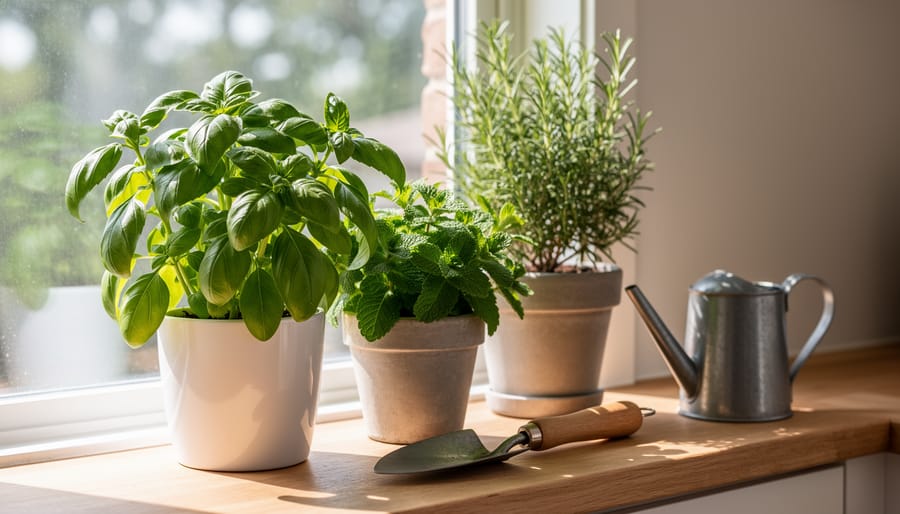
Starting an herb garden requires nothing more than a sunny spot, decent soil, and a handful of beginner-friendly plants like basil, mint, and rosemary. You can grow a thriving collection in containers on a balcony, a vertical wall planter, or even a sunny windowsill. Most herbs are remarkably forgiving, need minimal space, and deliver fresh flavor within weeks of planting.
If you’ve hesitated because you think gardening requires a yard or special skills, you’re not alone. Austin’s urban gardeners have proven that anyone can cultivate fresh herbs in tight quarters. The key is choosing the right plants for your space and understanding a few basic principles about water, light, and drainage.
Container gardening solves most beginner challenges. You control the soil quality, move plants to follow the sun, and avoid the complications of Texas clay. A 10-inch pot is enough for most herbs, and vertical solutions like wall-mounted planters or tiered shelves multiply your growing area without claiming precious floor space.
The herbs you start with matter. Basil thrives in Austin’s heat and grows fast enough to keep new gardeners motivated. Mint is nearly indestructible but needs its own container because it spreads aggressively. Rosemary tolerates drought and adds structure to small gardens. These three give you versatility in the kitchen and build confidence before you expand to more temperamental varieties.
Summer 2026 brings intense heat, but herbs actually prefer warm weather as long as you water consistently. Start now, and you’ll be harvesting fresh oregano, cilantro, and thyme by late July.
Why Herbs Are the Perfect Starting Point
Herbs give you gardening success fast, which is exactly what you need when you’re starting out. While vegetables demand weeks of care before you see results, most herbs grow noticeably within days. Basil shoots up almost overnight in Austin’s heat, and you can snip usable leaves from your cilantro in just two to three weeks. That quick feedback loop keeps you motivated instead of wondering if you’re doing something wrong.
These plants also forgive your learning curve. Forget to water your tomatoes for a day in July and you’ll lose them, but most herbs bounce back from minor neglect. Overwater your rosemary once and it’ll sulk but usually recover. This resilience matters tremendously when you’re still figuring out what “moist but not waterlogged” actually feels like.
Space constraints won’t hold you back either. A single 6-inch pot on your apartment balcony can support a thriving basil plant that produces more than you’ll use. Three containers stacked vertically on a wall planter give you a complete kitchen herb collection without sacrificing your limited patio square footage. You don’t need a yard or even a big balcony to grow genuinely useful amounts of fresh herbs.
The immediate payoff keeps you engaged. Snip fresh basil for tonight’s pasta, grab mint for your iced tea, or harvest cilantro for taco Tuesday. You’re using what you grow within weeks of planting, which makes the whole endeavor feel practical rather than theoretical. That connection between planting, tending, harvesting, and eating builds real confidence. You’ll quickly realize that you actually can keep something alive and thriving, which naturally leads to trying more ambitious plants later.
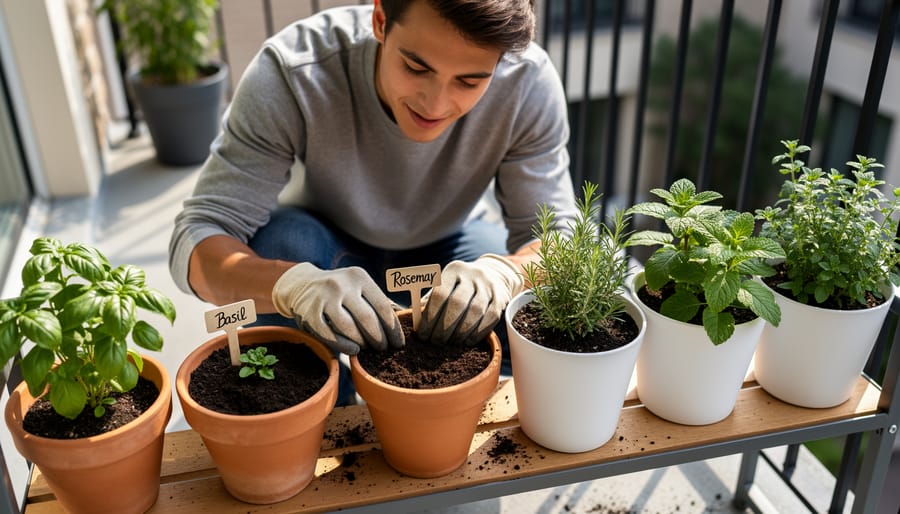
Best Beginner Herbs for Austin’s Climate
Heat-Loving Heroes
Austin’s scorching summers create perfect conditions for basil, rosemary, and oregano. These three herbs thrive in heat that would stress other plants, making them your most reliable choices from June through September.
Basil loves full sun and actually produces more flavorful leaves in hot weather. Plant it after the last frost (typically mid-March in Austin) and harvest frequently to encourage bushy growth. Genovese and Thai basil varieties handle our heat exceptionally well.
Rosemary is nearly indestructible once established. This Mediterranean native tolerates drought, poor soil, and blazing sun without complaint. Plant it in a spot with good drainage and resist the urge to overwater, rosemary prefers to dry out between waterings.
Oregano thrives in Austin’s alkaline soil and hot, dry conditions. Greek oregano offers the most intense flavor and spreads readily in containers. Let it dry out completely between waterings, and harvest regularly to keep plants compact and productive. All three herbs actually develop stronger flavors when slightly stressed by heat, which means Austin’s climate naturally enhances your harvest.
Cool-Season Champions
Austin’s cooler months, roughly October through March, are prime time for herbs that struggle in summer heat. Cilantro tops this list and grows fast in fall and winter, giving you fresh leaves in just a few weeks. Plant it every three to four weeks for a steady supply, since it bolts quickly once temperatures climb above 75°F. Parsley thrives in the same window and tolerates light frosts, making it reliable through winter. Both prefer morning sun and afternoon shade during warmer stretches.
Chives and dill also excel in Austin’s mild season. Chives stay compact in containers and come back year after year if you protect them during the occasional hard freeze. Dill grows tall and feathery, perfect for pickling or adding to salads, but needs a deeper pot to accommodate its taproot. Start these cool-season herbs in late September or early October, and you’ll harvest fresh greens all winter while your heat-loving basil takes a break.
Setting Up Your First Herb Garden
Container and Vertical Options for Small Spaces
You don’t need a backyard to grow a thriving herb collection. Austin’s apartments and small patios are perfect for vertical and container setups that maximize every square inch you have.
Start with individual pots sized to each herb’s root system. Basil, cilantro, and parsley do well in 6 to 8-inch containers, while rosemary and oregano need 10 to 12-inch pots to spread out. Terra cotta breathes better in Austin’s heat, but plastic retains moisture longer between waterings. Pick what fits your schedule.
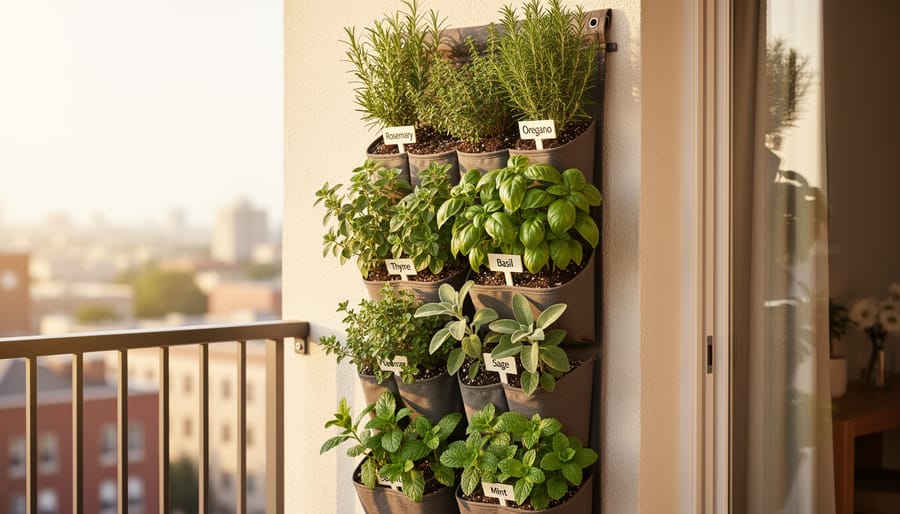
Vertical wall planters transform bare balcony walls into productive gardens. Pocket planters with felt pockets or modular grid systems work beautifully for shallow-rooted herbs like thyme and chives. Mount them where they’ll get at least six hours of sun, and you’ll harvest fresh herbs without sacrificing floor space.
Tiered plant stands give you three levels of growing area in the footprint of a single pot. Place taller herbs like rosemary on the bottom tier where they won’t shade smaller plants, and arrange basil and cilantro up top where you can reach them easily. These setups look sharp on patios and make watering a breeze since you can see every plant at once.
For more container gardening tips beyond herbs, you’ll find plenty of Austin-specific guidance that applies to balcony growing. The key is starting with just a few containers this week and adding more as you get comfortable with the rhythm of watering and care.
Soil and Drainage Basics
Good potting mix makes the difference between thriving herbs and sad, wilted ones. Skip garden soil, it’s too heavy for containers and compacts quickly. Look for bags labeled “potting mix” or “container mix” at any Austin garden center. These blends are lighter, hold moisture without getting soggy, and let roots breathe.
Drainage matters more than most beginners realize. Herbs hate sitting in water, which causes root rot faster than anything else. Every container needs drainage holes in the bottom, no exceptions. If you fall in love with a pot without holes, use it as a decorative outer sleeve for a plastic nursery pot that drains properly.
Here’s a simple test: water your potted herb and watch. If water pools on top instead of soaking in, or if it doesn’t drain out the bottom within a few seconds, you’ve got a problem. Add perlite to improve drainage, or start over with fresh mix. During Austin’s blazing summers, well-draining soil actually helps because you can water more frequently without risking soggy roots.
Daily Care Made Simple
Caring for herbs takes minutes a day once you understand their basic needs. The secret to keep plants alive is consistency, not complexity.
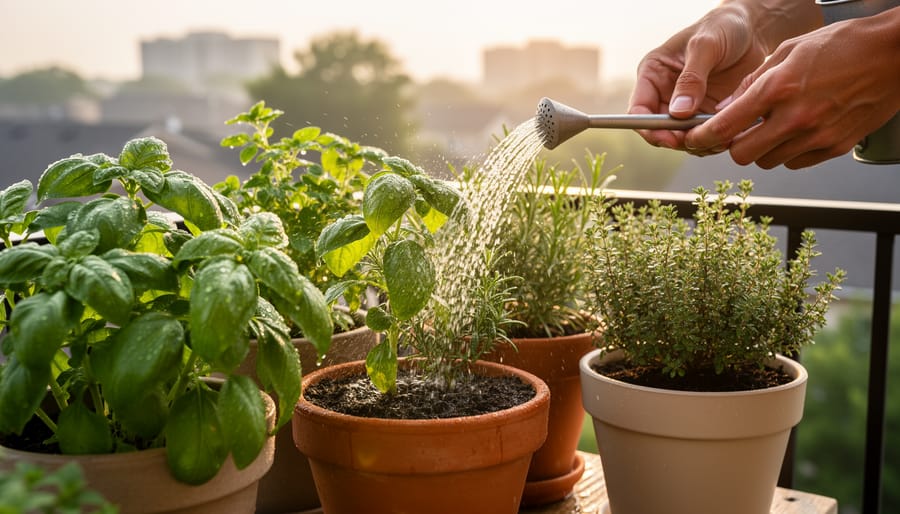
Water your herbs when the top inch of soil feels dry to the touch. Stick your finger in the soil before watering. During Austin’s brutal summer months (June through September), container herbs often need daily watering, especially on balconies and patios where heat radiates off concrete. In cooler months, you might water only twice weekly. Always water at the soil level rather than overhead to prevent fungal issues that thrive in our humidity.
Austin’s intense sun means location matters. Most herbs need 6-8 hours of sunlight, but afternoon shade during peak summer helps prevent stress. If your basil leaves look pale or your cilantro bolts immediately, they’re getting too much heat. Move containers to spots with morning sun and afternoon protection, or use shade cloth during July and August heat waves.
Feed your herbs lightly every 4-6 weeks with a balanced liquid fertilizer diluted to half strength. Container herbs need more frequent feeding than ground-planted ones since nutrients wash out with watering. Skip fertilizing in winter when growth naturally slows, even in our mild Austin gardening zone.
Harvest regularly, even if you don’t need the herbs immediately. Pinching off the top leaves and stems encourages bushier growth and prevents flowering, which makes most herbs taste bitter. Take no more than one-third of the plant at once.
Watch for sudden cold snaps in winter. When temperatures drop below 32°F (rare but possible in December and January), bring containers indoors overnight or cover them with frost cloth. Most culinary herbs handle brief cold, but basil dies at the first freeze. Your rosemary and oregano will bounce back; your basil won’t.
Common Beginner Mistakes (And How to Avoid Them)
Most new herb gardeners don’t fail because they lack a green thumb. They struggle because they’re too careful or too hands-off. Here’s what trips up beginners and how to fix it.
Overwatering kills more herbs than drought. Your instinct might tell you to water daily, but most herbs prefer their soil to dry out between waterings. Stick your finger an inch into the soil. If it’s damp, wait another day. Basil and mint like consistent moisture, but rosemary and oregano actually thrive on neglect. In Austin’s summer heat, containers dry faster, so check daily but don’t automatically water.
Wrong light placement stunts growth. Most herbs need six hours of direct sun, but in Austin’s brutal summer, afternoon shade prevents scorching. If your herbs look leggy and pale, they’re reaching for more light. Move them to a brighter spot. Conversely, wilting leaves in full afternoon sun mean they need shade during peak heat.
Not harvesting enough makes plants weak. This surprises beginners: the more you trim, the bushier your herbs grow. Harvest from the top, cutting just above a leaf node. If you’re waiting for your basil to “get bigger” before picking, you’re doing it backward. Regular trimming prevents flowering and keeps plants productive. Aim to use your herbs at least twice weekly.
Crowding plants invites problems. That cute three-herb combo pot at the nursery? It’s temporary. Give each herb its own container or space them 8-10 inches apart. Crowded plants compete for nutrients and airflow, making them susceptible to pests and disease. When you embrace organic gardening practices, proper spacing becomes even more important for preventing issues without chemicals.
These mistakes are fixable. Notice what your plants tell you and adjust.
Local Resources and Learning Opportunities
Learning alongside other beginners makes herb gardening less intimidating and way more fun. Austin’s gardening community offers plenty of hands-on opportunities to build your skills and connect with fellow urban gardeners who get the challenges of small-space growing.
- Seed to Supper
- An edible gardening program coming up June 16 at Thistle Cottage that covers everything from soil basics to harvesting. Sign up at https://mcplib.libnet.info/event/16043355 or call 270-338-4760 to reserve your spot.
- Thyme to Grow: A Guide to Herb Gardening
- This hands-on program happens Saturday, August 23 at LancasterHistory, 230 N. President Ave., Lancaster. Tickets are $10 for adults, $5 for children, and free for Friends of the Tanger Arboretum and American Horticultural Society Reciprocal Admission Program Members.
- Local Extension Offices
- Travis County AgriLife Extension offers free advice on growing herbs in Austin’s specific climate and can answer questions about pest problems, watering schedules, and variety selection. They’re an invaluable resource when you run into issues your online research can’t solve.
Beyond formal programs, Austin’s community gardens often welcome beginners who want to observe experienced gardeners at work. You’ll pick up practical tricks watching someone stake a sprawling basil plant or divide overgrown mint that no tutorial quite captures the same way.
You don’t need a sprawling garden or years of experience to grow fresh herbs. Start this week with just two or three containers, some potting mix, and a sunny spot on your balcony or windowsill. Pick heat-loving basil and rosemary if it’s summer, or cilantro and parsley when cooler months arrive. Austin’s climate makes herb gardening surprisingly forgiving once you understand your seasons.
Mistakes will happen. You’ll overwater something, forget to harvest, or watch a plant struggle in the wrong spot. That’s how you learn what works in your specific space. The local gardening community is welcoming and eager to share tips, whether you connect through neighborhood plant swaps or programs designed for beginners.
The hardest part is simply starting. Grab those first containers, plant your herbs, and give yourself permission to experiment. Within weeks, you’ll be snipping fresh leaves for dinner and planning which herbs to add next. Your kitchen garden begins now, not when conditions are perfect.