Header Image - Gardens Austin Designers

Monthly Archives

3 Articles

How to Start Gardening in a Small Space: From Balcony to Backyard Corner

How to Start Gardening in a Small Space: From Balcony to Backyard Corner

You can absolutely grow a thriving garden in a small space, and the secret is vertical thinking. Whether you’re working with a cramped Austin balcony, a narrow patio, or just a sunny windowsill, container gardening combined with vertical structures lets you maximize every square inch without sacrificing variety or yield. The process is straightforward: choose compact or vining plants, set up vertical supports like trellises or wall planters, and manage your containers for optimal drainage and soil health.

Small space gardening has exploded in popularity across urban Austin neighborhoods, and for good reason. Limited square footage doesn’t mean limited possibilities. In fact, growing upward instead of outward opens up opportunities most traditional gardeners never consider. You’ll discover that herbs, tomatoes, peppers, and leafy greens thrive in containers when given the right conditions, and vertical systems can turn a blank wall into a productive growing surface.

This guide walks you through the exact setup, from selecting the right containers and soil mix to installing vertical supports that can handle our Texas heat. You’ll learn how to position plants for maximum sun exposure (crucial during Austin’s intense summers), establish a watering routine that prevents both drought stress and root rot, and troubleshoot common issues like leggy growth or nutrient deficiencies. By the end, you’ll have a clear roadmap to transform even the tiniest outdoor area into a productive garden that delivers fresh produce and beauty throughout the growing season.

Key Takeaway: Healthy small space gardens show steady new growth, drain water quickly, and maintain vibrant leaf color. If plants yellow, wilt despite watering, or remain static for weeks, adjust light exposure, drainage, or watering frequency before they decline further.

What You’ll Need to Get Started

Starting a small space garden doesn’t require a shed full of equipment. In fact, one of the benefits of gardening on a balcony or patio is that you can begin with just a handful of essentials and add more as you learn what works for your space.

Containers and Growing Spaces

Your containers are the foundation of a small space garden. Look for pots with drainage holes in the bottom, this is non-negotiable for healthy plants. For Austin’s intense summer heat, choose light-colored plastic or glazed ceramic containers that won’t absorb as much heat and stress plant roots. Terra cotta is beautiful but dries out fast in our climate. Start with containers at least 8-10 inches deep for most herbs and vegetables, and go deeper (12-18 inches) for tomatoes, peppers, or root vegetables.

Self-watering containers are worth considering if you travel or work long hours. They have a reservoir that keeps soil consistently moist without daily watering, which is a lifesaver during Austin’s 100-degree stretches.

Soil and Amendments

Skip the cheap “garden soil” bags. You need a high-quality potting mix specifically formulated for containers, it’s lighter, drains better, and won’t compact like ground soil. Look for mixes that contain perlite or vermiculite for drainage. In Austin’s heat, mixing in coconut coir or extra compost helps retain moisture without creating soggy conditions that lead to root rot.

Essential Tools and Equipment

Here’s what you actually need to get started:

  • Hand trowel and cultivator for planting and loosening soil in tight spaces
  • Watering can with a narrow spout or a hose with a spray nozzle for controlled watering
  • Pruning shears or scissors for harvesting and trimming
  • Gardening gloves to protect your hands and keep them clean
  • Moisture meter (optional but helpful) to check when plants actually need water
  • Vertical supports like tomato cages, small trellises, or stakes for vining plants

If you’re planning vertical gardening, add wall-mounted planters, hanging baskets with sturdy hooks, or a simple bamboo trellis. Make sure any wall-mounted system is rated for outdoor use and properly anchored, Austin’s occasional strong winds can pull poorly secured planters right off the wall.

A small bag of organic fertilizer rounds out your starter kit. Container plants need regular feeding since frequent watering leaches nutrients from the soil faster than in-ground gardens.

Before You Plant: Important Safety and Setup Considerations
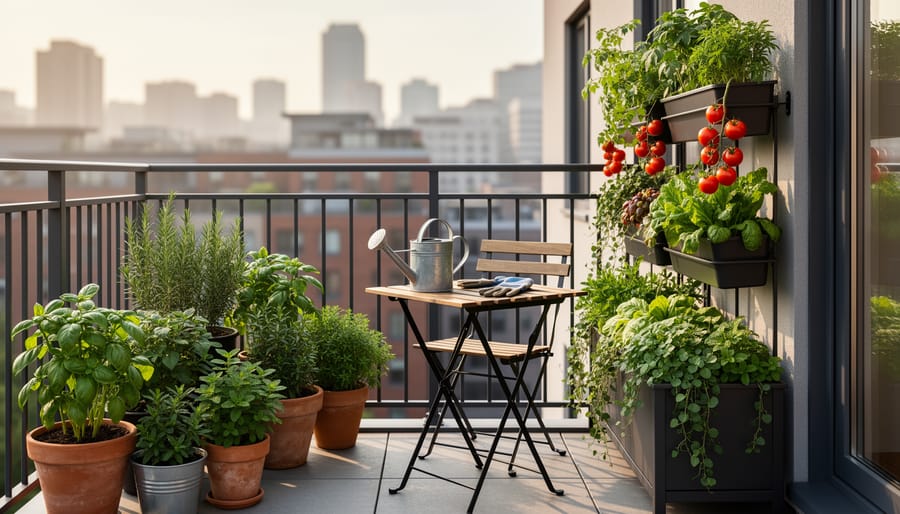
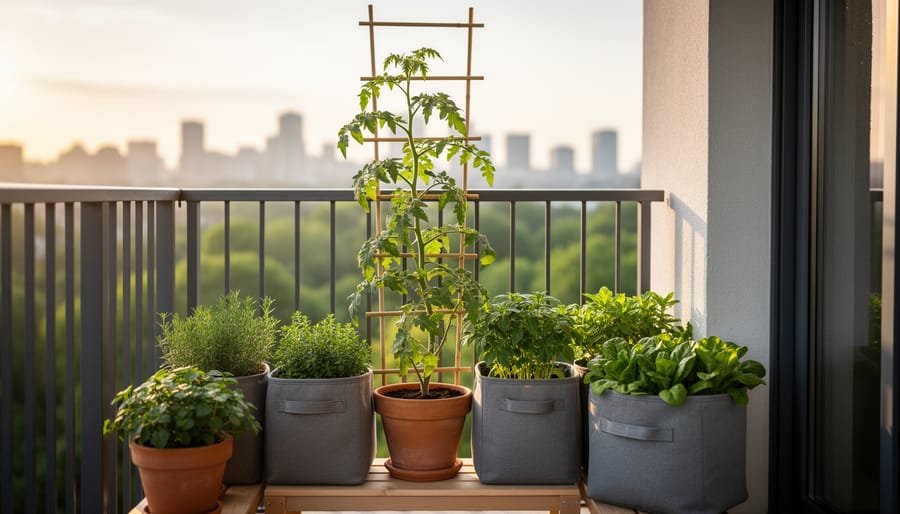
Small-space balcony garden with grow bags, herbs, and a compact trellis next to an apartment railing
A compact balcony setup demonstrates how herbs and vegetables can thrive in containers even in an urban setting.

Before you start filling containers with soil and plants, take time to ensure your space can safely support a garden. A balcony full of wet soil and pots can weigh hundreds of pounds, so check your building’s weight capacity guidelines or consult your landlord or property manager. Most modern balconies handle 50-100 pounds per square foot, but older structures may have lower limits. Distribute weight evenly across the space rather than clustering everything in one corner, and consider lightweight potting mix instead of garden soil, it can weigh 40% less when saturated.

Warning: Always verify your balcony or rooftop’s weight capacity before adding multiple filled containers, and ensure all containers need drainage holes to prevent water accumulation that adds dangerous extra weight.

Water damage is another serious concern. Without proper drainage, excess water will pool under containers and seep into floors, potentially causing structural damage or leaking into units below. Use saucers or trays to catch runoff, but empty them regularly so roots don’t sit in standing water. If you’re on a wooden deck or balcony, elevate containers slightly with pot feet to allow air circulation underneath and prevent rot.

Check your lease, HOA rules, or building codes before you begin. Some communities restrict container placement, prohibit drilling into walls for vertical structures, or limit the types of plants you can grow. In Austin, this is especially common in historic districts or condos with strict exterior appearance guidelines.

Finally, be mindful of container materials in Austin’s intense summer heat. Black plastic pots can reach scorching temperatures that cook roots, and some cheaper plastics may leach chemicals into soil. Stick with food-safe containers, glazed ceramic, or light-colored materials that reflect heat rather than absorb it.

Step-by-Step: Setting Up Your Small Space Garden
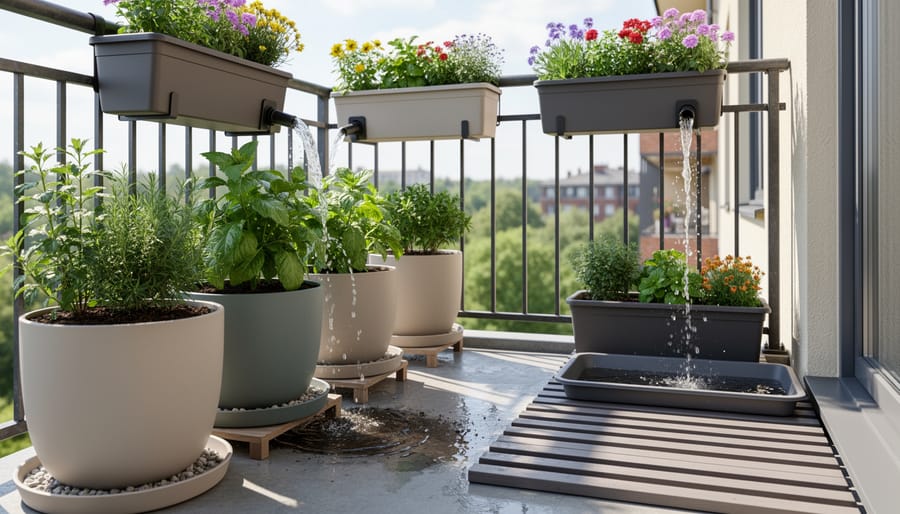
Gardener’s hands setting up a container with drainage and a drip tray on a balcony surface
This image highlights the practical setup details, proper containers and drainage, to help protect small-space gardens from water damage.

Maximizing Vertical Space

Vertical solutions multiply your growing area without claiming precious floor space. Wall planters work beautifully for herbs and shallow-rooted greens, mount them securely with heavy-duty anchors rated for outdoor use, and in Austin, position them on east or north walls to escape the brutal afternoon sun. Trellises turn climbing plants like beans, cucumbers, and cherry tomatoes into productive vertical crops; anchor the base with stakes driven deep into containers or soil, and use zip ties rather than twine to secure vines in our gusty spring winds.

Hanging baskets add layers of interest and suit strawberries, trailing herbs, and compact peppers. Choose baskets with built-in water reservoirs to reduce daily watering in summer heat, and hang them from reinforced hooks, calculate the weight when soil is saturated, not dry. Tiered shelving or ladder-style plant stands let you stack multiple container gardening ideas in a compact footprint, ideal for balconies or patios. Place heat-sensitive plants on lower tiers where they catch some shade from upper containers.

Before installing any vertical structure, check your Austin gardening zone requirements and verify load limits if you’re on a balcony. During summer, mist vertical plantings more frequently, elevated containers dry out faster than ground-level ones. Secure everything with weatherproof hardware; lightweight structures can topple in thunderstorms or sudden gusts.

Know When Your Garden Is Thriving
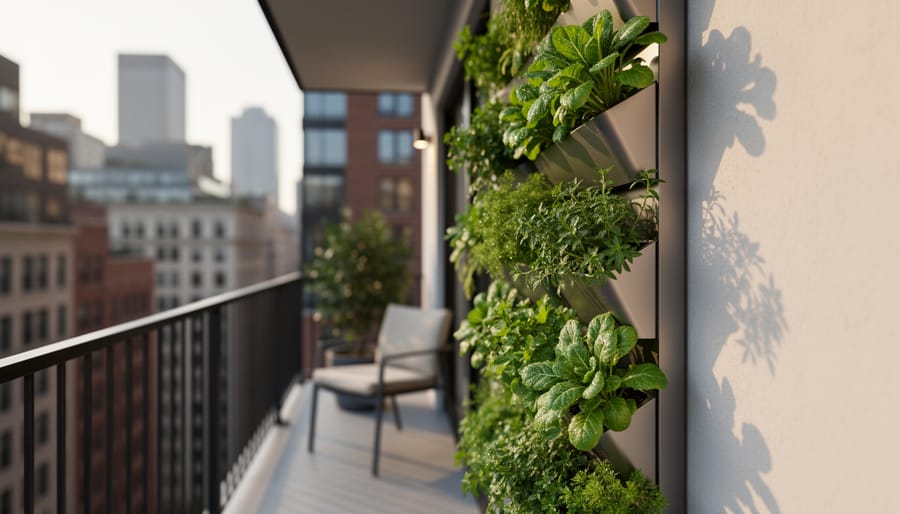
Vertical garden with wall planters and a hanging basket filled with basil and leafy greens in warm sunlight
Vertical planters use limited square footage effectively, letting herbs and greens grow vigorously upward in small outdoor areas.

Your garden is working when you see new growth within 7-10 days of planting, fresh leaves unfurling, stems reaching upward, and a vibrant green color that signals healthy photosynthesis. In Austin’s heat, plants may grow slower during July and August, but consistent new leaves and buds mean your setup is sound. Check that water drains freely from container bottoms within a few seconds of watering; if it pools or takes minutes to drain, you risk root rot and need to add drainage holes or switch to a lighter soil mix.

Struggling plants show yellowing lower leaves (often overwatering), crispy brown edges (underwatering or heat stress), or leggy, stretched stems reaching toward light (insufficient sun). If growth stalls for two weeks or more, reassess your light conditions, most edibles need at least six hours of direct sun, while shade-tolerant herbs and greens can manage with four. Move containers as needed; small space gardening gives you that flexibility.

Once your initial plantings thrive, plan your next steps. Rotate cool-season crops like lettuce and spinach in fall, then switch to heat-lovers like peppers and tomatoes in spring. Austin’s mild winters let you garden year-round if you keep plants alive through occasional freezes with frost cloth. Start a simple log noting what works in each spot, sun hours, which varieties flourished, when you watered, so you refine your approach each season.

Connect with local resources to grow your skills. Austin’s urban gardening meetups, weekend workshops at community gardens, and seasonal plant swaps offer hands-on learning and fellow small space gardeners who understand your challenges. Expanding your garden means adding one or two new containers at a time, testing vertical structures, or trying a new crop, build confidence through small, deliberate experiments rather than overwhelming yourself.

Common Questions About Small Space Gardening

How much sun does my small space garden actually need?

Most vegetables and herbs need at least six hours of direct sunlight daily, but many leafy greens and herbs will tolerate four to five hours. If your space gets less than that, focus on shade-tolerant plants like lettuce, spinach, and mint rather than tomatoes or peppers.

What if I only have a shady balcony?

Shade gardening works fine for leafy greens, herbs like parsley and cilantro, and ornamentals such as coleus or ferns. Austin’s intense summer heat can actually make partial shade a blessing, reducing water stress on plants that would struggle in full sun.

How often should I water containers in Austin’s heat?

During summer, most small containers need daily watering, sometimes twice a day for shallow pots in full sun. Stick your finger an inch into the soil; if it feels dry, water until it drains from the bottom. Larger containers hold moisture longer and may only need watering every other day.

Can I really grow vegetables in containers?

Absolutely. Tomatoes, peppers, lettuce, radishes, beans, and most herbs thrive in containers with proper depth and drainage. Choose compact or dwarf varieties bred for containers, and make sure pots are at least 12 inches deep for root vegetables and 5 gallons for larger plants like tomatoes.

What grows best in Austin’s brutal summer heat?

Heat-loving crops like okra, cherry tomatoes, peppers, basil, and Armenian cucumber excel in Austin summers. Native or adapted plants such as purslane and amaranth also handle the heat. For cooler months, switch to greens, broccoli, and root vegetables.

How do I deal with pests when everything’s right outside my door?

Small space gardening actually makes pest management easier, you notice problems quickly. Hand-pick larger pests like caterpillars, use neem oil spray for aphids, and encourage beneficial insects with herbs like dill and fennel. For more strategies, check out our organic gardening tips that work perfectly in tight quarters.

The beauty of container gardening is that you control the soil quality and can move plants around as needs change. If a spot isn’t working, shift the pot to a better location. Start with one or two plants to get a feel for your space’s quirks, then expand once you understand the light patterns and watering rhythm. Small space gardening rewards observation and quick adjustments more than rigid planning.

Starting a garden in a small space isn’t just possible, it’s one of the most rewarding ways to connect with nature right where you live. Whether you’ve got a sunny balcony, a shaded patio, or just a windowsill, you can grow fresh herbs, vibrant flowers, or even vegetables that thrive in Austin’s climate. Begin with one or two containers, experiment with what works in your specific light and weather conditions, and don’t hesitate to try vertical solutions as you gain confidence.

As compact and vertical gardening continues to evolve in 2026, the options for urban growers keep expanding. If you need supplies, want hands-on guidance, or are curious about classes tailored to Austin gardeners, Gardens Austin Designers offers personalized support to help you succeed. Your small space garden is waiting, start planting today.
Why Leisure Gardening Is Taking Over Urban Spaces (And How You Can Start)

Why Leisure Gardening Is Taking Over Urban Spaces (And How You Can Start)

Leisure gardening means growing plants purely for enjoyment, not for maximum yield or self-sufficiency, and in 2026 it’s becoming the antidote to hustle culture that burned out a generation of hobby gardeners. Instead of meticulously planned beds and strict harvesting schedules, you’re planting what looks beautiful, smells good, or simply makes you happy when you walk outside with your morning coffee. No pressure to preserve 40 pounds of tomatoes or justify every square foot of space.

The shift reflects a broader cultural change. People discovered during the gardening boom of the early 2020s that turning a hobby into an optimization project strips away the very stress relief they were seeking. Leisure gardening flips that script entirely. You grow three types of basil because you like the way they look together, not because you need to stock a year’s worth of pesto. You let the cosmos self-seed wherever they want. You dedicate half your balcony to fragrant jasmine that serves no purpose except making your evenings nicer.

For Austin gardeners working with limited outdoor space, this approach feels liberating. Vertical gardening setups become showcases for trailing pothos and colorful coleus rather than cramped vegetable factories. Container gardens hold whatever caught your eye at the nursery last weekend. The goal is simple: if tending your plants feels like another chore on your to-do list, you’re doing it wrong. Leisure gardening invites you to grow things that spark joy, water when you remember, and skip the guilt when life gets busy.

What Makes Leisure Gardening Different

Leisure gardening flips the script on what it means to tend plants. Instead of obsessing over harvest yields, pest control schedules, or picture-perfect flower beds, it treats your garden as a place to unwind and enjoy the process. Think of it as the difference between running a marathon and taking a walk in the park, both involve movement, but only one requires a stopwatch and a training plan.

Traditional gardening often comes with pressure. There are planting calendars to follow, specific fertilizer ratios to calculate, and the nagging feeling that you’re failing if your tomatoes aren’t Instagram-worthy. Production gardening cranks this intensity even higher, focusing on maximizing yield and efficiency. Leisure gardening, by contrast, asks a simpler question: Does this bring you joy?

Note: Leisure gardening prioritizes process over production, enjoyment over efficiency, it’s about how gardening makes you feel, not what you harvest.

The mental health benefits are real. Research shows that community gardening reduces stress and improves wellbeing, and leisure gardening extends these benefits by removing the performance anxiety. You’re not competing with anyone or racing against deadlines. If a plant thrives, great. If it doesn’t, you learned something and moved on without guilt.

This approach also unlocks creative fulfillment in ways goal-driven gardening can’t. You can experiment with unusual plant combinations just because you like how they look together, rearrange containers on a whim, or spend an entire afternoon simply observing how light filters through leaves. The garden becomes a sanctuary rather than a project list, and that shift changes everything about how you engage with it.

Why Leisure Gardening Is Gaining Momentum in 2026

The leisure gardening movement is gathering serious momentum in 2026, and it’s not hard to understand why. After years of grind culture and screens demanding constant attention, people are craving activities that feel restorative rather than exhausting. Gardening has always offered that escape, but the leisure approach strips away the pressure to produce perfect yields or maintain Instagram-worthy landscapes. It’s gardening reimagined as pure enjoyment, a low-stakes hobby that fits into chaotic urban lives without adding to the to-do list.

The lifestyle shifts we’ve seen since the pandemic continue to reshape how people spend their time. Remote and hybrid work arrangements persist, giving urban dwellers more flexibility to step outside during daylight hours. That midday break becomes a chance to water a few plants or simply sit with a coffee near some greenery, rather than scrolling through lunch. There’s also a noticeable pushback against digital overload. Leisure gardening offers something tangible and analog, a way to disconnect that doesn’t require a meditation app or another subscription.

Urban gardening solutions have become remarkably accessible, making it easier than ever to start small. Vertical gardens, self-watering containers, and beginner-friendly plant varieties remove traditional barriers like lack of space or expertise. You don’t need a yard or advanced horticultural knowledge anymore. A balcony and curiosity are enough.

The trend is showing up in unexpected places. Events like the Southern Alberta Home, Garden & Leisure Show, running March 12-14, 2026 at the Lethbridge Trade and Convention Centre, and the Northumberland Home, Garden & Leisure Show returning to the Cobourg Community Centre May 30-31, signal that leisure gardening has moved beyond niche circles into mainstream interest. These shows reflect what people want right now: approachable, enjoyable outdoor pursuits that don’t demand perfection, just presence.

Person watering container plants on an apartment balcony in soft daylight
A quiet moment watering balcony plants captures the low-pressure, feel-good side of leisure gardening.

Leisure Gardening for Austin’s Urban Spaces

Vertical Gardens: Your Low-Effort, High-Joy Solution

Vertical gardens flip the script on traditional gardening by growing up instead of out, making them the perfect match for leisure gardening’s low-stress philosophy. If you’re working with a small Austin balcony or patio, you can create a lush, productive garden without claiming every square foot of floor space. The real beauty is how little effort they demand once you’ve got them set up, plants arranged vertically tend to stay cleaner, drain better, and suffer fewer pest problems than ground-level beds.

For Austin’s climate, vertical setups offer a practical advantage: you can move them into shade during brutal afternoon sun or bring delicate herbs closer to your door when temperatures spike. Wall-mounted planters, tower systems, and hanging pockets all work beautifully, and many pair naturally with container gardening basics you might already know. You water from the top, gravity does the work, and you’re done in minutes.

The visual payoff is immediate and satisfying, there’s something genuinely joyful about stepping outside to a wall of greenery that you didn’t have to weed, till, or wrestle into shape. Herbs like basil and oregano thrive in vertical pockets, cherry tomatoes cascade beautifully, and succulents add texture without any fuss. You get the relaxation and creative fulfillment of gardening without the back-breaking labor or weekend-consuming maintenance schedules that can turn a hobby into a chore.

Vertical garden wall with stacked planters filled with herbs on an urban patio
A lush vertical planter wall turns limited space into an easy, visually rewarding gardening setup.

Getting Started: Your First Leisure Garden Project

Plants That Practically Take Care of Themselves

The easiest way to embrace leisure gardening is choosing plants that thrive with minimal fussing. In Austin’s climate, basil and mint make a perfect beginner herb garden they love heat, forgive occasional watering lapses, and reward you with fresh flavors for your kitchen. Mint grows so enthusiastically it practically tends itself, though you’ll want to contain it in a pot to prevent takeover.

Succulents are the ultimate low-pressure choice for leisure gardeners. Varieties like sedum and echeveria tolerate Austin’s scorching summers and need watering only when the soil dries completely. They’re nearly impossible to kill with neglect.

For color without commitment, zinnias are your friend. Scatter seeds in spring, water occasionally, and they’ll bloom reliably through fall with zero deadheading required. Cherry tomatoes also fit the leisure philosophy, choose patio varieties, give them a sunny spot and consistent water, and you’ll harvest handfuls of fruit all summer without intensive care.

These selections make it simple to keep plants alive while still feeling like a successful gardener, which is exactly the point.

Making It Truly Leisurely: Tips to Keep It Fun

The secret to keeping gardening leisurely isn’t finding more time or better plants. It’s permission to break all the rules that made gardening feel like work in the first place.

Start by ditching the idea that your garden needs to look Instagram-perfect or produce bushels of tomatoes. Your only job is to enjoy the process. Water when you remember, prune when it feels right, and skip a week if life gets busy. Real leisure gardening means your garden fits around your life, not the other way around.

Tip: If it feels like a chore, you’re doing it wrong. Adjust your approach, not your effort level.

Make your garden space somewhere you actually want to be. Add a comfortable chair, keep a speaker nearby for music or podcasts, and treat your watering time as coffee-on-the-balcony time. Some of the best leisure gardeners spend more time sitting with their plants than fussing over them. That’s not lazy, that’s the whole point.

Learn to let go without guilt. Plants die. It happens to everyone, and it doesn’t mean you failed. A wilted basil plant just means you tried something, enjoyed it while it lasted, and now you know what works for your space and routine. Replace it or don’t. There’s zero obligation to maintain a perfect streak.

Keep a casual approach to maintenance by grouping plants with similar needs together and choosing a watering schedule that matches your lifestyle, not some rigid calendar. If you travel often, lean into succulents and drought-tolerant herbs. If you’re home most evenings, herbs that need frequent snipping give you something to do without pressure.

The moment gardening stops being fun is the moment to step back, simplify, or try something completely different. Your garden should recharge you, not drain you.

Terracotta pots of succulents and zinnias on a patio table next to a cup of coffee
Leisure gardening looks like a comfortable routine, plants are cared for, but the day stays easy and enjoyable.

Local Resources and Inspiration in Austin

Austin’s gardening community is quietly building a support network perfect for the leisure gardening mindset. You don’t need to commit to a full semester course or join a formal club, plenty of local options let you dip in at your own pace.

Private gardening classes around Austin offer personalized, low-pressure instruction that fits the leisure approach beautifully. You can book a one-on-one session to learn vertical garden setup or container basics without the intimidation of a group setting. Several local garden centers and independent instructors offer these consultations, letting you ask questions specific to your space and schedule.

If you’d rather skip the setup phase entirely, Austin’s potting services will deliver planted containers ready to enjoy. You choose your plants and aesthetic, they handle the dirty work, and you start with a finished garden that’s already thriving. It’s leisure gardening at its most accessible.

The growing momentum behind leisure gardening nationwide, reflected in events like the Southern Alberta Home, Garden & Leisure Show in March 2026 and the Northumberland show returning in May, signals that the industry is finally catching up to what beginners actually want: approachable entry points without the pressure. That shift is trickling into local offerings, making it easier than ever to explore gardening as a genuine leisure activity rather than a test of horticultural skill. Check in with your neighborhood nursery or search for Austin garden consultants to find your best starting point.

Leisure gardening isn’t about mastering perfect rows or hitting harvest quotas. It’s about stepping outside with your coffee, noticing a new leaf unfurling, and feeling genuinely good about it. That’s the whole point. You’re not failing if your basil gets leggy or your tomatoes stay green longer than expected, you’re learning what works in your space and enjoying the process along the way.

Start with one small project. A vertical planter on your balcony. Three pots of herbs by the kitchen window. Whatever feels manageable and sounds fun. The beauty of leisure gardening is that there’s no finish line, no competition, just you creating a little green space that makes your day better.

If you’re not sure where to begin, consider a vertical garden setup, it’s low-maintenance, fits Austin’s urban spaces perfectly, and gives you immediate visual satisfaction without the pressure. Or take a local class to ease in with guidance and meet others who garden for the same reasons you do. Your version of garden leisure is waiting, and it starts smaller and simpler than you think.

25 Container Gardening Ideas to Transform Your Austin Space in 2026

25 Container Gardening Ideas to Transform Your Austin Space in 2026

Container gardening transforms any outdoor space into a productive growing area, whether you’re working with a balcony, patio, fire escape, or sunny windowsill. The beauty of containers is their flexibility: you control the soil quality, move plants to follow the sun or escape Austin’s punishing afternoon heat, and experiment with combinations impossible in traditional beds. From edible gardens that produce fresh herbs and vegetables year-round to vertical installations that maximize square footage, container gardening solves the urban gardener’s biggest challenges: limited space, poor native soil, and the need for portability.

Austin’s climate makes container gardening especially rewarding. Our long growing season means you can harvest tomatoes well into November and start cool-season greens by September. Containers also let you sidestep our notorious caliche and clay soils, giving heat-loving peppers and citrus the drainage they demand. The catch? Containers dry out faster than ground beds, particularly during triple-digit summers, so choosing the right size pot and understanding watering needs becomes crucial.

This guide breaks down 25 container ideas across edibles, vertical solutions, ornamentals, and specialty projects. Each category addresses different goals, from feeding your family to creating privacy screens or adding seasonal color. You’ll find practical details on container size, plant selection for Central Texas conditions, and maintenance tips that keep your garden thriving without constant intervention.

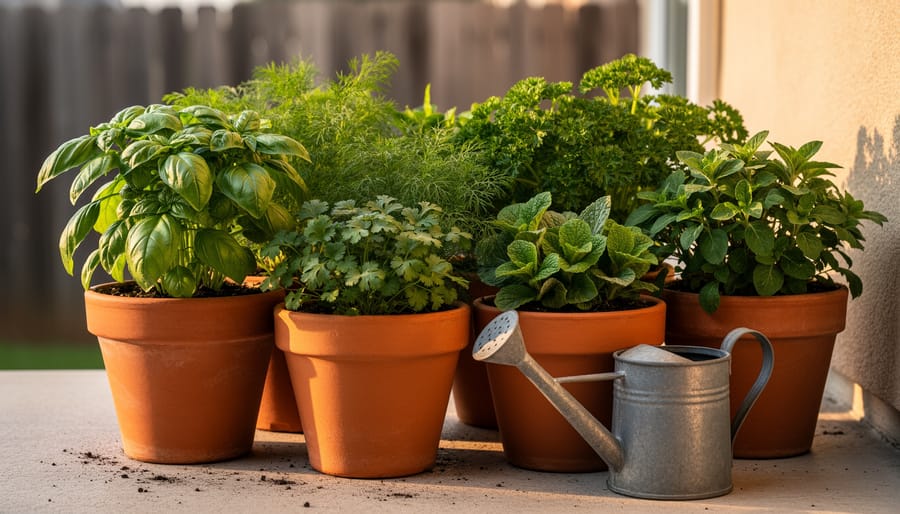
Close-up view of basil, parsley, and cilantro growing in multiple containers on a patio with a watering can nearby.
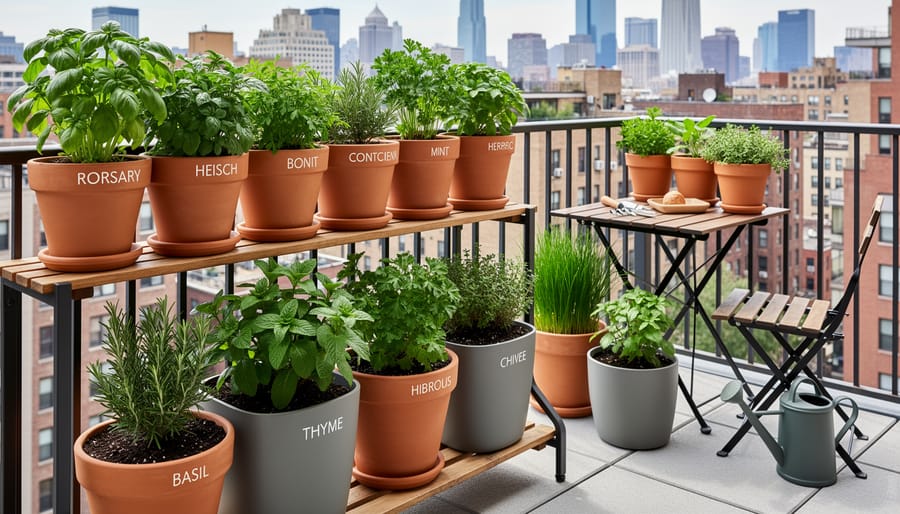
A well-planned container herb setup shows how easily you can grow usable plants in limited urban space.

What Makes a Great Container Garden

Before diving into specific ideas, let’s talk about what separates a thriving container garden from a disappointing one. The 25 ideas in this guide weren’t chosen at random, each meets specific criteria that matter for Austin’s unique growing conditions and urban spaces.

Container choice matters more than you might think. Your pot needs drainage holes (non-negotiable), but it also needs enough volume for roots to develop properly. A 5-gallon container is the minimum for most vegetables and larger ornamentals, while herbs and succulents can work in smaller spaces. Material affects performance too, terracotta breathes beautifully but dries out fast in our heat, while plastic and glazed ceramic retain moisture longer.

Austin’s climate shaped every recommendation here. We deal with intense summer sun, sporadic rainfall, and a growing season that stretches nearly year-round. The best container ideas either embrace heat-loving plants that thrive in those conditions or provide strategies for protecting more delicate species. Sun exposure drives plant selection: a south-facing balcony in July is a completely different environment than a covered porch.

Here’s what made each idea worth including:

  • Proper drainage system or self-watering capability for Austin’s erratic rainfall patterns
  • Heat tolerance appropriate for USDA Zone 8b/9a conditions
  • Container size matching the plant’s mature root system
  • Space efficiency for apartments, patios, and small urban yards
  • Realistic maintenance requirements for busy schedules

Plant compatibility matters when you’re combining multiple species in one container. The ideas group plants with similar water needs, sun requirements, and growth rates. A sprawling tomato plant and a compact basil can share space, but aggressive spreaders will crowd out slower growers.

Finally, every idea balances ambition with practicality. You’ll find options for beginners starting with three herbs and experienced gardeners ready to tackle vertical systems or specialty crops.

25 Container Gardening Ideas for Your Space

Edible Container Gardens

1. Classic Herb Trio

Start your edible container journey with the easiest win: a single pot holding basil, parsley, and cilantro. These workhorses thrive together in a 12-inch container with excellent drainage. Place them where they’ll get morning sun and afternoon shade, crucial during Austin’s brutal June through August stretch. Basil bolts fast in full Texas sun, so partial shade extends your harvest. If you’re new to growing your own seasonings, check out herb gardening basics for detailed cultivation techniques. Water daily during summer heat, and pinch back stems regularly to keep plants bushy rather than leggy.

2. Salad Bowl Garden

A wide, shallow container (at least 18 inches across, 8 inches deep) becomes your personal salad bar. Mix quick-growing lettuce varieties, Buttercrunch, Red Sails, and Oakleaf, with arugula and spinach for continuous harvests. In Austin, plant this one in March or late September to avoid the heat that turns greens bitter and sends them bolting. Harvest outer leaves as you need them, and the plants keep producing for weeks. Add a layer of mulch on top of the soil to keep roots cooler and moisture more consistent.

3. Tomato Tower

A single determinate tomato variety like Patio or Bush Early Girl fits beautifully in a 5-gallon container, but you’ll need sturdy support. Choose a pot at least 14 inches deep with a cage or stake already in place before planting. Austin tomatoes produce best when planted in March for a spring harvest, our summer heat above 95 degrees stops fruit set cold. Water deeply every other day once fruiting starts, and feed with a balanced fertilizer every two weeks. One plant provides enough tomatoes for fresh eating all season.

4. Pepper Collection

Group three different pepper plants, a sweet bell, a jalapeño, and a shishito, in individual 5-gallon containers positioned together. Peppers actually handle Austin heat better than tomatoes, producing right through summer if you keep them consistently watered. They need full sun and excellent drainage. Start with transplants in April, and you’ll harvest from July through the first frost. The varied heat levels give you options for every meal, from breakfast scrambles to evening stir-fries.

5. Strawberry Planter

Those terracotta pots with side pockets work perfectly for everbearing strawberry varieties. Plant one crown per pocket, ensuring the crown sits just at soil level, bury it and the plant rots, leave it exposed and it dries out. In Austin, strawberries thrive as a winter crop; plant them in October for spring harvests. They need six hours of sun and consistent moisture but not soggy soil. Pinch off runners to direct energy into fruit production rather than new plants.

6. Dwarf Citrus Trees

A Meyer lemon or improved Meyer lime lives happily for years in a 15-gallon container on your patio. These compact trees handle containers better than full-size varieties while still producing real fruit. They need full sun, monthly feeding during the growing season, and protection when temperatures drop below 28 degrees (rare in Austin but it happens). Wheel them near a south-facing wall on those occasional freezing nights, or throw a blanket over the canopy.

7. Culinary Asian Greens

Bok choy, mizuna, and tatsoi grow fast in a rectangular planter box, ready to harvest in 30 days. These cool-season greens tolerate light frost, making them perfect for Austin’s mild winters. Plant them in October or February in a container at least 8 inches deep. They prefer afternoon shade even in cool weather. Cut the entire plant at soil level when it’s 6 inches tall for baby greens, or let them mature for full heads.

8. Container Root Vegetables

Carrots, radishes, and beets all work in deep containers, go at least 12 inches for carrots, 6 inches for radishes. Choose short carrot varieties like Thumbelina or Paris Market rather than long types that need more depth. Austin’s cool seasons (October through March) suit root crops perfectly. Thin seedlings aggressively to give each plant room to develop, and keep soil consistently moist for the sweetest flavor and best texture.

Vertical and Space-Saving Solutions

When you’re working with a compact Austin patio or balcony, thinking vertically transforms your growing potential. These six ideas stack, climb, and hang to multiply your planting space without claiming more square footage.

Idea 9: Tiered Planter Systems
Three or four-tier stackable planters create mini growing zones at different heights. Put sun-loving basil and cherry tomatoes on top, heat-tolerant peppers in the middle, and shade-appreciating parsley at the bottom. The graduated design makes watering easier and gives each plant its spotlight. Look for systems with built-in saucers to catch runoff on your balcony floor.

Idea 10: Wall-Mounted Pocket Planters
Fabric or rigid pocket systems turn any vertical surface into a garden wall. Mount them on a sunny fence section and fill with trailing succulents, compact herbs like thyme and oregano, or small ornamental grasses. Each pocket needs drainage holes punched if they don’t come pre-made, and fabric versions dry out faster in Austin’s heat, so check them daily during summer.

Idea 11: Trellis Containers for Vining Plants
Pair a large container with a sturdy trellis or obelisk for climbing beans, cucumbers, or morning glories. The vertical growth habit gives you pounds of produce from a single pot. Choose containers at least 18 inches deep and position them where vines won’t block afternoon sun from other plants. Sugar snap peas thrive here in Austin’s cooler months.

Idea 12: Stacked Herb Towers
Purpose-built herb towers with multiple planting pockets spiraling up a central column pack serious flavor into minimal footprint. Plant your most-used herbs (cilantro, basil, mint) in easy-reach pockets and experiment with less common varieties like lemon balm or Cuban oregano higher up. Rotate the tower weekly so all sides get equal sun exposure.

Idea 13: Hanging Basket Combinations
Suspend mixed plantings at varying heights to create floating garden layers. Combine upright plants in the center with trailing varieties that cascade over the edges, try upright zinnias with trailing verbena, or cherry tomatoes with trailing rosemary. Use swivel hooks so you can rotate baskets for even growth, and remember that hanging containers dry out twice as fast as ground-level ones.

Idea 14: Ladder Garden Display
An old wooden ladder or purpose-built plant stand creates instant vertical real estate for multiple containers. Arrange pots on each rung by size and sun needs, with largest containers on lower rungs for stability. This setup works beautifully for displaying seasonal color rotations or organizing an entire kitchen herb collection where everything stays visible and accessible.

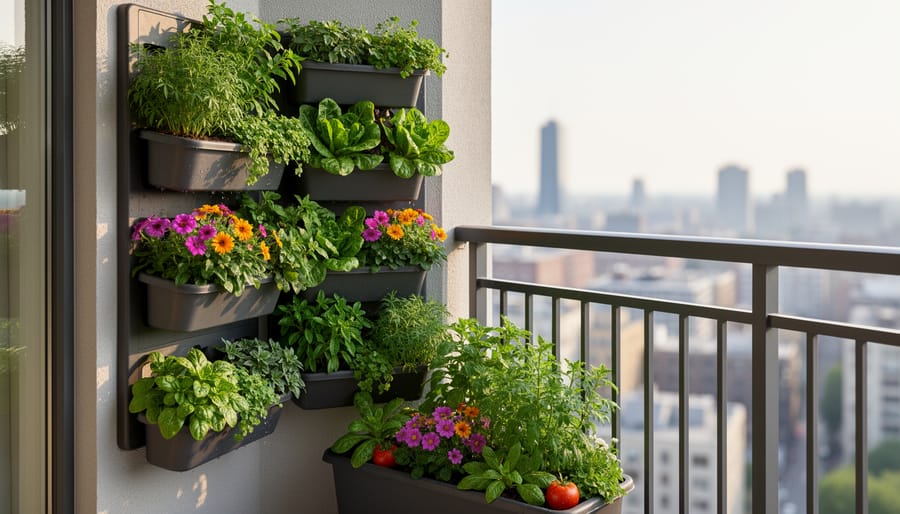
Vertical stacked and wall-mounted planters with cascading greens and flowers in warm golden-hour light.
Vertical container gardening makes the most of limited space by turning walls and corners into productive plant zones.

Ornamental and Pollinator-Friendly Options

15. Native Texas Wildflower Mix

Transform a large shallow container into a miniature meadow with native bluebonnets, Indian paintbrush, and black-eyed Susans. Use a container at least 18 inches wide and 12 inches deep with excellent drainage. Plant seeds in fall for spring blooms, or buy transplants in late winter. These hardy natives thrive in Austin’s heat and require minimal water once established.

16. Butterfly Garden Container

Create a pollinator paradise with nectar-rich plants like purple coneflower, lantana, and zinnias paired with host plants such as milkweed for monarch caterpillars. Choose a container 16 inches or larger and position it in full sun. Plant in clusters rather than single specimens to attract more butterflies. Add a flat stone as a basking spot.

17. Succulent Arrangement

Combine drought-tolerant beauties like echeveria, sedum, and agave in a wide, shallow container with multiple drainage holes. Succulents handle Austin’s intense summer sun and need watering only every two to three weeks. Layer gravel at the bottom and use cactus-specific potting mix. Perfect for hot patios where other plants struggle.

18. Seasonal Color Rotation

Keep your entrance or patio vibrant year-round by swapping out annuals each season. Plant pansies and snapdragons for winter color, petunias and geraniums for spring, heat-tolerant vinca and pentas for summer, and chrysanthemums for fall. Use the same decorative containers but refresh the plantings quarterly. This approach gives you continuous blooms without committing to perennials.

19. Fragrant Evening Garden

Design a container for your outdoor living area with night-blooming jasmine, moonflower vines, and white nicotiana that release intense fragrance after sunset. Add a small trellis for the vining plants and position the container near seating areas. These plants also attract night-pollinating moths, adding movement and life to evening gatherings.

20. Hummingbird Haven

Fill a tall container with red salvia, coral honeysuckle on a small trellis, and cigar plant to create an irresistible feeding station. Hummingbirds favor tubular flowers in red, orange, and pink. Position the container where you can watch from inside, ideally near a window. Plant densely and deadhead regularly to keep blooms coming through our long growing season.

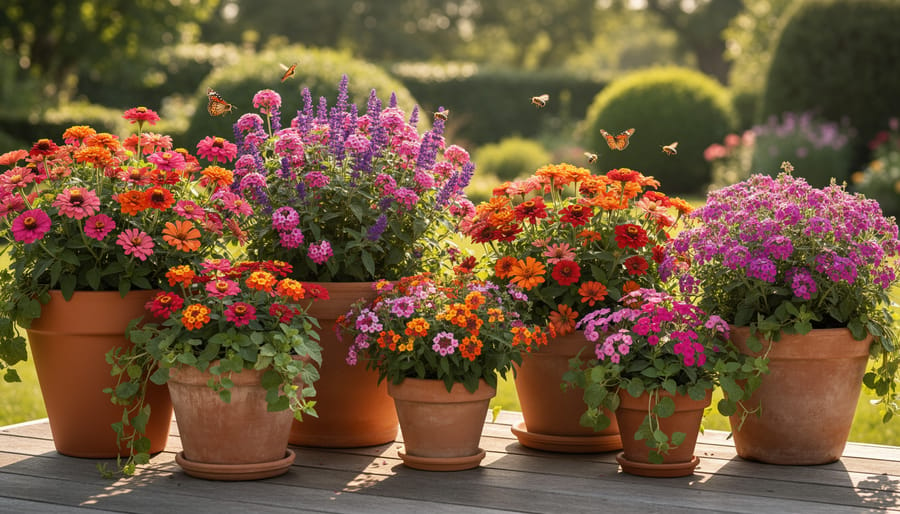
Butterfly resting on bright wildflowers in a container garden with soft morning light.
Flowering containers can invite butterflies and other pollinators while adding color to your outdoor space.

Creative and Specialty Container Ideas

21. Self-Watering Container System

Perfect for Austin’s busy professionals or frequent travelers. Self-watering planters feature a built-in reservoir that delivers moisture to roots through capillary action, keeping plants hydrated for days without attention. Look for containers with water-level indicators and fill spouts. Plant drought-tolerant herbs like rosemary and oregano, or leafy greens that appreciate consistent moisture. These systems work especially well during Austin’s intense summer heat when twice-daily watering becomes necessary for standard containers. Start with a single self-watering planter to test the system before investing in multiple units.

22. Shade-Loving Container for Covered Porches

Transform that shaded porch or north-facing balcony into a lush retreat. Combine coleus for vibrant foliage, impatiens for pops of color, and trailing vinca vine to soften container edges. Add caladiums with their striking heart-shaped leaves for drama. Use a large container at least 16 inches wide to accommodate multiple plants and retain moisture longer in Austin’s dry air. This combination thrives in dappled light and actually prefers protection from afternoon sun. Water regularly but check soil first since shaded containers dry out more slowly than those in full sun.

23. Drought-Tolerant Texas Tough Planter

Embrace native resilience with a container designed to handle whatever Texas weather throws at it. Mix Texas sage, blackfoot daisy, and trailing lantana in a shallow, wide bowl. These Austin natives tolerate heat, require minimal water once established, and bloom prolifically. Use a terracotta or unglazed ceramic container that allows roots to breathe. Add a layer of gravel mulch on top to reduce evaporation and give a clean desert aesthetic. Water deeply but infrequently, letting soil dry completely between waterings.

24. Kid-Friendly Sensory Garden

Get children excited about gardening with plants they can touch, smell, and taste. Combine soft lamb’s ear leaves, fragrant chocolate mint, cherry tomatoes at kid height, and colorful marigolds. Choose a sturdy container placed at child-accessible height. Let kids decorate the pot with outdoor paint before planting. This hands-on garden teaches responsibility while engaging multiple senses. Avoid plants with thorns or toxic properties, and supervise taste-testing to ensure only edible parts get sampled.

25. Windowsill Micro-Garden

Maximize limited space with a compact indoor or outdoor windowsill setup. Use narrow rectangular containers or a series of small pots for microgreens, sprouting herbs, or dwarf varieties. East or west-facing windows work best in Austin to avoid scorching afternoon sun. Grow basil, chives, or cilantro for cooking, or try fast-growing arugula microgreens ready to harvest in two weeks. Rotate containers regularly for even growth and keep soil consistently moist but not waterlogged in the confined space.

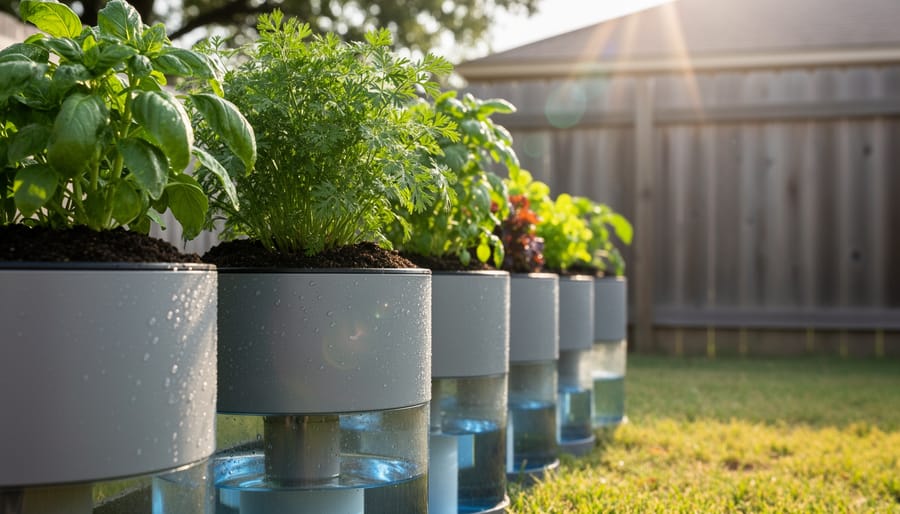
Pepper plant growing in a decorative self-watering container with dark, moist soil visible at the surface.
Self-watering containers help maintain consistent moisture, especially valuable during Austin’s hot stretches.

Getting Started with Your Container Garden

Ready to turn those container gardening ideas into reality? Whether you’re a container gardening beginners or expanding your collection, success starts with the right foundation and consistent care tailored to Austin’s unique climate.

Start by choosing containers with drainage holes, non-negotiable in our climate. Clay pots breathe well but dry out faster; plastic or resin retains moisture longer, which helps during July and August. Go larger than you think you need: a 14-inch pot beats a 10-inch for most vegetables and ornamentals, giving roots room and buffering against rapid temperature swings.

For soil, skip garden dirt entirely. Use a quality potting mix designed for containers, it drains properly while holding enough moisture. Texas heat is brutal, so consider mixing in compost or coconut coir to improve water retention. Remember that nutrients leach with watering especially in our summer downpours, so plan to fertilize every two to three weeks during the growing season with a balanced liquid fertilizer diluted to half strength.

Tip: During Austin’s peak summer months (June through September), check container moisture daily, sometimes twice a day for small pots in full sun.

Water deeply until it drains from the bottom, then let the top inch dry before watering again. Morning watering works best, giving plants a reservoir before afternoon heat hits. Mulch the soil surface with bark chips or stones to slow evaporation.

Understanding your Austin gardening zone (8b or 9a, depending on your neighborhood) helps you time plantings and protect containers during our occasional winter freezes. When frost threatens, move pots to a covered porch or wrap them overnight.

Struggling? Yellow leaves often mean overwatering or poor drainage. Wilting despite moist soil suggests root problems, time to repot. Leggy growth means insufficient light; relocate or choose shade-tolerant plants. The key is observation: check your containers regularly, adjust watering as weather shifts, and don’t be afraid to keep your plants alive through trial and error. Every gardener learns by doing.

Common Container Gardening Questions

When is the best time to start container gardening in Austin?

You can start most container gardens in March or early April after the last frost risk passes. For heat-sensitive greens and cool-season crops, September through October offers ideal planting conditions, and you can grow vegetables indoors during the coldest months.

Which container materials work best in Austin’s heat?

Ceramic and thick resin containers insulate roots better than thin plastic or metal, which can overheat in full sun. Terracotta breathes well but dries out quickly, so plan for more frequent watering during summer months.

How do I keep container plants alive during 100-degree days?

Move containers to areas with afternoon shade, group them together to create humidity, and water in early morning or evening. Add a two-inch mulch layer on top of the soil to reduce evaporation and keep roots cooler.

When should I protect containers from frost?

Austin typically sees frost between late November and mid-February. Move tender plants indoors or against a south-facing wall, and cover with frost cloth when temperatures drop below 35 degrees.

What’s the easiest way to manage pests in container gardens?

Check plants weekly for aphids, spider mites, and whiteflies. Spray affected plants with a strong water stream or use insecticidal soap early in the morning before temperatures climb.

Where can I find container gardening supplies in Austin?

Local nurseries like The Great Outdoors, Shoal Creek Nursery, and Barton Springs Nursery carry quality containers, potting mix, and plants suited to our climate. Natural Gardener on Old Bee Caves Road specializes in organic options and offers expert advice for Central Texas growing conditions.

These questions cover the practical concerns Austin gardeners face when starting container gardens. The answers provide specific, actionable guidance without overwhelming detail, helping you troubleshoot common issues before they become problems. Local resources make it easier to source the right materials and get advice tailored to our unique climate challenges.

Container gardening opens up a world of possibilities for every Austin resident, whether you’re working with a tiny balcony or a spacious patio. These 25 ideas prove that limited space doesn’t mean limited potential, you can grow fresh herbs, colorful flowers, productive vegetables, and even small fruit trees in containers. Start with one or two ideas that excite you most, then expand as you gain confidence. Don’t be afraid to mix and match concepts or adjust them to your specific conditions. Your local resources, including nurseries and gardening communities throughout Austin, offer supplies, advice, and inspiration when you need it. The beauty of container gardening lies not just in what you grow, but in the daily connection to plants, the satisfaction of harvesting your own food, and the creative expression of transforming any space into a thriving garden.