Header Image - Gardens Austin Designers

Monthly Archives

4 Articles

What Is Gardening Philosophy (and How Does It Shape Your Approach)?

What Is Gardening Philosophy (and How Does It Shape Your Approach)?

A gardening philosophy is the set of principles and values that guide your decisions about what, how, and why you grow plants. It’s the reason you choose native wildflowers over exotic imports, embrace composting, or commit to organic pest control. Rather than following someone else’s playbook, your philosophy reflects what matters most to you, whether that’s maximizing harvests in tight spaces, supporting local pollinators, or simply creating a calming retreat.

Most gardeners develop their philosophy without realizing it. The first time you skip a chemical fertilizer because it doesn’t feel right, or arrange containers to catch rainwater instead of letting it run off, you’re acting on your values. In Austin’s unique climate, where water conservation and extreme heat shape every growing decision, these guiding principles become especially practical. Your philosophy helps you prioritize when resources, space, or time run short.

This article breaks down how different gardening philosophies work in real urban settings, the most common approaches you’ll encounter (from permaculture to container-focused methods), and how to identify the principles that will serve your specific situation. You’ll learn to recognize which beliefs drive your choices and how to refine them as your garden evolves. The goal isn’t to pick the “right” philosophy but to build one that makes your limited space, time, and energy work harder for you. When you’re clear about your approach, every decision becomes faster and more confident.

What Gardening Philosophy Really Means
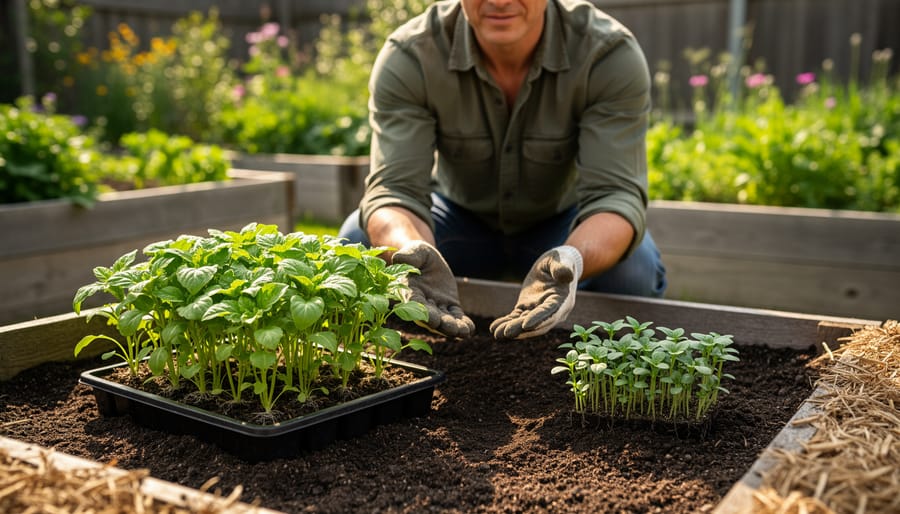
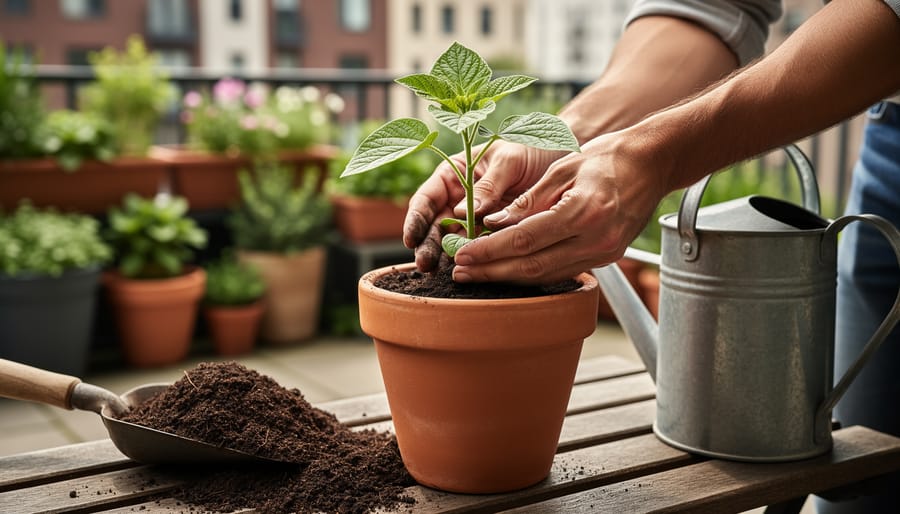
Gardener’s hands holding a seedling in a small terracotta planter beside watering and compost supplies.
The image captures the moment a gardener makes a thoughtful choice, starting with healthy soil and seedlings that reflect a mindful approach.

Gardening philosophy is the set of beliefs and priorities that shapes why you garden the way you do. It’s your personal framework for making countless small decisions, from whether to use mulch to which tomato variety fits your space. Think of it as the difference between following a recipe and understanding why certain ingredients work together.

Most gardeners develop their philosophy without ever naming it. You might naturally gravitate toward native plants because you care about local wildlife, or choose containers that require minimal watering because your schedule is packed. Those aren’t random choices, they reflect underlying values about what matters most in your garden.

Gardening Philosophy
The core beliefs and values that guide your overall approach to growing plants, from environmental priorities to aesthetic preferences.
Approach
Your general method or style of gardening that flows from your philosophy, such as low-maintenance, organic, or design-focused.
Methodology
The specific techniques and systems you use to implement your approach, like drip irrigation or companion planting.
Principles
The fundamental rules or standards you follow consistently, such as always choosing drought-tolerant plants or avoiding synthetic chemicals.

Here’s what makes philosophy different from technique: techniques are the how-to steps, while philosophy is the thinking that determines which techniques you’ll even consider. Someone with a sustainable philosophy might learn composting techniques and skip synthetic fertilizers entirely. Another gardener focused on aesthetics might master color theory and seasonal succession planting.

Your philosophy doesn’t lock you into rigid rules. It evolves as you learn what works in your space and what brings you satisfaction. A beginner might start with a simple “keep everything alive” philosophy and gradually develop more nuanced priorities as they gain confidence. The key is recognizing that every watering decision, every plant purchase, and every weekend hour you spend outside reflects some underlying intention, and bringing that intention into focus makes gardening more purposeful and enjoyable.

How a Gardening Philosophy Works in Practice
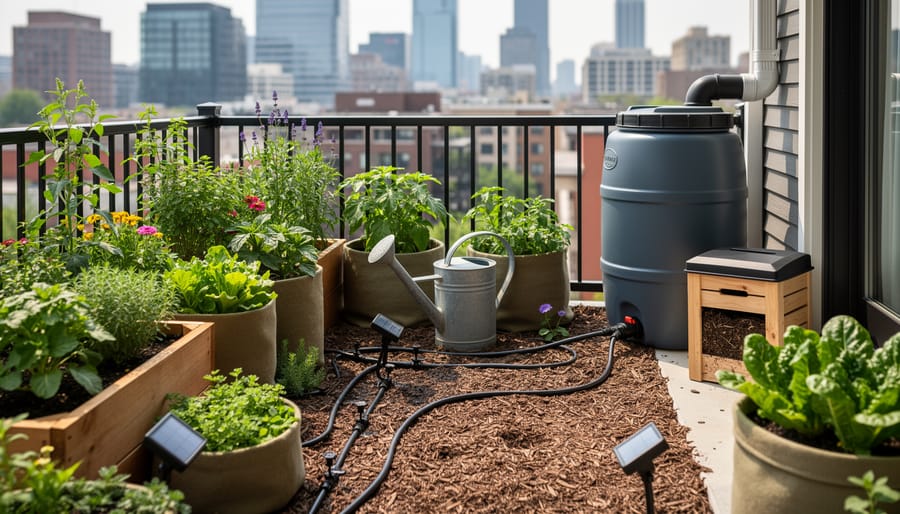
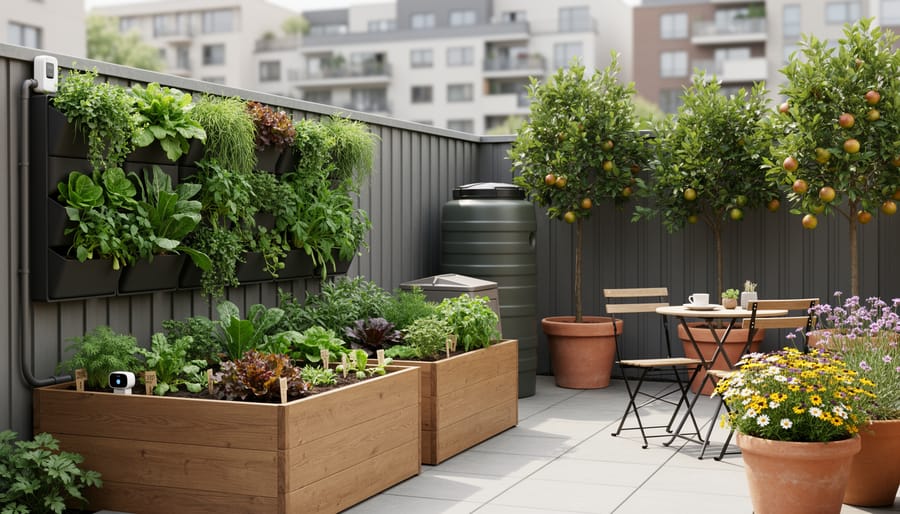
Urban patio container garden with drip irrigation and a rainwater collection barrel in the background.
A compact urban garden shows how sustainability principles can translate into everyday watering and infrastructure choices.

The Decision Filter

Your philosophy works like a filter that sorts every gardening decision through two questions: does this fit who I am as a gardener, and will it actually work in my space? When you spot a beautiful but water-hungry tropical plant at the nursery, a low-maintenance philosophy reminds you it won’t survive Austin summers without constant attention. A sustainability-focused gardener automatically reaches for drip irrigation over 90% efficient watering methods instead of sprinklers that waste half the water.

The filter becomes especially useful in urban gardening where every choice has consequences. That trendy vertical tower looks amazing, but does it match your realistic watering schedule? The heirloom tomatoes sound wonderful, but do they fit your productive philosophy when your balcony only gets four hours of sun? A clear philosophy lets you decline what doesn’t serve you without guilt or second-guessing. You’re not missing out, you’re staying aligned with what matters in your garden and your life.

Austin-Specific Considerations

Central Texas gardening means working with intense summer heat, limited rainfall, and mandatory water rules that directly impact your philosophy. The Austin gardening zone (8b/9a) lets you grow year-round, but June through September brings triple-digit temperatures where heat stress affects plants even with adequate water. Check the Austin water restriction schedule before planning any garden, most addresses follow twice-weekly limits that shape what you can realistically maintain.

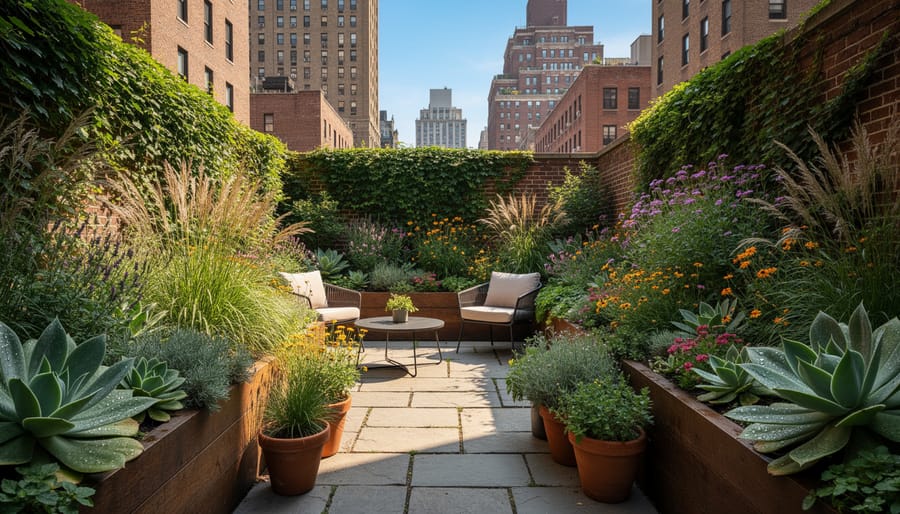
These constraints push many urban gardeners toward xeriscaping principles: choosing native or adapted plants that thrive without constant irrigation. Think salvias, zinnias, lantana, and Texas sage rather than water-hungry annuals. Your philosophy might prioritize drought tolerance over appearance, or accept that some containers need daily summer watering while in-ground beds get deep drinks twice weekly. The limestone soil and alkaline pH also influence choices, some philosophies embrace what grows easily here instead of fighting the conditions. Heat and water limits aren’t obstacles; they’re parameters that help clarify what matters most in your garden approach.

Common Gardening Philosophy Types

Sustainable and Organic Approaches

Sustainable and organic gardeners see their plots as small ecosystems rather than controlled experiments. This philosophy centers on soil health, you’ll compost kitchen scraps, avoid synthetic fertilizers, and choose pest management strategies that don’t disrupt beneficial insects. Chemical-free growing means accepting some leaf damage as normal rather than reaching for sprays at the first sign of aphids.

In Austin’s heat, this approach pairs naturally with native plants that thrive without constant intervention. You’re selecting varieties adapted to local conditions instead of fighting your climate. Water conservation becomes second nature, mulching heavily, capturing rainwater, and grouping plants by their moisture needs. The goal isn’t perfection but creating a resilient garden that supports pollinators, builds healthy soil over time, and minimizes environmental impact.

Low-Maintenance and Practical Philosophies

This approach values simplicity over spectacle. You choose plants that thrive with minimal intervention, native perennials, succulents, and drought-tolerant varieties that forgive a missed watering. The goal is a garden that looks good without demanding weekend marathons of maintenance.

In Austin, this means embracing heat-loving plants like lantana, salvia, and yucca that actually prefer neglect over fussing. You skip high-maintenance annuals that need constant deadheading and fertilizing. Your systems are simple: drip irrigation on a timer, mulch to reduce weeds, and perennials that come back year after year without replanting.

This philosophy asks one question before adding anything new: will this make my life easier or harder? If the answer is harder, you pass.

Aesthetic and Design-Focused Thinking

For design-minded gardeners, the plot itself becomes a canvas where color palettes, textural contrasts, and architectural forms matter as much as plant health. You’re thinking about how silver-gray artemisia plays against deep burgundy heuchera, or how a cascade of trailing jasmine softens hard balcony railings. Every element, from pot finishes to foliage shapes, serves the overall composition.

This philosophy shines in vertical and container gardens where space limitations demand intentional choices. Instead of cramming in whatever fits, you curate a cohesive look: maybe all terracotta pots with warm-toned blooms, or a minimalist palette of greens and whites climbing a trellis. Seasonal rotations become opportunities to refresh the display, swapping spent annuals for new textures that maintain your visual theme throughout Austin’s long growing season.

Productive and Edible-First Approaches

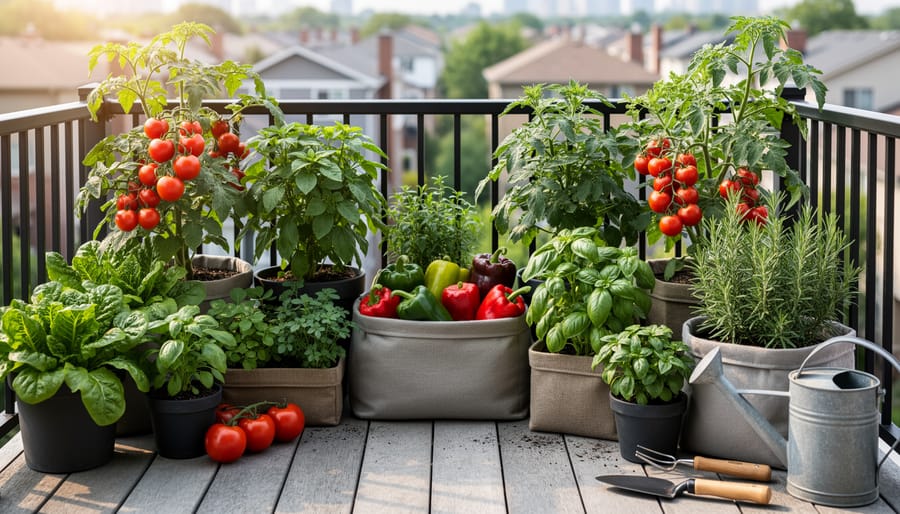
For gardeners who measure success in harvests rather than blooms, the edible-first philosophy prioritizes producing food above everything else. This approach treats every square inch as potential growing space, vertical trellises support pole beans and cucumbers, containers line balcony railings with cherry tomatoes and peppers, and even ornamental spots get replaced with productive herbs.

In Austin’s climate, this means focusing on heat-tolerant crops that deliver quick returns: jalapeños, basil, cherry tomatoes, and okra thrive through our long summers. Succession planting keeps harvests coming, while compact varieties bred for containers maximize yield without requiring yard space. The philosophy is straightforward: if it doesn’t feed you, it probably doesn’t earn its spot.

Experimental and Learning-Oriented

This philosophy treats every planting as a potential lesson rather than a guaranteed success. You might test unfamiliar herbs in one container, compare two watering schedules side-by-side, or experiment with companion planting combinations you’ve never tried. Failures become data points that inform your next attempt. It’s perfect for urban gardeners in Austin who want to discover what actually works in their specific microclimate without following prescribed formulas.

How to Apply Your Philosophy to Urban Gardening
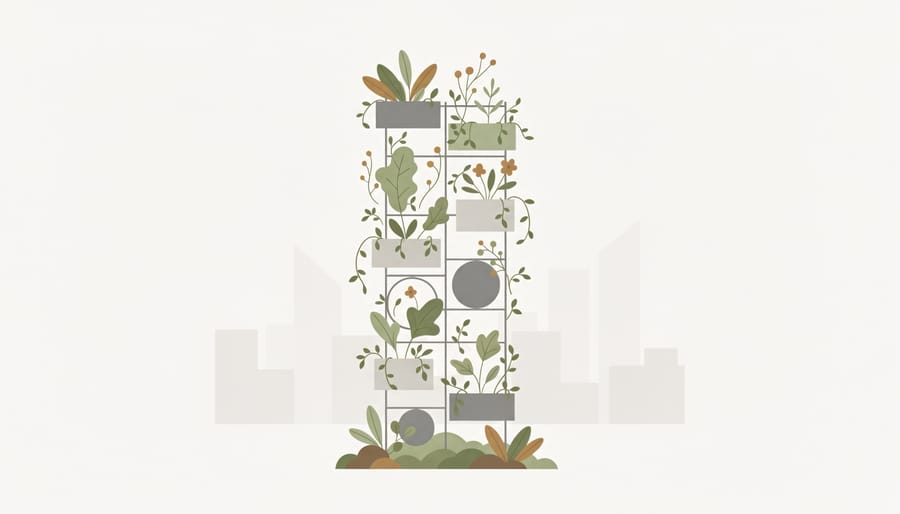
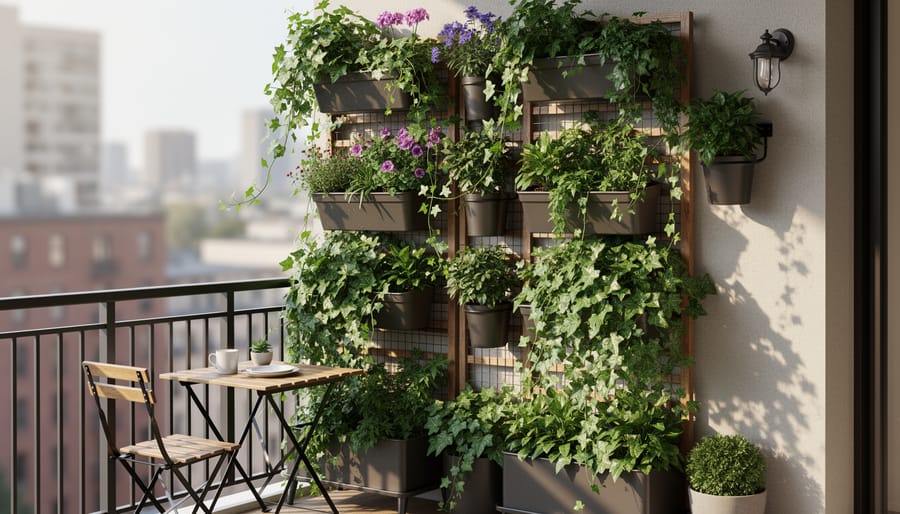
Vertical balcony garden with climbing plants on a trellis during golden hour lighting.
Vertical gardening creates a living “framework” for design and values, turning limited space into a thriving, visually rewarding garden.

Once you’ve identified your core gardening philosophy, the next step is translating those principles into actual decisions for your Austin urban space. The key is letting your values drive every choice, from the containers you buy to the plants you select.

Start with your available space and let your philosophy shape how you use it. If you’re working with a balcony and follow a sustainable approach, prioritize native Texas plants in recycled containers with built-in water reservoirs. A productive philosophy on the same balcony might mean installing vertical growing systems for herbs and tomatoes, maximizing every inch for edibles.

Container selection offers a perfect example of philosophy in action. Low-maintenance gardeners choose self-watering pots that reduce daily care, while aesthetic-focused gardeners might invest in matching ceramic planters that create visual harmony. Those with experimental philosophies often mix container types to test which materials handle Austin’s summer heat best.

Your watering system should reflect your approach too. Sustainable gardeners typically install drip irrigation or soaker hoses to minimize water waste, crucial during Austin’s dry spells. If convenience drives your philosophy, a simple timer-controlled system keeps plants healthy without daily attention.

Plant selection becomes straightforward once you know your philosophy. Wildlife-friendly approaches mean choosing native flowering plants that attract pollinators, even in small spaces. Aesthetic philosophies might focus on foliage texture and color combinations that work well with small-space garden trends. Productive gardeners prioritize compact vegetable varieties and herbs that deliver the highest yield per square foot.

Layout decisions follow naturally from your guiding principles. A low-maintenance approach groups plants with similar water and sun needs for easier care. An experimental philosophy might dedicate one corner to trial plants while keeping proven performers elsewhere. Vertical gardens suit nearly every philosophy, but the structure and plant choices vary wildly based on whether you’re prioritizing aesthetics, production, or wildlife habitat.

Building Your Personal Gardening Approach

Your gardening philosophy should fit your life, not the other way around. Start by taking honest inventory of what you’re working with: how much space you have, how many hours per week you can realistically spend maintaining plants, and what your budget allows. A tiny balcony with afternoon shade demands different thinking than a sunny backyard, and weekends-only attention shapes your choices differently than daily care.

Ask yourself what parts of gardening excite you versus what feels like obligation. If you love the visual reward but dread pest management, lean toward low-maintenance natives. If harvesting your own lettuce brings satisfaction but ornamental deadheading bores you, prioritize edibles. Your philosophy should amplify what you enjoy.

Consider Austin’s specific realities, summer heat, occasional hard freezes, water costs, and limited rainfall. A philosophy that ignores these factors creates frustration, no matter how beautiful it sounds in theory. Match your ideals to your Zone 8b conditions.

Write down three core principles that matter most to you. Maybe it’s “grow food efficiently,” “create habitat for pollinators,” and “keep watering simple.” Use these as your filter when choosing plants, products, or projects. When something doesn’t align with at least two of your principles, skip it.

Your approach will shift as you gain experience and your circumstances change. That’s normal. The goal isn’t perfection, it’s creating a framework that makes decisions clearer and gardening more satisfying rather than overwhelming.

Common Questions About Gardening Philosophy

Can you mix different gardening philosophies?

Absolutely. Most gardeners blend elements from multiple approaches, like combining low-maintenance principles with productive edible growing. Your philosophy should serve you, not constrain you.

Do I need a philosophy to be a successful gardener?

No, but having one makes decisions easier. Without guiding principles, you’ll spend more time second-guessing plant choices and garden changes. A loose framework beats analysis paralysis.

How do I know if my approach is working?

Ask yourself if gardening feels manageable and enjoyable. If you’re constantly stressed, frustrated, or abandoning projects, your philosophy might not match your reality. Good philosophies reduce friction.

What if my philosophy conflicts with Austin’s climate?

Adapt it. If you love lush greenery but live in a drought-prone area, shift toward native Texas plants that offer texture and color without constant water. Your philosophy evolves as you learn what thrives here.

Your approach will naturally shift as you gain experience. First-year gardeners often start with ambitious productive goals, then dial back to low-maintenance once they realize how Texas summers work. That’s progress, not failure.

Small urban spaces actually make it easier to define your philosophy because limitations force clarity. A balcony garden can’t be everything, so you’ll quickly figure out whether you prioritize herbs for cooking, flowers for pollinators, or simply greenery that survives your schedule. Setting up dedicated potting station ideas helps clarify which activities you’ll actually maintain versus which sound appealing but gather dust.

If you’re starting out, don’t overthink it. Pick one or two principles that resonate, maybe “I want edibles” and “I can’t water daily”, then make choices that honor both. Your philosophy will sharpen through practice.

Your gardening philosophy doesn’t need to be complicated or perfect from day one. It’s simply your personal framework for making choices that align with what matters to you and what works in your space. Whether you’re working with a sunny balcony, a shaded patio, or a small backyard in Austin, having that clarity makes every decision, from choosing drought-tolerant plants to setting up a vertical garden, feel less overwhelming and more intentional.

Start small. Pick one or two principles that resonate with you, try them out, and see how they feel. Your approach will naturally evolve as you learn what thrives in Austin’s heat, what fits your schedule, and what brings you the most joy. There’s no wrong way to develop your gardening mindset.

If you’re just starting out and want hands-on guidance, check out beginner gardening classes to learn techniques that match your chosen philosophy. Keep exploring our blog for practical tips tailored to urban gardens, vertical solutions, and sustainable practices that work right here in central Texas. Your garden, your rules, make them count.
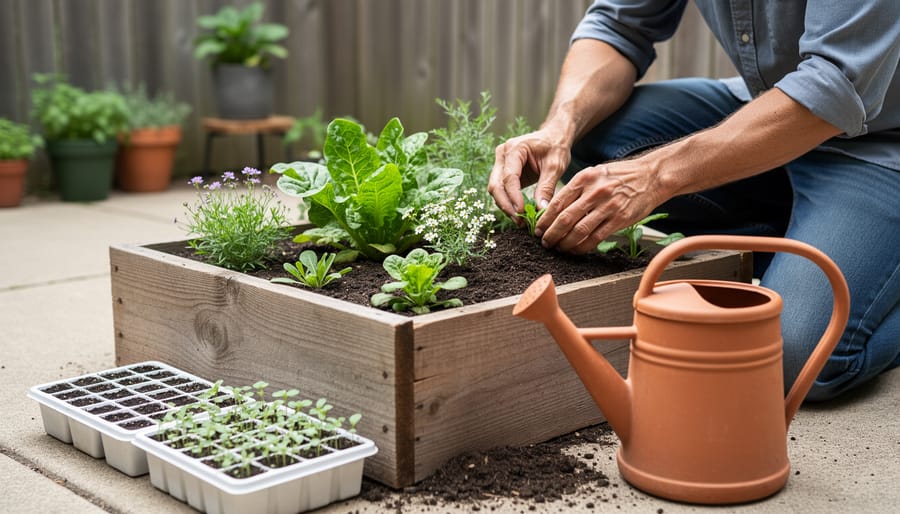
Guide to Beginner Gardening Classes Near Me in Austin: Private Options, Practical Information, and Local Tips

by thomas 0 Comments
Guide to Beginner Gardening Classes Near Me in Austin: Private Options, Practical Information, and Local Tips

Finding beginner gardening classes near you in Austin is easier than ever, with local private instructors, community workshops, and garden centers offering hands-on training designed specifically for newcomers. These classes take the guesswork out of getting started, teaching you what to plant in Central Texas’s unique climate, how to prepare soil that actually supports growth, and which watering schedules work when summer temperatures hit triple digits.

Austin’s gardening scene welcomes beginners with open arms. You don’t need prior experience or a sprawling backyard to get started. Many local instructors specialize in urban gardening techniques, including vertical gardening solutions perfect for balconies, patios, and small yards. You’ll learn to grow food and flowers in containers, make the most of limited space, and work with Austin’s alkaline soil and unpredictable weather patterns.

Private gardening classes offer personalized attention you won’t find in generic online tutorials. A local instructor can walk your actual growing space, recommend plants that thrive in your specific light conditions, and troubleshoot problems as they arise. Most beginner courses run two to four sessions, covering everything from seed starting and transplanting to pest management and seasonal planning.

The investment typically ranges from $50 for single workshops to $300 for comprehensive multi-week courses, but the payoff is a solid foundation that saves you from costly trial-and-error mistakes. You’ll gain confidence knowing exactly when to plant tomatoes, how to protect tender seedlings from late spring freezes, and which native plants attract pollinators while requiring minimal water. Local classes also connect you with fellow Austin gardeners, building a support network that lasts well beyond your first harvest.

Key Takeaway: Private gardening classes offer personalized curriculum tailored to your exact space, one-on-one troubleshooting for your soil and light conditions, flexible scheduling that fits your life, and hands-on learning in the environment where you’ll actually garden, eliminating guesswork and building confidence faster than group settings.

Why Choose Private Beginner Gardening Classes in Austin

Private gardening instruction gives beginners something group workshops can’t: a curriculum built around your actual space, your schedule, and your specific questions. Instead of sitting in a classroom hearing general advice, you work hands-on in your own yard or patio while an instructor addresses the exact conditions you’re dealing with, whether that’s a shaded balcony, a sun-baked backyard, or a few square feet of concrete. You set the pace, ask follow-up questions without competing for attention, and learn techniques you’ll use immediately rather than trying to remember what applied to your situation from a lecture three weeks ago.

For Austin gardeners, that personalization matters even more. Private instructors assess your soil on-site, crucial when you’re working with the city’s notorious alkaline clay that behaves nothing like the generic potting mix advice in most gardening books. They help you choose plants that survive July and August without constant watering, recommend timing for spring planting before the heat hits, and design vertical or container solutions that make sense for urban spaces with limited square footage. A group class might mention heat-tolerant varieties in passing; a private session puts the right ones in your hands and shows you exactly where to plant them in your yard’s microclimates.

Flexible scheduling removes the biggest barrier for busy adults: you’re not locked into a six-week evening series or missing sessions because of conflicts. Book a two-hour session when it works for you, schedule follow-ups as questions arise through the season, and get real-time coaching when problems show up rather than waiting until the next class meets.

Top Private Beginner Gardening Classes and Services in Austin

Thriving beginner garden with healthy plants in containers and a visible drip line in an Austin backyard setting.
A lush, watered-in garden scene reflects what confident beginner care can look like in Austin’s climate.

1. Gardens Austin Designers Private Classes

Private gardening instructor demonstrating potting basics next to terracotta pots and seedlings on an Austin patio.
A private instructor demonstrates hands-on potting in a sunny backyard setting, reflecting the personalized learning experience.

Gardens Austin Designers offers private beginner gardening classes designed specifically for Austin’s urban gardeners and small-space enthusiasts. Their one-on-one instruction covers essential topics including container potting techniques, selecting plants that thrive in Austin’s heat and alkaline soil, and vertical gardening solutions for patios and balconies. Each session is tailored to your specific space and goals, whether you’re working with a sunny balcony, a shaded courtyard, or a small backyard plot.

The hands-on learning approach means you’ll get your hands dirty from the first session. Instructors guide you through practical tasks like mixing potting soil, choosing the right container sizes, and installing vertical garden structures. They emphasize Austin-specific challenges, teaching you which plants tolerate triple-digit summer heat, how to manage watering schedules during drought conditions, and strategies for dealing with Central Texas clay soil.

What sets these classes apart is the personalized attention and ongoing support. You’ll learn at your own pace without the pressure of keeping up with a group, and instructors adapt the curriculum based on what you want to grow and where. After your sessions, you have access to their shop for supplies and tools, plus their blog library offers continued guidance as you develop your gardening skills. Most beginners start with a two-hour introductory session and then schedule follow-up visits as their garden evolves through Austin’s distinct growing seasons.

2. One-on-One Container and Patio Gardening Sessions

Hands tending a container garden on an apartment balcony with planters, watering can, and seedlings.
Container plants on a balcony illustrate how private sessions help beginners succeed in small Austin spaces.

For apartment balconies and small patios, one-on-one container gardening sessions teach you exactly what you need to grow successfully in pots. These private classes focus on the fundamentals beginners need most: choosing the right container size and drainage, selecting potting mix that holds moisture without compacting in Austin’s heat, and understanding how containers dry out faster than ground beds.

Your instructor will show you how to water deeply, not lightly ensuring roots develop properly even in small pots. You’ll learn which herbs, vegetables, and flowers thrive in containers here, from cherry tomatoes and peppers to heat-loving basil and drought-tolerant succulents. The session covers grouping plants with similar water needs, setting up simple drip irrigation or self-watering systems for busy schedules, and adjusting care through Austin’s seasons.

Because these classes happen at your location, the instructor can assess your specific light conditions, help you arrange containers for maximum sun exposure, and recommend plants that will actually succeed on your balcony or patio. You leave with a personalized planting plan and the confidence to keep your container garden thriving year-round.

3. Vertical Garden Design and Installation Classes

Hand planting a seedling in a vertical garden panel with lush herbs on an outdoor wall.
A vertical garden wall demonstrates how beginners can grow more in Austin’s urban spaces using structured, space-saving planters.

Vertical gardening classes offer beginners a smart solution when ground space is tight. These private sessions teach you how to grow vegetables, herbs, and flowers upward instead of outward, perfect for Austin balconies, patios, and narrow side yards where every square foot counts.

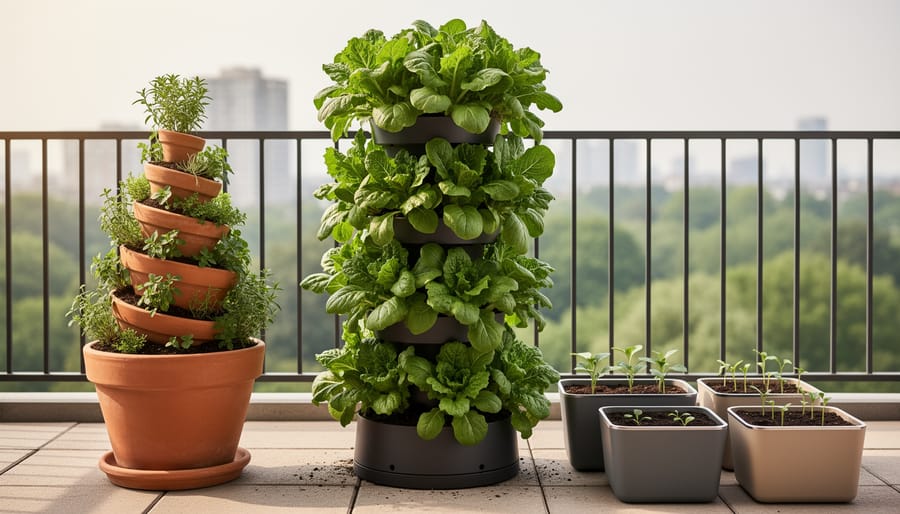
Your instructor will walk you through selecting the right vertical structures for your space and skill level. Trellises, wall-mounted planters, pocket gardens, and tower systems each work differently, and you’ll learn which suits your budget and the weight your walls or railings can handle. You’ll discover which beginner-friendly plants thrive vertically in Austin’s heat: cherry tomatoes, pole beans, cucumbers, trailing herbs like oregano and thyme, and heat-tolerant flowers.

Irrigation presents unique challenges when plants grow upward. These classes show you simple drip systems and self-watering setups that keep upper plants hydrated without constant hand-watering, crucial during Austin’s brutal summer months when container plants dry out fast. You’ll also troubleshoot common vertical garden problems: uneven moisture distribution, plants becoming top-heavy, and managing pests that hide in dense vertical foliage. By the end of your session, you’ll have a workable plan for installing and maintaining a productive vertical garden in your actual space.

4. Seasonal Planting Private Workshops

Gardener planting seedlings into a raised garden bed with mulch during a seasonal workshop.
Seasonal seedlings being planted into a prepared bed captures the practical, Austin-ready guidance covered in private workshops.

Seasonal planting private workshops take the guesswork out of Austin’s quirky climate by teaching you exactly what to plant when. These one-on-one sessions walk you through the Austin monthly gardening calendar explaining why fall is your prime planting window for cool-season crops and spring arrivals, and how to navigate our unpredictable last frost dates. Your instructor assesses your specific space and helps you prep beds or containers for each season, from amending clay soil to choosing the right potting mix for summer heat.

You’ll learn which varieties actually thrive here: heat-tolerant tomatoes for our brutal summers, leafy greens timed for mild winters, and herbs that handle drought without constant babysitting. The focus stays practical, how deep to plant, proper spacing for airflow, mulching techniques that conserve water, and maintenance schedules that fit Austin’s long growing season. These sessions typically include a personalized planting calendar for your garden, so you know what seeds to start in January, what transplants to buy in March, and when to let beds rest. Most instructors offer follow-up check-ins as seasons change, helping beginners stay on track year-round without feeling overwhelmed.

5. Custom Garden Planning and Coaching

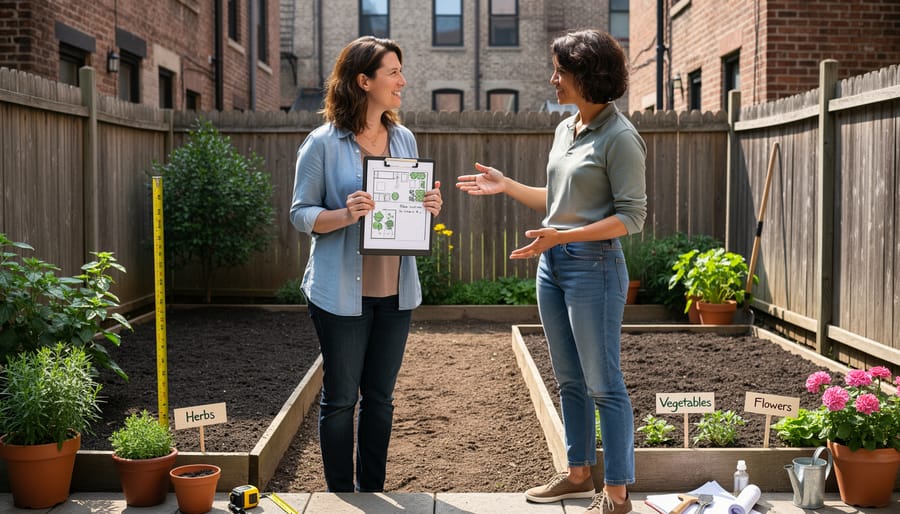
Instructor coaching a beginner in a small Austin yard while reviewing garden layout tools like a measuring tape and clipboard.
Two people assess a small space for a personalized garden plan, showing how coaching translates ideas into a workable layout.

Custom garden planning sessions put you in direct collaboration with an experienced instructor who evaluates your actual growing space, whether that’s a cramped balcony, a shaded patio, or a narrow side yard, and builds a realistic garden plan around it. The instructor measures sunlight exposure throughout the day, assesses soil conditions if you have ground access, notes drainage issues, and identifies microclimates that affect what will thrive.

Together, you’ll select beginner-appropriate plants suited to your specific light and space constraints, prioritizing varieties that handle Austin’s heat and require minimal fussing. The instructor sketches a layout showing where each plant goes, accounting for mature sizes so nothing gets crowded out. You’ll discuss container choices if you’re working with hard surfaces, vertical solutions for tight quarters, and how to layer plants for visual interest without creating maintenance headaches.

The session concludes with a written maintenance roadmap: a month-by-month guide covering watering frequency adjustments as seasons shift, when to fertilize, pruning timing, and how to recognize early signs of trouble. This personalized plan removes guesswork and gives you a clear reference to follow as your garden establishes, making it easier to build confidence and avoid common beginner mistakes that derail enthusiasm.

What You’ll Learn in Beginner Private Gardening Classes

Most private beginner classes in Austin cover the same essential foundation, giving you hands-on confidence to grow successfully in our unique climate. You’ll start with soil basics, understanding how to amend Austin’s notorious alkaline clay, when to use compost, and how to create healthy growing conditions whether you’re planting in the ground or working with containers.

Your instructor will guide you through:

  • Soil preparation and amendment techniques for Austin’s alkaline clay
  • Selecting heat and drought-tolerant plants suited to Central Texas
  • Watering schedules and techniques for our hot, dry summers
  • Fertilizing basics: what, when, and how much for container and in-ground gardens
  • Common pest identification and organic control methods
  • Seasonal planting calendars tailored to Austin’s growing zones
  • Troubleshooting issues like leaf burn, wilting, and nutrient deficiencies
  • Space-maximizing strategies for balconies, patios, and small yards

Plant selection gets special attention since choosing the right varieties makes or breaks beginner success in Austin’s heat. You’ll learn which herbs, vegetables, and ornamentals thrive here, plus proven small-space garden trends like vertical growing and succession planting. Many instructors also cover practical workspace setup, including potting station ideas that make maintaining your garden easier. Since private classes adapt to your specific space and goals, your instructor can spend more time on the topics most relevant to you, whether that’s container gardening, raised beds, or maximizing a shady courtyard.

Practical Information: Cost, Scheduling, and What to Expect

Private beginner gardening classes in Austin typically range from $75 to $150 per session, with most instructors offering 90-minute to two-hour sessions. Many providers bundle multiple classes at discounted rates: a three-session package might run $200-$350, while ongoing monthly coaching sessions often start around $100 per visit when purchased as a series.

Most instructors offer flexible scheduling, including evenings and weekends to accommodate working gardeners. Classes can take place at your home, apartment balcony, or patio so you learn directly in the space you’ll be tending, or at a teaching garden if you prefer a demonstration setting before tackling your own area. In-home sessions let instructors assess your soil, sun exposure, and specific challenges related to your Austin gardening zone making the instruction immediately actionable.

Class Type Typical Duration Price Range Best For
Single private session 1.5-2 hours $75-$150 Complete beginners testing the waters
Three-session package 1.5 hours each $200-$350 Hands-on learners wanting seasonal guidance
Container gardening focus 1-1.5 hours $85-$125 Apartment and balcony gardeners
Monthly coaching 1 hour $100+ per visit Ongoing support through growing seasons

Materials vary by instructor. Some include starter supplies like soil amendments, small tools, or plant samples in the session fee, while others provide a shopping list you’ll source beforehand. Always clarify what’s covered when booking.

To prepare for your first session, photograph your garden space from multiple angles, note how many hours of sun it receives, and jot down any specific problems you’ve encountered or goals you have. Wear comfortable clothes and sun protection if meeting outdoors, and have a notebook ready for taking notes.

Local Austin Gardening Tips for Beginners

Austin’s clay soil presents the biggest challenge for new gardeners. Before planting anything, work in 3-4 inches of compost to improve drainage and aeration, clay dries brick-hard in summer and becomes waterlogged in winter if left untreated. Raised beds or large containers bypass this problem entirely if you’re working with especially stubborn soil.

Plant selection makes or breaks your success here. Prioritize native and adapted species like black-eyed Susans, salvias, esperanza, and Texas sage, they thrive in heat and need minimal water once established. For edibles, try heat-tolerant varieties of tomatoes, peppers, and herbs like rosemary and oregano. Avoid plants that demand constant moisture or afternoon shade unless you can provide both.

Timing matters in Austin’s climate. Fall (September through November) is actually prime planting season, mild temperatures let roots establish before summer stress hits. Spring works too, but you’ll need to water more frequently. Skip planting anything between July and late August; the heat will overwhelm new transplants no matter how much you water.

Tip: Austin enforces strict watering restrictions during summer months, typically twice weekly maximum. Water deeply in early morning to minimize evaporation and stay compliant with city ordinances.

Container gardening solves multiple problems for beginners. Pots let you control soil quality completely, relocate plants as needed, and maximize patios or balconies. Use containers at least 12 inches deep for most vegetables and herbs. Mastering beginner potting basics sets you up for vertical gardening success, stacking planters or using wall-mounted systems multiplies your growing space without requiring yard access. Add mulch to all plantings, potted or in-ground, to retain moisture and moderate soil temperature through Austin’s temperature swings.

Frequently Asked Questions About Beginner Gardening Classes

Do I need any gardening experience to take beginner classes?

No experience is required. These classes are designed for absolute beginners who have never gardened before, and instructors start with the fundamentals like soil, watering, and plant selection.

What should I bring to my first gardening class?

Most private instructors provide all necessary materials, but bring a notebook for taking notes, wear comfortable clothes you don’t mind getting dirty, and have sunscreen and a hat ready if the session is outdoors. Check with your instructor beforehand about any specific items they recommend.

How many sessions do most beginners need?

Most beginners start with a single 1-2 hour session to learn the basics, then decide if they want follow-up sessions for seasonal guidance or specific projects. Some instructors offer 3-4 session packages that cover a full growing cycle from planting through harvest.

Can classes be conducted at my home?

Yes, many Austin instructors come directly to your space, whether that’s a backyard, patio, or balcony. Teaching in your actual growing area lets the instructor assess your specific conditions like sunlight, soil, and microclimates, then tailor advice to what will actually work there.

Are supplies and plants included in the class cost?

Basic instruction typically doesn’t include plants or supplies, though some instructors provide starter materials or offer package deals. Expect to purchase your own seeds, plants, soil, and containers separately, and ask upfront what’s included when you book.

What if I only have a balcony or small patio?

Small spaces are perfect for beginner classes focused on container and vertical gardening. Instructors can show you how to maximize limited square footage with wall-mounted planters, tiered containers, and compact varieties that thrive in pots.

When choosing an instructor, look for someone with experience teaching absolute beginners and knowledge of Austin’s specific growing conditions. Read reviews or ask for references from other students, and don’t hesitate to ask questions about their teaching style during your initial contact. The right match will make you feel comfortable asking basic questions and will adapt the pace to your learning speed rather than rushing through material.

Starting your gardening journey doesn’t have to feel overwhelming. Private beginner gardening classes give you the personalized attention and hands-on experience you need to build real confidence, whether you’re working with a sunny balcony or a small backyard. You’ll learn exactly what works in Austin’s climate, from choosing heat-tolerant plants to managing our challenging clay soil, without the pressure of keeping up with a large group or wondering if your questions are too basic.

The beauty of private instruction is that every lesson addresses your specific space, your schedule, and your goals. You won’t waste time on techniques that don’t apply to your situation. Instead, you’ll walk away with practical skills you can use immediately and a clear plan for growing food, flowers, or both in the heart of Texas.

Ready to get your hands dirty? Gardens Austin Designers offers private beginner gardening classes designed for Austin’s urban gardeners. Their experienced instructors bring the classroom to your space, teaching you vertical gardening techniques, container planting strategies, and seasonal care tailored to our local conditions. Visit their shop or website to schedule your first session and start growing with confidence.

7 Garden Trends from 2020 That Still Work Beautifully in Small Spaces

7 Garden Trends from 2020 That Still Work Beautifully in Small Spaces

Looking back at 2020’s gardening revolution six years later, seven of that year’s biggest trends have proven themselves not just pandemic pastimes but lasting innovations that still work beautifully for Austin’s urban gardeners. The year lockdowns began sparked an explosion of creative home growing solutions, from vertical tower gardens that transformed tiny patios into productive food sources to beginner-friendly herb spirals that made the most of limited square footage. What started as necessity became a movement that reshaped how we think about growing food in cities.

These trends endure because they solved real problems. Container gardening systems that maximize yields in minimal space? Still essential for apartment balconies and small yards. Indoor grow lights that let you cultivate greens year-round, even during our brutal Texas summers? More popular than ever. The innovations of 2020 weren’t gimmicks but practical responses to the challenge of growing food and beauty in tight quarters, and they align perfectly with your Austin gardening zone realities.

This guide highlights the seven most valuable trends from that pivotal year, explaining why each one still deserves space in your urban garden setup and how to implement them without special skills or a big budget. You’ll discover which 2020 breakthroughs remain game-changing for small-space growers today.

Key Takeaway: Start small with container edible gardens, native drought-tolerant plants, or a simple indoor herb wall, these three trends require minimal investment and deliver quick wins for Austin beginners. Even adopting one trend transforms your space into a productive, sustainable garden.

Why These 2020 Trends Still Matter

When 2020 forced everyone to slow down and look closer at their immediate surroundings, gardens became more than decorative, they turned into productive, purposeful spaces that fit real life. The trends that emerged weren’t gimmicks. They answered practical needs: growing food when grocery runs felt uncertain, creating green calm in apartment living rooms, and making the most of every square foot when outdoor space was precious. These solutions stuck because they work, especially in cities like Austin where summer heat, water restrictions, and limited space have always shaped what thrives.

Tip: Austin’s hot summers and compact yards make these space-saving, drought-conscious approaches essential rather than optional, what worked nationwide in 2020 is basically tailor-made for our climate.

The trends featured here passed three tests: they fit genuinely small spaces (balconies, patios, windowsills), they lean toward sustainability rather than constant inputs, and they’re approachable for beginners. You won’t find complicated hydroponic setups or rare plant collections requiring expert care. Instead, these are the accessible, resilient ideas that changed how urban gardeners think about their space, and they’re still delivering results six years later.

Wide view of a small urban garden featuring vertical planters, containers, and flowering plants.
A unified small-space view shows how several 2020-inspired ideas can work together in one city garden.

1. Vertical Gardens: Grow Up, Not Out

Climbing plants growing on a trellis with wall-mounted planters on a small balcony.
A space-saving vertical setup shows how climbing plants can thrive on a small patio or balcony.

Vertical gardening took off in 2020 when city dwellers realized they could multiply their growing space without needing a backyard. For Austin gardeners working with compact patios and narrow balconies, this approach remains one of the smartest ways to create lush, productive gardens in tight quarters.

The concept is straightforward: train plants to climb supports or mount containers on walls, freeing up precious floor space. Wall-mounted planters work beautifully for herbs and small greens, simply attach sturdy brackets to exterior walls and hang lightweight containers. Trellises transform a bare fence into a living wall when you pair them with climbing vegetables like cherry tomatoes, beans, or cucumbers. Pocket gardens made from fabric or felt offer another space-saving option, letting you tuck strawberries, lettuce, or trailing flowers into vertical pockets that stay cooler than traditional pots.

When you choose plants for Austin‘s vertical gardens, heat tolerance matters. Pole beans handle the summer sun reliably, while passion vines provide shade and fruit. Sweet potato vines cascade beautifully without demanding constant water. For shadier spots, pothos and philodendron thrive with minimal fuss.

Position vertical structures where they’ll get morning sun but afternoon shade during peak summer months. This protects plants from the brutal western exposure while still providing enough light for healthy growth. Start with one wall or trellis rather than tackling your entire space at once, you’ll learn what works before expanding your vertical garden.

2. Edible Container Gardens for Fresh Produce

Container-grown vegetables in terracotta and fabric pots on a small porch.
Fresh produce grown in containers transforms a small porch into a productive mini garden.

The surge of interest in growing your own food during 2020 wasn’t just a passing fad, it revealed how productive a small porch or balcony can be. Container vegetable gardens let Austin gardeners enjoy fresh tomatoes, peppers, and herbs without needing yard space, and they’re forgiving enough for beginners.

Start with containers at least 12 inches deep for most vegetables. Five-gallon buckets work beautifully and cost next to nothing, but any pot with drainage holes will do. Bigger is better, tomatoes and peppers thrive in 15-18 inch pots, while lettuce and herbs do fine in shallower 8-inch containers. Skip garden soil; it compacts in pots. Use a quality potting mix instead, which drains well and stays fluffy.

For Austin’s heat, choose vegetables that tolerate hot summers. Cherry tomatoes like ‘Sungold’ produce reliably through May and June before temperatures peak. Jalapeños and serranos handle scorching afternoons without complaint. Basil loves the heat and grows like a weed in full sun. In fall and winter, switch to lettuce, kale, and Swiss chard, which prefer cooler weather and give you fresh greens when grocery store prices spike.

Place containers where they’ll get six hours of sun for fruiting plants, though leafy greens tolerate partial shade during brutal August afternoons. Water daily once temperatures climb, containers dry out faster than ground soil, especially on west-facing balconies. A simple setup of three or four pots can keep your kitchen stocked with fresh produce year-round.

3. Native and Drought-Tolerant Plants

Drought-tolerant native flowers and grasses growing in a small mulched urban garden bed.
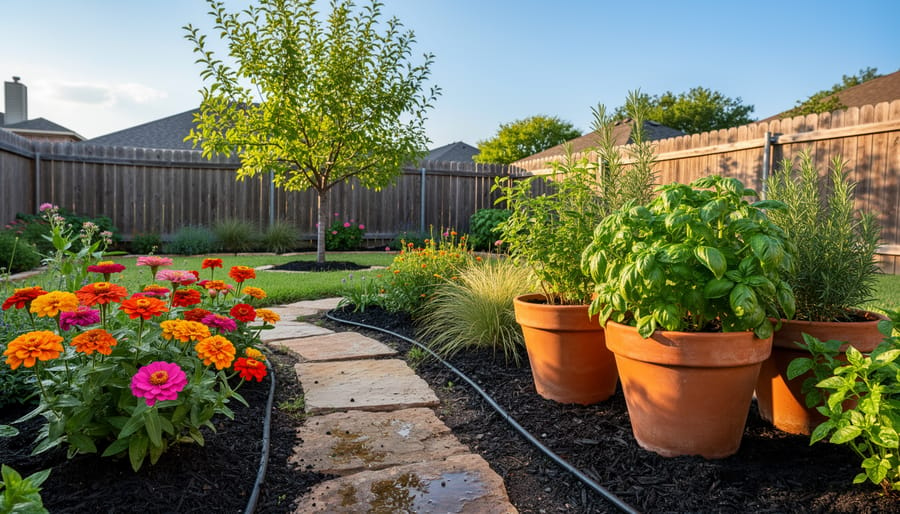
Native, drought-tolerant plants bring color and structure while using less water in small urban spaces.

When drought restrictions hit Austin in 2020, gardeners quickly realized the value of plants that thrive with minimal water. This shift toward native and drought-tolerant species wasn’t just practical, it created gardens that actually work with Texas weather instead of fighting it.

Native plants like Turk’s cap, gregg’s mistflower, and flame acanthus need far less attention than thirsty exotics. They’ve adapted to Austin’s clay soil and scorching summers over thousands of years. Once established, most require watering only during extreme dry spells. That’s a huge advantage when you’re managing containers on a balcony or rooftop where every gallon counts.

For small spaces, try cenizo (Texas sage) in large pots, its silvery foliage and purple blooms appear after rain without any extra effort. Black-eyed Susans and blanket flowers deliver continuous color in tight spots while attracting pollinators. These plants know Austin’s rhythms the way you might understand indoor veggie timing or the right zone for herbs.

The low-maintenance benefits extend beyond water savings. Native plants resist local pests naturally and don’t need fertilizer once they’re settled in. You’ll spend less time troubleshooting problems and more time enjoying the garden. Start with three or four native species this season and watch how they outperform everything else when August heat arrives.

4. Pollinator-Friendly Gardens

A honeybee on a flowering plant in a small garden bed.
Pollinator-friendly plantings invite beneficial insects right into compact gardens.

The 2020 pandemic brought backyard wildlife watching into sharp focus as people spent more time at home, sparking a movement toward pollinator-friendly gardening that’s proven essential for Austin’s ecosystem. You don’t need acres to make a difference, a single balcony filled with the right blooms can sustain dozens of pollinators.

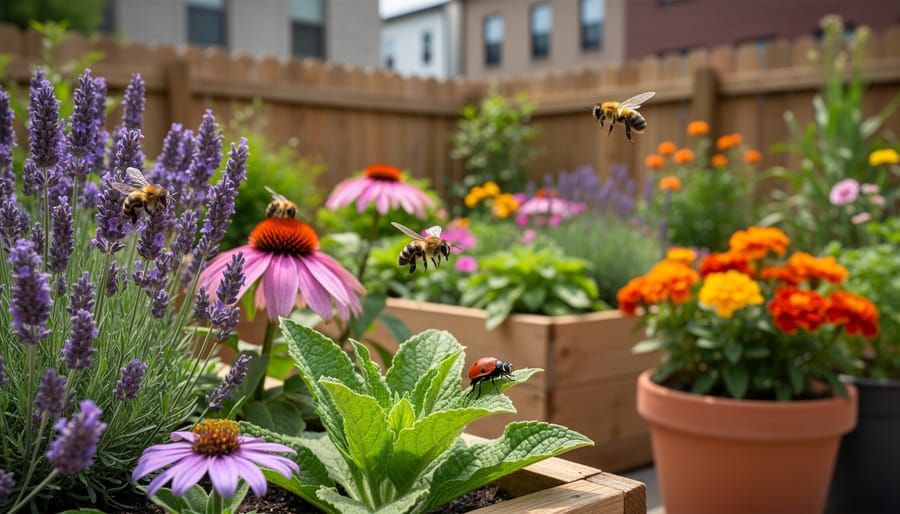
Start with native Texas plants that bloom at different times. Gregg’s mistflower attracts butterflies from late summer through fall, while autumn sage offers tubular flowers that hummingbirds adore. Texas lantana handles brutal heat and feeds both bees and butterflies all season. Plant these in clusters rather than singles, pollinators spot grouped colors more easily and feed more efficiently.

Container gardens work beautifully for pollinator support. A half-whiskey barrel can hold three or four different flowering plants, creating a mini buffet on your patio. Avoid pesticides entirely; even organic options can harm beneficial insects. If aphids appear, spray them off with water or let ladybugs handle the job.

Add a shallow dish of water with pebbles or marbles for landing spots, pollinators need hydration, especially during Texas summers. Change the water every few days to prevent mosquito breeding.

The payoff goes beyond helping nature. Pollinator gardens require less fussing than traditional ornamentals, and watching a hummingbird hover at your salvias beats scrolling through screens any day. These gardens practically run themselves once established, making them perfect for busy urban gardeners who want maximum beauty with minimal effort.

5. Indoor Herb Gardens and Houseplant Jungles

Indoor herbs and houseplants arranged on a sunny windowsill.
An indoor herb corner turns everyday light into fresh flavor, even in apartment-sized spaces.

When lockdowns forced everyone indoors in 2020, living spaces transformed into thriving indoor gardens filled with fresh herbs and lush houseplants. What started as a way to stay connected to nature became a revelation: you don’t need outdoor space to grow your own food or create a green sanctuary. Austin’s abundant sunshine through apartment windows makes indoor herb gardening especially successful year-round.

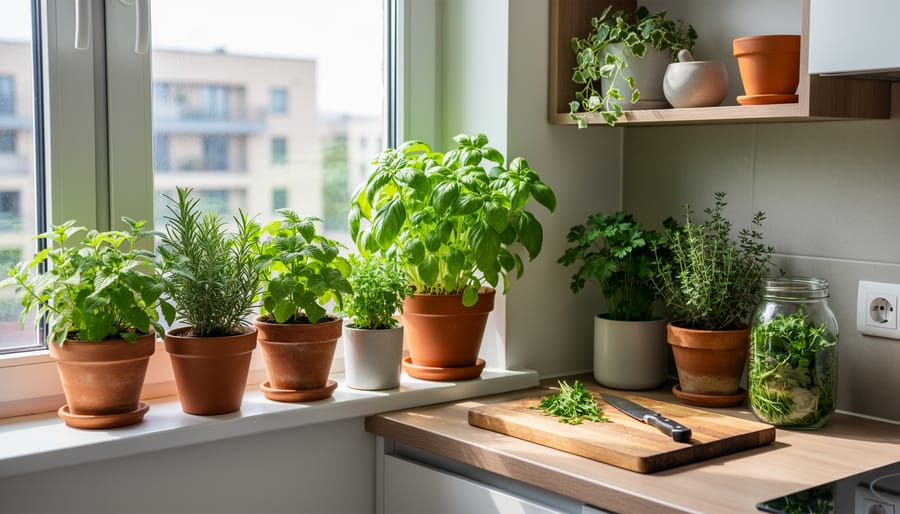
Start your indoor herb garden by choosing a south or west-facing window that gets at least six hours of sunlight daily. If natural light is limited, a simple grow light from any hardware store fills the gap, position it six to twelve inches above your plants and run it for twelve to fourteen hours daily. Pick containers with drainage holes (repurposed jars or cans work fine if you drill a hole in the bottom) and fill them with quality potting mix, not garden soil.

For beginners, these herbs practically grow themselves:

  • Basil: loves warmth, needs consistent moisture, pinch off flower buds to encourage leaf growth
  • Mint: incredibly forgiving, contains its spread in pots, water when the top inch feels dry
  • Parsley: tolerates lower light than most herbs, slow to start but prolific once established
  • Chives: requires minimal care, grows back quickly after cutting, handles occasional neglect
  • Thyme: prefers drier conditions between waterings, perfect for forgetful gardeners

Water your herbs when the top inch of soil feels dry to the touch, Austin’s indoor heat means you’ll likely water twice weekly in summer, less in winter. Overwatering kills more indoor herbs than underwatering, so resist the urge to keep soil constantly wet. Rotate pots weekly so all sides receive equal light, and harvest regularly by snipping stems just above a leaf node to encourage bushier growth. Within weeks, you’ll have fresh herbs for every meal and a windowsill that looks and smells amazing.

6. Composting at Home

Covered compact compost bin with dark compost on a patio.
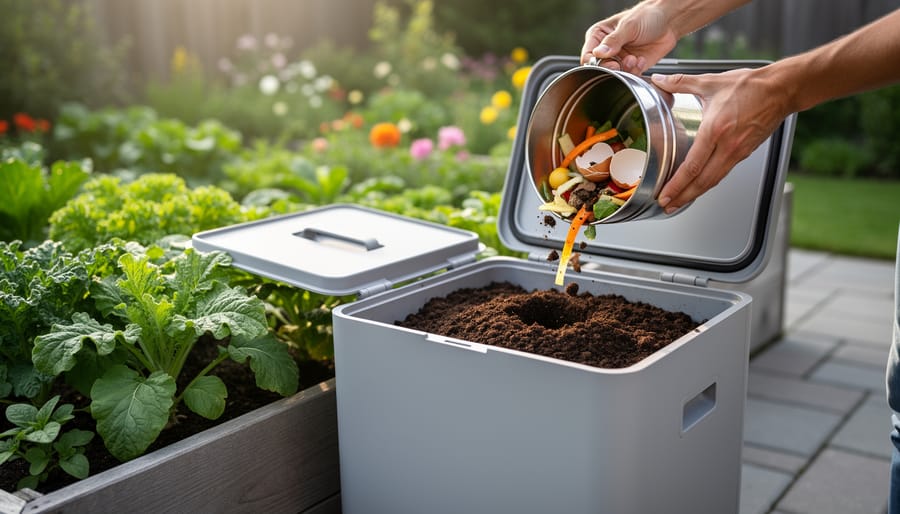
A small, contained compost system makes it easy to recycle kitchen scraps into garden-ready soil.

The pandemic gardening surge in 2020 made composting mainstream, as people realized they could turn kitchen scraps into valuable soil while spending more time at home. For Austin gardeners with limited outdoor space, compact composting systems offer a practical way to reduce waste and create nutrient-rich amendments for containers and vertical planters.

You don’t need a backyard to compost successfully. Countertop bins with charcoal filters handle fruit and vegetable scraps without odors, making them apartment-friendly. If you have a small balcony or patio, a tumbler composter (about the size of a large beach ball) processes materials faster than traditional bins and keeps things tidy. Worm composting bins fit under kitchen sinks and produce exceptional fertilizer through vermicomposting, though Austin’s summer heat means you’ll need to keep them indoors where it’s cooler.

Stick to fruit and vegetable scraps, coffee grounds, eggshells, and shredded paper. Skip meat, dairy, and oils, which attract pests and slow decomposition. In Austin’s heat, outdoor composters work quickly, often producing usable compost in six to eight weeks during summer.

The finished product transforms container gardens. Mix compost into potting soil at a ratio of one part compost to three parts soil, or use it as a top dressing around plants in vertical planters. For established containers, scratch a thin layer into the top inch of soil every few months. Your tomatoes, herbs, and flowering plants will respond with stronger growth and better drought tolerance, essential qualities for weathering Austin’s intense summers.

7. DIY Garden Projects and Upcycling

Hands planting seedlings into an upcycled wooden planter box.
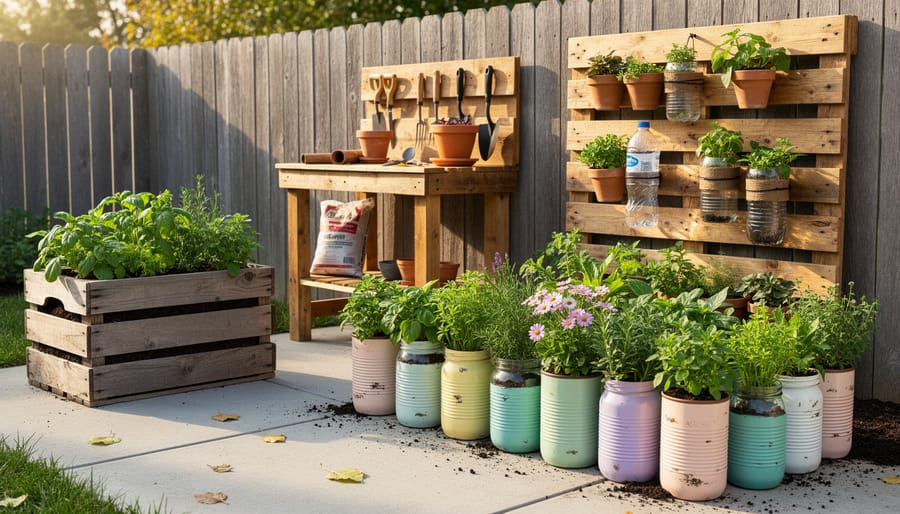
Upcycled planters and simple DIY projects can look great while stretching your gardening budget.

The 2020 lockdowns sparked a wave of creative DIY garden projects as people transformed everyday items into planters and garden features. This hands-on approach hasn’t just stuck around, it’s become a cornerstone of sustainable urban gardening in Austin.

Old wooden crates, vintage colanders, and plastic bottles all found new life as containers. The key is choosing materials that can handle Austin’s intense summer heat without warping or releasing toxins. Terracotta pots decorated with outdoor paint, concrete hypertufa planters made in mixing bowls, and cedar wood boxes all perform beautifully in Texas sun.

Start with simple projects. Drill drainage holes in tin cans or mason jars for herb gardens. Convert a broken ladder into a tiered plant stand for your patio. Stack cinder blocks to create modular planter walls that also provide wind protection for delicate seedlings.

For vertical gardens, repurpose gutters into wall-mounted lettuce planters or hang old shoe organizers as strawberry pockets. These projects cost a fraction of store-bought systems while giving you custom sizing for your space.

The real beauty of upcycling goes beyond aesthetics and budget savings. You’re keeping materials out of landfills while creating a garden that reflects your personality. In Austin’s heat, focus on containers with thick walls that insulate roots from temperature swings. Paint lighter colors on darker materials to reflect heat, and always ensure proper drainage to prevent root rot during our occasional heavy rains.

Common Questions About 2020 Garden Trends

Starting these trends in Austin doesn’t have to be complicated or overwhelming. Here are the questions beginners ask most often, with straightforward answers to get you growing.

How much water do these trends actually require in Austin’s heat?

Native plants and drought-tolerant options need minimal watering once established, usually just during extreme dry spells. Container gardens and vertical setups require more frequent watering in summer, often daily, but using mulch and self-watering containers significantly reduces water needs.

Which trend is easiest for complete beginners?

Start with an indoor herb garden or a single pollinator-friendly native plant in a container. Both offer quick wins with minimal maintenance while you build confidence and learn what works in your specific space.

Can I combine multiple trends in a small balcony?

Absolutely, most Austin gardeners mix several approaches. A vertical trellis with cherry tomatoes, a few native plants in containers, and a compact compost bin work beautifully together in just a few square feet.

What if I rent and can’t make permanent changes?

All seven trends work perfectly for renters. Use freestanding vertical structures, movable containers, and countertop composters that you can take with you when you move.

The beauty of these 2020 trends is their flexibility. You don’t need a yard, big budget, or green thumb to make them work, just pick what fits your space and start small.

You don’t need to tackle all seven trends at once. Pick the one or two that match your available space, time, and interests. Maybe you’ll start a few container tomatoes on your balcony this fall, or dedicate a sunny windowsill to basil and cilantro. Perhaps you’ll swap out thirsty annuals for native Texas sage and black-eyed Susans. Each small choice builds momentum.

What made these 2020 innovations stick around is simple: they work. Vertical systems maximize your square footage, native plants thrive without constant attention, and growing your own food tastes better than anything from the store. These aren’t passing fads but practical responses to real constraints Austin gardeners face, limited space, intense heat, water costs, and busy schedules.

The best garden is the one you’ll actually tend. Start where you are, use what you have, and let your confidence grow along with your plants. You’ll be surprised how much life a few strategic containers or a well-chosen trellis can bring to your patio, balcony, or front step.

8 Creative Potting Station Ideas to Transform Your Garden Workspace

by thomas 0 Comments
8 Creative Potting Station Ideas to Transform Your Garden Workspace

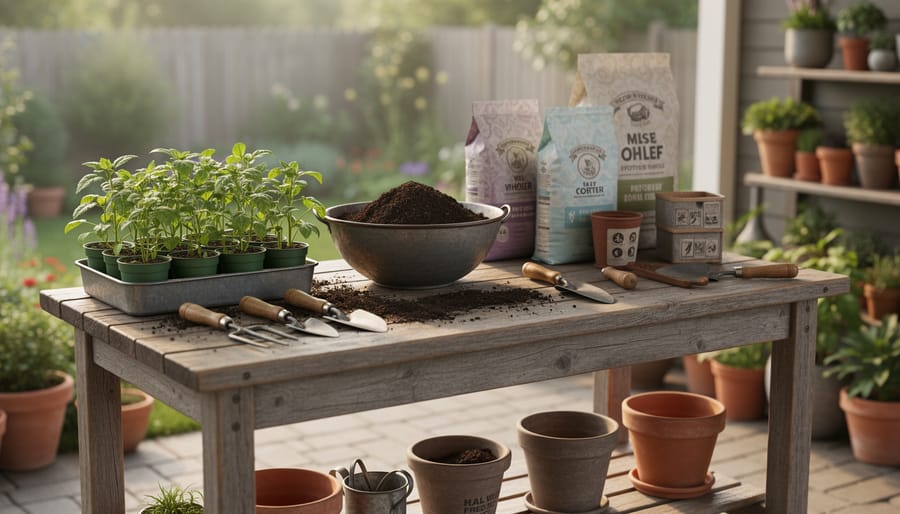
A potting station transforms gardening from a messy floor operation into an organized, ergonomic workspace where you can transplant seedlings, mix soil, and prep containers without wrecking your back or your patio. Whether you’re working with a narrow apartment balcony or a full backyard corner, the right setup keeps supplies within arm’s reach and saves you from hunting for trowels every time you need to pot up tomatoes.

The best potting stations balance three priorities: work surface height (typically 36 inches to avoid hunching), smart storage for soil and tools, and weather resistance if you’re keeping it outdoors year-round in Austin’s heat and humidity. You don’t need a custom-built unit. Some of the most functional stations come from repurposed furniture, wall-mounted fold-down tables, or simple shelving units fitted with hooks and bins.

Urban gardeners especially benefit from dual-purpose designs. A potting bench that doubles as a display shelf for houseplants or integrates vertical growing space below the work surface makes every square foot count. The ideas ahead cover temporary setups you can break down when guests arrive, budget DIY builds using reclaimed materials, and more permanent structures that anchor your gardening routine. Each option offers practical solutions for keeping soil contained, tools organized, and your planting process efficient.

Key Takeaway: Place stations in morning-sun locations to avoid Austin’s harsh afternoon heat, weatherproof all wood surfaces, keep frequently-used tools at eye level, and store bagged soil in sealed containers to prevent moisture absorption during humid months.

What Makes a Great Potting Station

Before diving into specific potting station ideas, it helps to understand what separates a truly functional workspace from a cluttered corner that frustrates more than it helps. The eight ideas featured here were selected based on criteria that matter most to urban gardeners working within real-world constraints.

Each station idea addresses specific challenges Austin gardeners face: limited square footage on balconies and patios, intense summer heat that degrades certain materials, and the need to move between indoor seedlings and outdoor vertical gardens. The best potting stations don’t just look organized, they make your gardening tasks genuinely easier.

Here’s what went into choosing these ideas:

  • Space efficiency: works in compact urban settings without sacrificing functionality
  • Weather resistance: stands up to Austin’s heat, UV exposure, and occasional heavy rain
  • Storage capacity: keeps soil, pots, and tools accessible but contained
  • Ease of setup: achievable without advanced carpentry skills or permanent modifications
  • Austin-climate suitability: accommodates year-round gardening and outdoor living

Some ideas prioritize portability for renters, while others offer permanent solutions for homeowners with dedicated outdoor space. You’ll find options across different budgets and skill levels, from repurposed furniture to purpose-built workbenches. The common thread is that each one transforms chaotic potting tasks into streamlined, enjoyable work.

1. Fold-Down Wall-Mounted Station for Tiny Balconies

Fold-down wall-mounted potting bench open on a small urban balcony
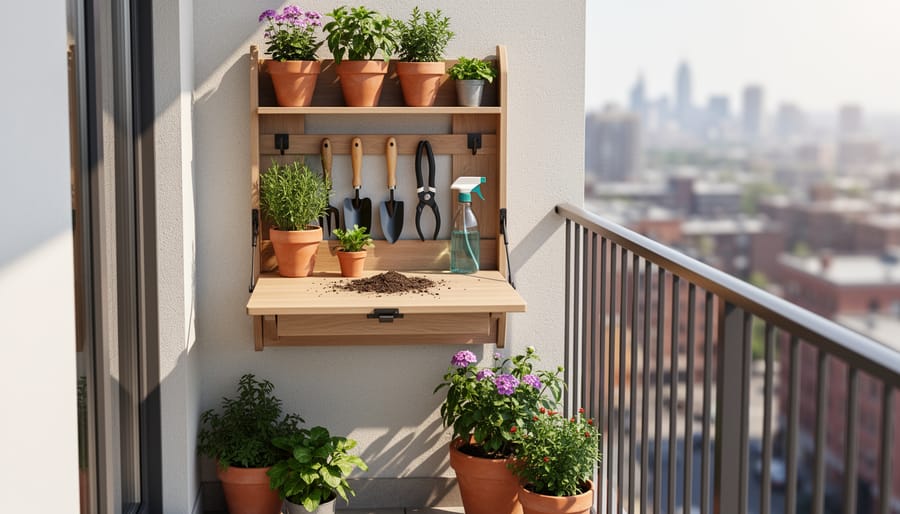
A space-saving wall-mounted potting station keeps tools ready while staying out of the way on a tiny balcony.

When you’re gardening on a compact Austin balcony where every square foot counts, a fold-down wall-mounted station solves your workspace problem without eating up precious floor space. This clever setup attaches directly to your balcony wall and hinges down to create a sturdy work surface only when you need it.

The basic design uses a simple plywood board (around 24 by 18 inches works well for most balconies) mounted with heavy-duty folding shelf brackets. When you’re done potting, the whole surface folds flat against the wall, completely out of the way. Add a few small shelves above the fold-down surface to keep seed packets and plant labels organized, and install hooks along the sides for hanging trowels, pruning shears, and watering tools.

For materials, choose weather-resistant plywood or cedar that can handle Austin’s intense summer heat and occasional rain. A coat of outdoor sealant extends its life significantly. Mount everything to wall studs or use heavy-duty masonry anchors if you’re attaching to concrete balcony walls, since the station needs to support the weight of soil bags and pots during use.

This setup transforms a blank wall into functional gardening space, making it perfect for renters who need a temporary solution that won’t damage their lease agreement.

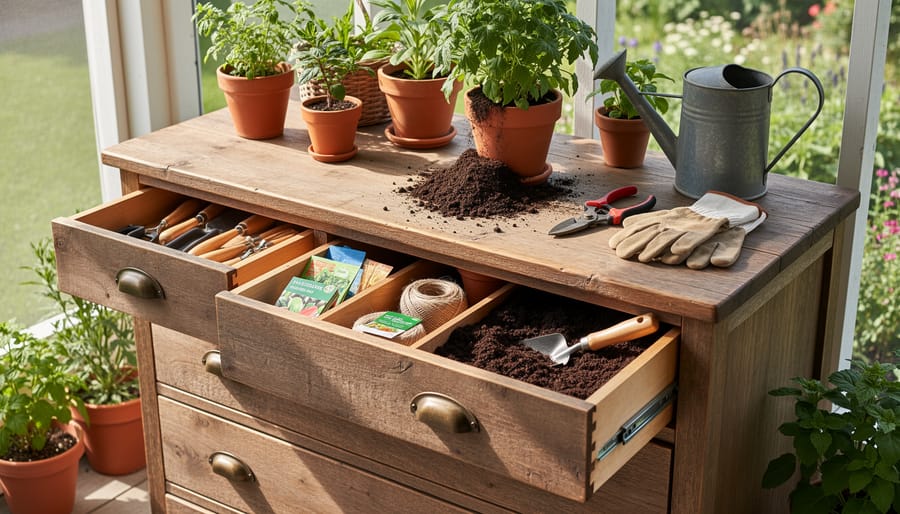
2. Repurposed Dresser Potting Bench

Repurposed wooden dresser used as a potting bench with open drawers and gardening tools
An old dresser becomes a functional potting station with drawers for tools and soil, plus a sturdy top for everyday planting.

Transform that old wooden dresser gathering dust in your garage into a charming potting bench with surprising functionality. The dresser’s sturdy top becomes your prep surface, sand it down and seal it with weatherproof finish to handle soil and water. Those drawers that once held clothes now organize seed packets, hand tools, twine, and bags of potting mix, keeping everything sorted and within arm’s reach.

The real magic happens when you remove the dresser’s mirror backing (if it has one) and mount pegboard in its place. Suddenly you’ve got vertical storage for trowels, pruning shears, and gloves hanging right above your workspace. You can outline each tool’s spot with paint markers so returning items becomes second nature.

Position your dresser station under a covered patio or carport. Austin’s intense summer sun will crack unsealed wood and fade finishes quickly, while afternoon thunderstorms can soak exposed stations. A roof overhead extends your dresser’s life and gives you a comfortable workspace even during those surprise rain showers that pop up during growing season.

Choose dressers with lower profiles, around counter height, so you won’t strain your back during transplanting sessions. Solid wood holds up better than particleboard, which crumbles when wet. Check estate sales and thrift stores for sturdy candidates.

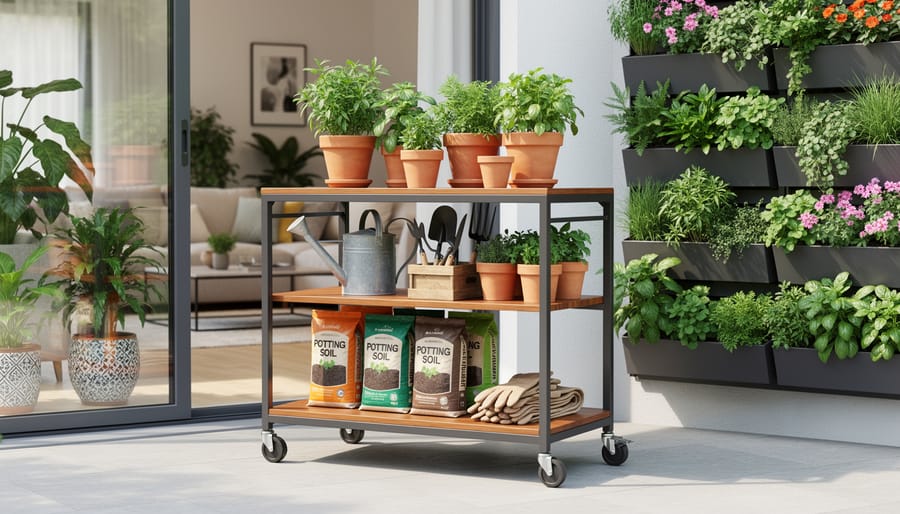
3. Rolling Cart Station for Multi-Space Gardening

Rolling tiered potting cart on wheels with pots and soil near indoor and outdoor plants
A mobile potting cart makes it easy to move supplies between indoor greenery and outdoor vertical gardening.

A rolling cart transforms your potting workflow when you’re juggling indoor houseplants, balcony containers, and vertical garden systems across different spaces. Metal utility carts with three or four tiers work exceptionally well, the top shelf becomes your active work surface, while lower levels store potting mix bags, hand tools, watering cans, and plant labels. Look for carts with lipped edges to prevent soil spills during transport, and prioritize models with locking wheels so the station stays stable while you work.

Wooden rolling carts offer a warmer aesthetic if your potting station doubles as indoor décor, though they need a protective sealant if you’re moving them between Austin’s humid outdoor mornings and air-conditioned interiors. Bar cart styles with removable trays make cleanup easier, you can lift out the soil-covered tray and hose it down outside.

The real advantage for renters is portability without permanent installation. Roll your cart to the sunny kitchen window for seed starting, then wheel it to the patio for repotting succulents in your vertical wall planters. When you move apartments, your entire potting setup moves with you intact. Add a small tool caddy or magnetic strip on the side to keep pruners and trowels within arm’s reach as you shift locations.

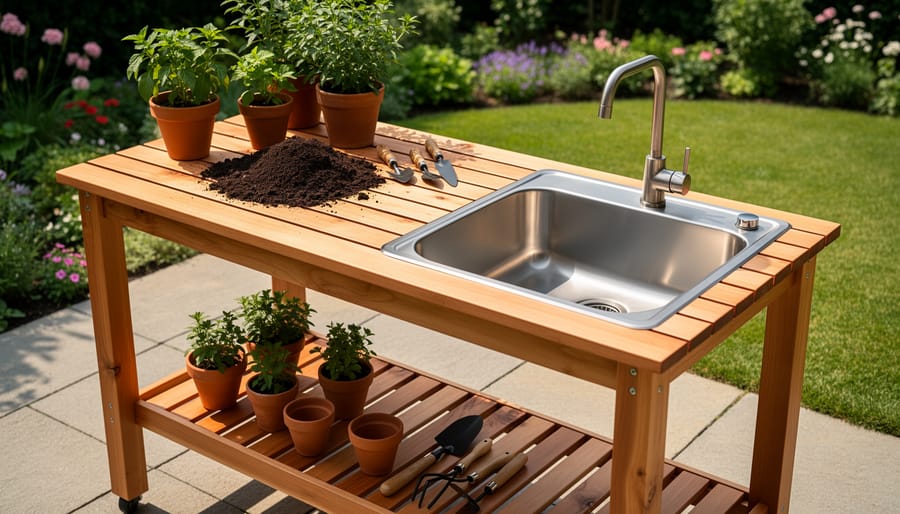
4. Cedar Potting Table with Built-In Sink

Cedar potting table with built-in sink basin outdoors
A cedar potting table with a built-in sink keeps cleanup simple while offering a durable work surface in outdoor heat.

A cedar potting table with a built-in sink represents a significant upgrade for gardeners ready to invest in a permanent outdoor workspace. This setup transforms routine potting tasks by adding running water right where you need it, no more trips inside to rinse tools or water freshly potted plants.

Cedar handles Austin’s intense summer heat remarkably well. The wood naturally resists rot and insect damage, even when exposed to our occasional downpours and high humidity. You’ll want a table that’s at least 24 inches deep and 48 inches wide, giving you ample room to spread out soil bags, pots, and seedlings without crowding your work area.

The sink doesn’t need to be elaborate. A shallow basin about 6-8 inches deep works perfectly for rinsing hands, cleaning tools, and watering plants. Many DIYers retrofit an old farmhouse sink or stainless steel basin, then connect it to a garden hose with a simple valve system. Some models include a drainage hole that empties onto surrounding plants or into a bucket for reuse during our drier months.

Position your cedar table under a pergola or large umbrella to extend the wood’s lifespan and create a shaded workspace during peak summer heat. The combination of durability and functionality makes this station ideal for gardeners who pot plants weekly and want their workspace to last years.

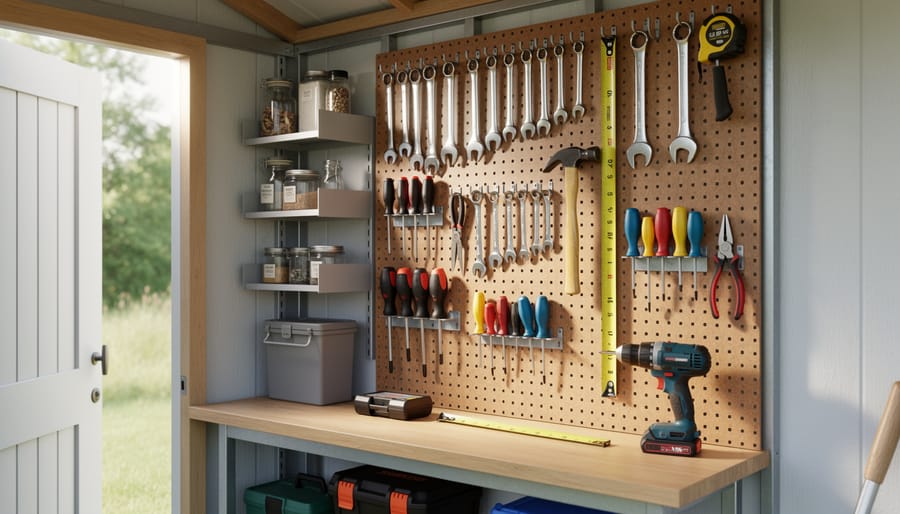
5. Vertical Pegboard and Shelf Combo

Vertical pegboard with hanging gardening tools and shelves above a potting work surface
Vertical pegboard storage keeps frequently used tools within reach and maximizes space in a compact shed or garage corner.

A vertical pegboard and shelf combo turns any awkward corner or narrow wall into a surprisingly efficient potting station. Mount a large pegboard panel (painted or sealed to protect against moisture) at a comfortable height above a basic work surface, this could be a simple butcher block counter, a wall-mounted fold-down shelf, or even a sturdy plank supported by brackets. The pegboard holds all your small hand tools, gloves, twine, plant markers, and scissors right at eye level where you can grab them without rummaging through drawers.

Install two or three floating shelves above the pegboard to store seed packets, soil amendments, fertilizers, and spare pots. This setup keeps your most-used supplies visible and within arm’s reach while freeing up the work surface below for actual potting tasks. It’s particularly clever in garage or shed corners where floor space is tight but wall space goes unused.

Tip: In Austin’s humid summers, coat your pegboard with water-resistant sealant and store potting soil in sealed plastic bins rather than open bags to prevent moisture absorption and pest issues.

This vertical station pairs beautifully with vertical gardening projects since you’re already thinking upward, many gardeners use the same wall system to hold propagation trays or hanging plant labels. The entire setup costs roughly $60-$100 in materials if you DIY it, and it adapts easily as your gardening needs change by simply rearranging hooks and shelves.

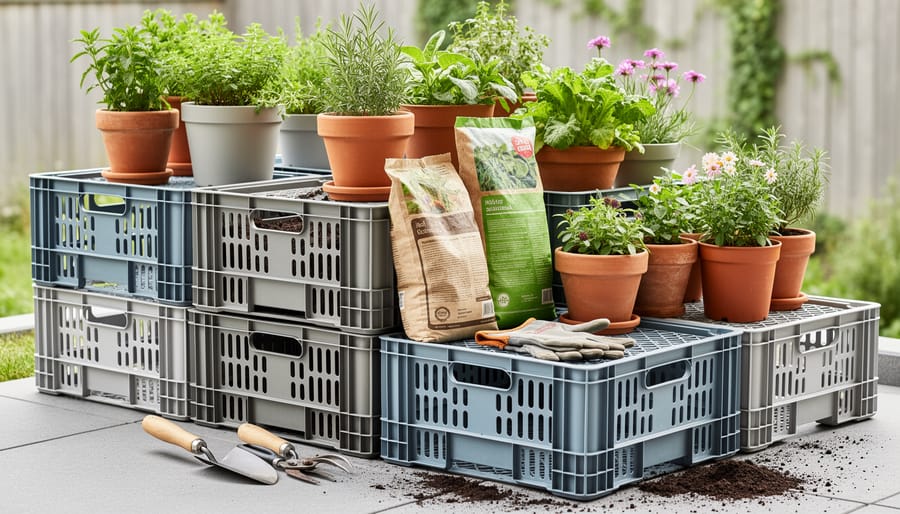
6. Stackable Crate System for Renters

Stackable wooden crates arranged as a temporary potting station
Stackable crates create a temporary, budget-friendly potting setup that’s easy to move and reconfigure.

Renters and frequent movers need gardening solutions that won’t leave holes in walls or require permanent installations. A stackable crate system delivers a fully functional potting station you can set up in minutes and take with you when you leave.

Start with four to six wooden or plastic crates from thrift stores, hardware shops, or even curbside finds. Stack two crates on their sides as the base, creating open-front storage cubbies for soil bags, pots, and watering cans. Place a sturdy piece of plywood or a butcher block across the top to form your work surface at a comfortable height, usually around 36 inches works well for most people.

Add another layer of crates above the work surface if you want overhead storage for hand tools, seed packets, or small containers. The open design keeps everything visible and within reach, eliminating the drawer-digging that slows down potting sessions.

This setup costs under fifty dollars if you source crates secondhand, requires zero tools or assembly skills, and breaks down in under five minutes when it’s time to move. You can adjust the configuration as your needs change, swap crates for different sizes, or even spray paint them to match your balcony aesthetic. It’s the ultimate commitment-free potting solution for Austin’s renter-heavy neighborhoods.

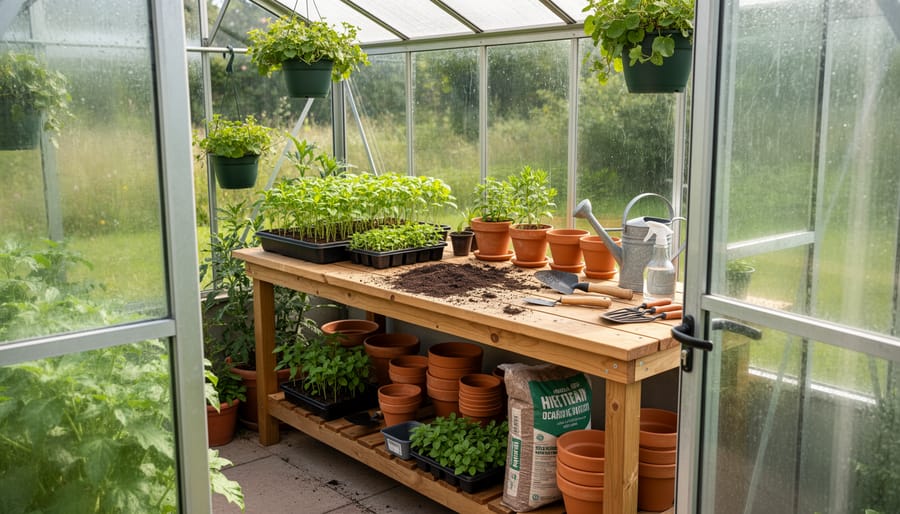
7. Corner Greenhouse Potting Nook

Seedlings on a narrow shelf inside a corner greenhouse potting nook
A dedicated potting nook inside a small greenhouse helps contain mess and protect seedlings while they get started.

A corner greenhouse or enclosed patio transforms into an incredibly efficient potting workspace when you dedicate just a small slice of it to this purpose. The built-in humidity control and protection from Austin’s intense afternoon sun make these spots ideal for seedling work and delicate transplanting tasks.

Start with a narrow shelf at comfortable working height, 18 to 24 inches deep is plenty for most potting tasks without eating up valuable growing space. Mount it securely across the corner at waist height, creating a triangular work surface that feels surprisingly roomy. Below, add moisture-resistant plastic bins or metal shelving to store soil, perlite, and vermiculite where occasional spills won’t create a mess.

Overhead LED grow lights serve double duty here: they illuminate your potting work and provide supplemental light for freshly potted seedlings sitting on the shelf. Position lights 12 to 18 inches above the work surface for comfortable visibility without glare.

Because greenhouses trap moisture, choose materials that won’t warp or rust. Sealed wood, plastic laminate, or powder-coated metal all hold up well. Keep a small hand broom and dustpan hanging nearby to sweep up soil quickly, this prevents tracking mess into the rest of your greenhouse and keeps things tidy for your Austin gardening zone seedlings.

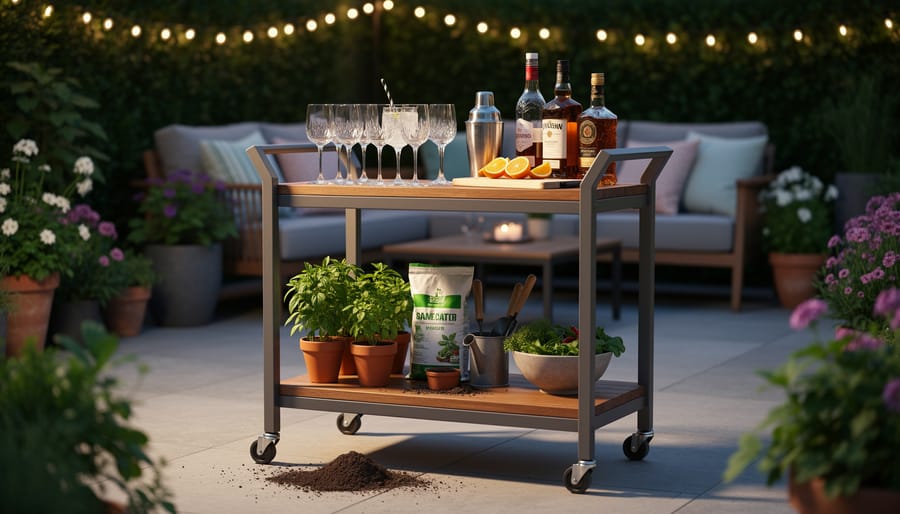
8. Dual-Purpose Outdoor Bar Cart Station

Outdoor bar cart repurposed as a potting station with pots and soil underneath
A stylish outdoor bar cart can double as a potting station, ready for plants by day and drinks by night.

A sleek metal or wooden bar cart transforms into the ultimate multitasker for Austin gardeners who love to entertain. The top tier serves as your active potting surface, just lay down a plastic mat or tray to catch soil spills during transplanting sessions. The middle and lower shelves hold terra cotta pots, bagged soil, and your most-used hand tools. When you’re planning indoor veggies timing or prepping seedlings, everything you need rolls right to your workspace.

What makes this station brilliant for Austin’s outdoor lifestyle is its quick-change personality. On Friday afternoon, swap out the potting supplies for glasses, ice, and bottles. The cart wheels smoothly from your gardening corner to the patio dining area, looking stylish rather than utilitarian. After your gathering, it transitions back to garden duty in minutes.

Choose a cart with weather-resistant finishes, powder-coated metal or sealed wood stands up to our intense sun and humidity. Models with a handlebar make maneuvering easy, and raised edges on shelves prevent pots from sliding off. For under $150, you get functional garden storage that doesn’t scream “shed” when guests arrive.

Setting Up Your Potting Station: Quick Tips

Once you’ve chosen your potting station style, smart setup makes all the difference. Start by positioning your station where you’ll actually use it, east-facing spots work great in Austin since they catch morning sun without the brutal afternoon heat, and remember your zone affects sun needs for seedlings versus mature plants. If your station sits outdoors year-round, seal wooden surfaces with exterior-grade varnish and invest in a waterproof cover for those surprise summer storms.

Organize tools by frequency of use, hang trowels and pruners within arm’s reach on hooks or pegboard, while seasonal items can live in drawers or lower shelves. Store potting soil and amendments in sealed bins rather than leaving bags open; Austin’s humidity swings between bone-dry and surprisingly muggy, and you don’t want clumpy soil when you’re ready to pot. Clean your work surface after each session to prevent soil buildup and pests, and occasionally check for wasp nests if your station’s under an overhang.

Common Questions About Potting Stations

How much space do I really need for a potting station?

You can create a functional potting station in as little as two square feet with a fold-down or wall-mounted design. The key is vertical organization and keeping only essential tools within reach.

What materials hold up best in Austin’s heat?

Cedar, treated pine, and powder-coated metal work well in our intense sun and humidity. Avoid untreated wood and cheap plastics that warp or crack after a season outdoors.

How do I keep pests out of my potting station?

Store soil and amendments in sealed containers with tight lids, clean up spills immediately, and avoid leaving damp organic matter sitting out overnight. A quick wipe-down after each use prevents most pest problems.

Will a potting station work if I mostly do vertical gardening?

Absolutely, vertical gardens need regular repotting and maintenance just like traditional beds. A compact station at the base of your vertical setup makes it easier to choose plants by zone and refresh containers without hauling supplies across your space.

These questions come up constantly among Austin gardeners setting up their first workspace. The answers reflect real-world experience: you don’t need a sprawling shed, just smart use of whatever space you have. Weatherproofing matters here because our summer sun is relentless, and keeping things tidy prevents the fire ants and roaches that love damp potting mix.

Having an organized potting station transforms your gardening routine from chaotic to streamlined, saving time and protecting your plants during crucial transplanting moments. Whether you choose a fold-down wall mount for your balcony or a repurposed dresser for your patio, starting with one setup that matches your available space makes all the difference.

Professional potting services demonstrate how efficient workspaces improve plant care outcomes, and you can apply these same principles at home on any budget. Ready to enhance your urban garden beyond the potting bench? Explore our vertical gardening guides and Austin-specific growing tips to make the most of every square foot in your outdoor space.