

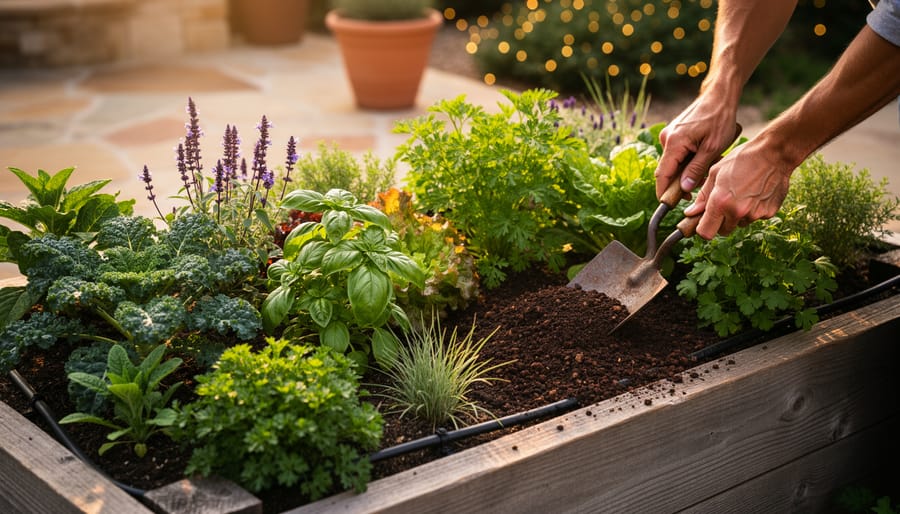
Growing an organic garden in Austin means working with the city’s intense summer heat, alkaline soil, and limited water resources to create a thriving, chemical-free oasis right in your backyard or balcony. You don’t need acres of land or a degree in horticulture. Start by building healthy soil with compost, choosing native and heat-tolerant plants, and implementing smart watering techniques that conserve every precious drop.
The transition to organic methods feels overwhelming at first, especially when you’re used to reaching for synthetic fertilizers or pesticides. But Austin’s unique climate actually makes organic gardening easier in some ways. Our long growing season means you can harvest vegetables nearly year-round, and our native beneficial insects do much of the pest control work for you once you create the right environment.
Urban gardeners face specific challenges here. Limited space, scorching concrete patios, and neighborhood restrictions push us to think vertically and creatively. Container gardens on apartment balconies can produce just as much food per square foot as traditional beds when you apply organic principles correctly. The key is understanding what actually works in our USDA Zone 8b climate, not just copying advice written for gardeners in cooler, wetter regions.
These twelve tips cut through the generic advice and focus on what works specifically for Austin gardeners who want healthier plants, better yields, and zero chemicals.
How We Selected These Organic Garden Tips
We built this list around one straightforward question: what actually works in Austin’s unique conditions? Each tip earned its spot by meeting four essential criteria.
First, it had to deliver results in our Austin gardening zone where alkaline clay soil, intense summer heat, and unpredictable rainfall patterns challenge conventional gardening advice. Methods that thrive in other regions often fail here, so we focused exclusively on practices proven effective in Central Texas gardens.
Second, every tip works in urban and vertical garden settings. Most Austin gardeners deal with limited space, patios, balconies, small yards, so advice requiring sprawling acreage got cut. These techniques scale down beautifully to containers and vertical structures.
Third, beginners can implement these approaches without specialized equipment or advanced skills. You don’t need a degree in horticulture to grow organically; you just need clear, actionable steps.
Finally, each tip supports genuinely sustainable practices that reduce chemical dependency while building healthier soil and plant ecosystems. We skipped shortcuts that sacrifice long-term garden health for quick fixes. This is organic gardening that sticks.
1. Start with Native Texas Soil Amendments
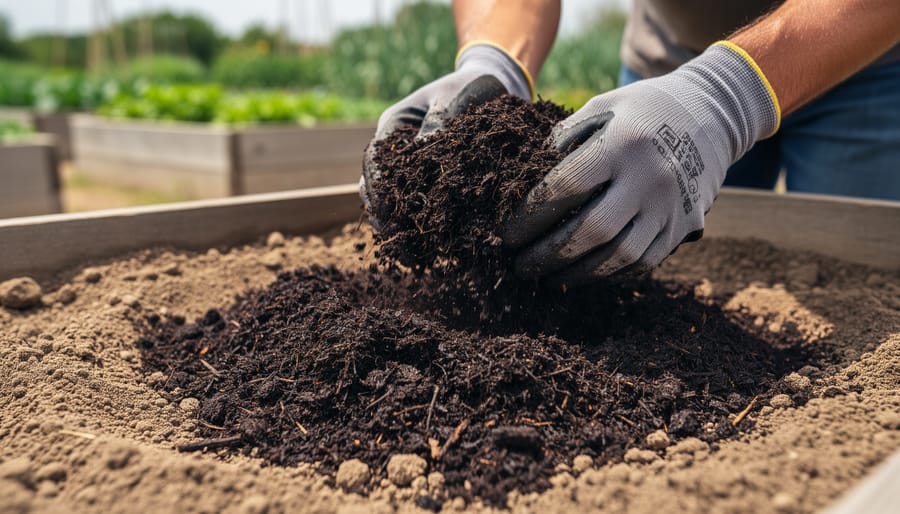
Austin’s notorious alkaline clay soil doesn’t have to be a dealbreaker for organic gardening. The key is building up organic matter that breaks apart that dense clay while balancing the pH naturally.
Start by mixing in compost at a 1:1 ratio when you’re preparing new beds, yes, that much. You want finished compost that’s dark, crumbly, and smells earthy, not hot or ammonia-like. Local sources like Texas Pure Products or the City of Austin’s Dillo Dirt program offer bulk compost made from yard waste, which means you’re keeping things local and sustainable.
Here are organic amendments that work particularly well for Austin’s soil:
- Composted horse manure from local stables (free if you haul it yourself)
- Native cedar or hardwood mulch, which breaks down slowly in our heat
- Greensand for potassium and trace minerals
- Expanded shale to improve drainage without chemicals
- Agricultural sulfur to gradually lower pH (apply in fall)
Work these materials into the top 6-8 inches of soil before planting. If you’re mixing amendments regularly, set up one of those potting station ideas to keep everything organized and save your back from constant bending.
For containers and vertical gardens, skip the native soil entirely. Use a quality organic potting mix as your base, then refresh it each season with compost and worm castings. Your plants will thank you with stronger growth and better yields.
2. Choose Heat-Tolerant Varieties for Austin Summers
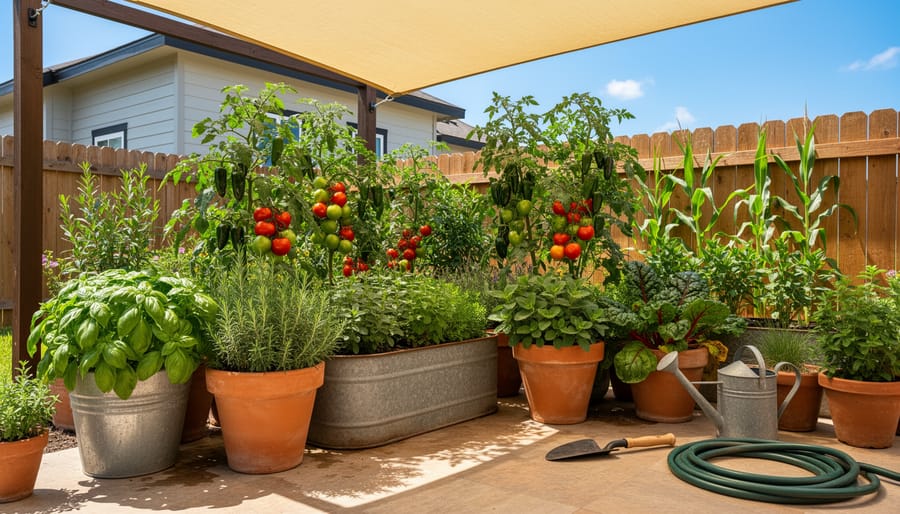
Austin summers will test every plant in your garden, but choosing heat-loving varieties from the start sets you up for success instead of frustration. When you shop for seeds or transplants, look specifically for varieties bred or adapted for hot climates, these plants won’t just survive our 100-degree days, they’ll actually produce.
For vegetables, cherry tomatoes like ‘Sun Gold’ and ‘Black Cherry’ handle heat better than large slicers. Peppers absolutely thrive here; try jalapeños, serranos, or sweet varieties like ‘Carmen’. Okra loves our summer heat and grows beautifully in containers. Armenian cucumber (technically a melon) keeps producing when regular cucumbers quit.
For herbs, basil becomes a summer workhorse, plant multiple varieties for continuous harvests. Mexican oregano, rosemary, and thyme laugh at our heat. Skip cool-weather herbs like cilantro and dill during summer months; they’ll bolt immediately.
Timing matters as much as variety selection. Plant heat-lovers after our last frost (typically mid-March) once soil warms up. Starting too early in cool soil invites disease and slow growth. In vertical gardens, these compact varieties work especially well since you can give each plant adequate air circulation, which helps them handle the heat even better.
3. Build Your Own Organic Compost System
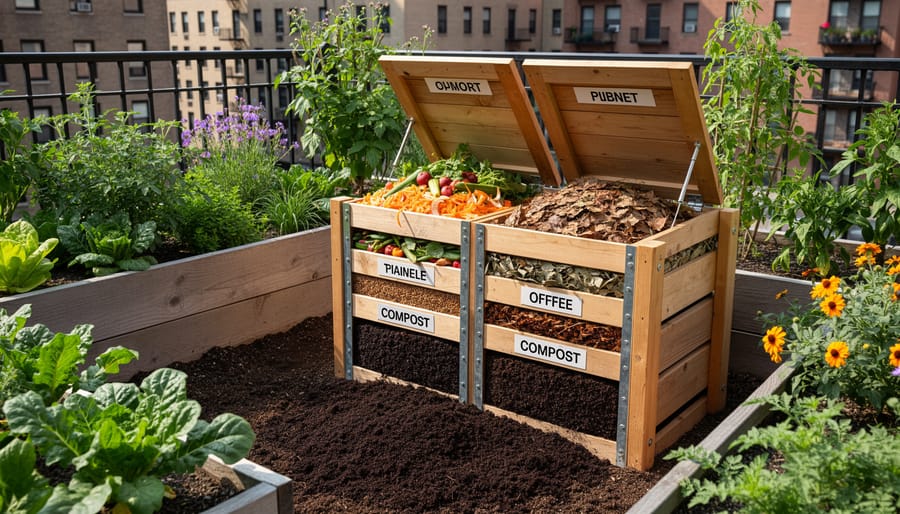
Building a composting system for your small-space garden doesn’t require a massive backyard setup. A simple three-bin system using stacked plastic storage containers with drilled holes works perfectly on an apartment balcony or small patio. Start with a 10-gallon container, drill quarter-inch holes around the sides and bottom for airflow, and you’re ready to go.
Layer your compost materials using the basic green-brown ratio: one part nitrogen-rich greens like vegetable scraps, coffee grounds, and grass clippings to two parts carbon-rich browns such as shredded newspaper, cardboard, and dried leaves. Austin gardeners often struggle to find enough browns during our long growing season, so save cardboard boxes and newspaper specifically for composting. Chop or tear materials into smaller pieces to speed decomposition, especially important in our heat.
Skip meat, dairy, oils, and pet waste entirely. These attract pests and create odors, which matters more in tight urban quarters where your compost bin sits close to living spaces. Citrus peels and onions can go in but break down slowly, so chop them small.
Turn your compost weekly by stirring with a stick or shaking the container. In Austin’s heat, you’ll have finished compost in six to eight weeks during summer, slightly longer in cooler months. The finished product smells earthy, looks dark and crumbly, and transforms your container plants into thriving organic gardens.
4. Use Companion Planting to Deter Pests Naturally
Companion planting turns your garden into a natural pest defense system. Instead of spraying chemicals, you strategically pair plants that protect each other.
Basil planted alongside tomatoes repels aphids, whiteflies, and hornworms, crucial for Austin’s intense pest pressure during summer. You’ll notice fewer damaged leaves and stronger tomato growth. This combination works perfectly in large containers or stacked vertical planters where space is tight.
Marigolds function as your garden’s security guards. Plant them around the edges of containers with cucumbers, squash, or beans to deter beetles, aphids, and nematodes in the soil. Their strong scent confuses pests looking for vulnerable plants.
Nasturtiums act as trap crops, drawing aphids away from your prized vegetables. Position them at the lowest level of your vertical garden setup, they’ll attract pests there while your upper-level greens stay clean. Plus, their flowers are edible and add peppery flavor to salads.
For vertical gardens on balconies or patios, combine rosemary with beans or carrots. Rosemary’s aromatic oils mask the scent that attracts bean beetles and carrot flies. It thrives in Austin’s heat and requires minimal water, making it ideal for container groupings.
These partnerships reduce pest problems by 40-60% compared to growing plants in isolation.
5. Water Deeply but Less Frequently
Deep watering encourages roots to grow down instead of spreading shallow, which makes your plants more drought-resistant when Austin’s summer heat kicks in. Instead of daily light sprinkles, water 2-3 times per week but let the water soak down 6-8 inches into the soil.
Stick your finger into the soil near the plant’s base. If the top two inches feel dry, it’s time to water. For containers in vertical gardens, this might mean watering more frequently since they dry out faster, but the same principle applies, saturate the entire root ball, then let it dry somewhat before watering again.
Early morning watering works best. You’ll lose less to evaporation, and plants can dry off before nightfall, reducing fungal issues. In Austin’s summer, that means watering before 9am when possible.
Austin’s Stage 2 water restrictions allow twice-weekly watering with sprinklers, but hand-watering and drip irrigation have no limits. Drip systems deliver water right to the root zone without waste, perfect for raised beds and container gardens. A soaker hose on a timer takes the guesswork out while staying compliant with city rules.
Surface mulch helps retain that deep watering by slowing evaporation between sessions.
6. Mulch Generously with Organic Materials
Organic mulch does double duty in Austin gardens: it keeps soil cool during brutal summer heat and locks in moisture so you water less. A generous two to three-inch layer acts as insulation for your plant roots, which can be the difference between wilted and thriving herbs when temperatures hit triple digits. In containers and vertical gardens, mulch prevents that rapid surface drying that happens when soil sits in black plastic pots or wall-mounted planters under direct sun.
The best organic mulches break down slowly and add nutrients as they decompose:
- Hardwood mulch from local tree services (free or cheap, breaks down in 12-18 months)
- Pine bark nuggets for containers (won’t wash away with watering)
- Shredded leaves from your own yard (excellent for improving clay soil)
- Straw or hay for vegetable beds (avoid seed heads if possible)
- Compost as a nutrient-rich top layer (double-feeds your plants)
For vertical gardens and wall planters, stick with lighter materials like shredded leaves or fine compost that won’t add too much weight. Pull mulch an inch or two away from plant stems to prevent rot and fungal issues, especially during our humid springs. Replenish your mulch layer when it breaks down to half its original depth, usually once or twice a year. This keeps working organic matter into your soil while maintaining that protective barrier your Austin garden needs.
7. Make Your Own Organic Pest Sprays
Aphids, spider mites, and whiteflies love Austin gardens as much as we do. Skip the chemical sprays and mix up these simple organic solutions using ingredients you probably already have.
Basic Soap Spray for Soft-Bodied Pests
Mix one tablespoon of pure castile soap with one quart of water in a spray bottle. This works wonders on aphids and spider mites. Spray early morning or evening to avoid leaf burn in our intense Texas sun. Reapply after rain.
Garlic Pepper Spray for Larger Pests
Blend three garlic cloves and one teaspoon cayenne pepper with two cups water. Strain and add to a spray bottle. This deters caterpillars and beetles without harming beneficial insects. The smell fades quickly for humans but lingers for pests.
Neem Oil Solution for Fungal Issues
Combine two teaspoons neem oil with one teaspoon dish soap and one quart warm water. Shake well before each use. This targets powdery mildew and fungus gnats common in humid Austin weather.
Test any spray on a few leaves first, wait 24 hours, then apply more broadly. Store mixed sprays for up to one week in the refrigerator. These recipes work beautifully on container plants and vertical gardens where you can’t just blast pests with a hose.
8. Rotate Your Crops, Even in Containers
Crop rotation isn’t just for sprawling farm fields. You can apply the same soil-saving principles in containers and vertical gardens by simply swapping what you plant where each season.
The basic rule: don’t plant the same family of vegetables in the same soil two seasons in a row. Tomatoes, peppers, and eggplants are all nightshades, they pull the same nutrients and attract similar pests. Follow them with leafy greens or legumes instead, which replenish nitrogen rather than depleting it.
In containers, this means keeping a simple notebook or photo log of what you planted where last season. When fall planting rolls around, move your tomato container to where you grew lettuce, and vice versa. If you’re using vertical towers or stacking planters, rotate crops between levels or swap out the soil mix entirely every few cycles.
This practice prevents disease spores from building up in your potting mix and gives your soil’s nutrient balance a chance to recover naturally. Your plants will show the difference with stronger growth and fewer pest problems, all without synthetic fertilizers or fungicides.
9. Feed Your Soil with Organic Fertilizers
Your container plants need regular feeding because frequent watering leaches nutrients faster than in-ground gardens. Organic fertilizers release slowly and feed beneficial soil microbes, not just your plants directly.
Fish emulsion works beautifully for leafy greens and herbs in vertical setups. Dilute it to half-strength for containers, the label directions assume garden beds with more soil volume to buffer the nutrients. Apply every two weeks during active growth, watering it in thoroughly. Yes, it smells fishy for about an hour, but your basil and lettuce will reward you with deep green leaves.
Worm castings are gentler and nearly impossible to overuse. Mix a handful into your potting soil when planting, then top-dress containers with a quarter-inch layer monthly. For vertical pocket gardens, brew worm casting tea by steeping a cup of castings in a gallon of water overnight, then water as usual.
Granular organic fertilizers like alfalfa meal or kelp meal work well mixed into containers at planting time. They break down over weeks, matching how container plants actually use nutrients. Avoid synthetic fertilizers that create salt buildup in containers, eventually turning your potting mix into something resembling concrete.
The best approach combines two methods: slow-release granules at planting plus liquid feeds during peak growing times. This mimics how natural soil ecosystems deliver nutrition.
10. Encourage Beneficial Insects and Pollinators
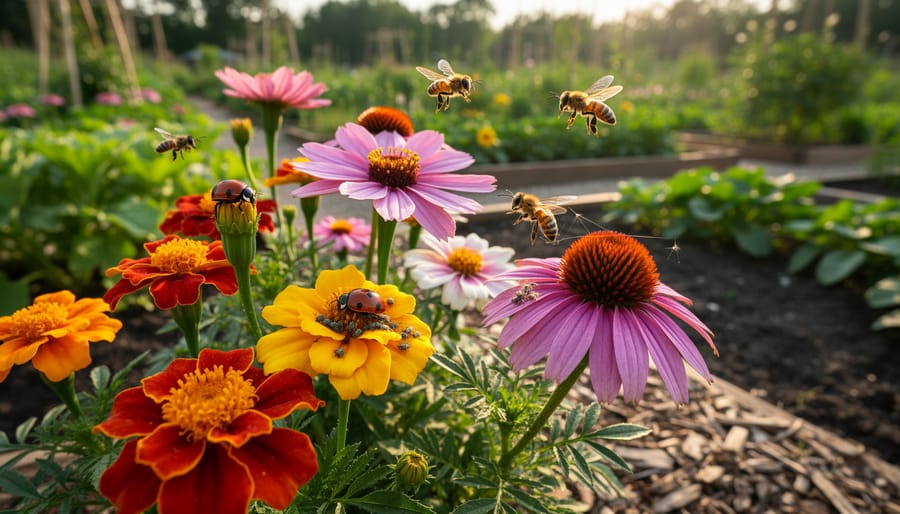
Your organic garden becomes a mini-ecosystem when you invite the right insects to move in. Beneficial bugs do the pest control work for you, ladybugs devour aphids, lacewings tackle whiteflies, and bees pollinate your vegetables so they actually produce food.
The simplest way to attract these helpers is planting their favorite flowers between your vegetables. Alyssum, zinnias, and marigolds work beautifully in containers and vertical pockets. I tuck alyssum around the base of my tomato towers, and it brings in hoverflies that demolish aphid colonies before I even notice them.
Native Texas plants like purple coneflower and black-eyed Susan are pollinator magnets that handle our heat without constant watering. Plant them in any spare container on your balcony or patio. Even a single pot of basil left to flower will draw bees.
Skip the pesticides completely, even organic ones kill beneficial insects alongside pests. A small shallow dish of water with pebbles gives pollinators a safe drinking spot. This gardening philosophy of working with nature instead of against it means less work and healthier plants. You’re basically hiring a free pest management team that works 24/7.
11. Practice Smart Weed Management Without Chemicals
Weeds compete for water and nutrients, precious resources in Austin’s summer heat. The good news? You don’t need chemicals to keep them under control in containers and vertical gardens.
Timing makes all the difference. Pull weeds when they’re young, ideally after a rain or watering when the soil is moist and roots release easily. Get the entire root system to prevent regrowth. In containers, this takes just minutes each week since weeds are easier to spot against potting mix.
Layer two to three inches of organic mulch around plants to block light and prevent weed seeds from germinating. Shredded leaves, wood chips, or straw work beautifully. In vertical gardens, mulch the soil surface in each pocket or container, it keeps weeds down while conserving moisture.
Check between plants regularly, especially in spring when weeds grow fastest. A weekly five-minute scan catches problems before they spread. For persistent weeds in tight spaces, use a narrow hand tool or old kitchen fork to dig them out without disturbing your vegetables.
Container gardens have a natural advantage: fresh potting mix contains fewer weed seeds than ground soil. Still, wind-blown seeds land everywhere, so stay vigilant. Our beginner classes cover weed identification so you know what you’re pulling versus what might be a volunteer herb or vegetable seedling.
12. Save Seeds from Your Best Organic Plants
Seed saving closes the loop on organic gardening and costs you nothing. Start with easy wins: tomatoes, beans, peppers, and squash all produce seeds beginners can collect and replant successfully.
For tomatoes, scoop seeds from your best-tasting fruit, rinse them in a strainer, and spread them on a paper plate to dry for about a week. Beans and peas are even simpler, just let a few pods dry completely on the plant, then shell them out. With peppers, choose fully ripe fruits (red, orange, or yellow), scrape out the seeds, and dry them the same way.
Austin’s humidity makes proper storage critical. Seeds need to be bone-dry before storing or they’ll mold. Once thoroughly dried, keep them in paper envelopes inside an airtight container with a silica gel packet. Store this container in your refrigerator’s crisper drawer, not a hot garage or kitchen cabinet.
Label everything with the variety name and date. Those mystery seeds next spring won’t help anyone.
Skip saving seeds from hybrids (seed packets marked F1), their offspring won’t match the parent plant. Stick with heirloom and open-pollinated varieties for consistent results. After one season of successful seed saving, you’ll have free plants for next year and varieties perfectly adapted to your specific garden conditions.
Growing Organic in Austin Just Takes These Simple Shifts
You don’t need to overhaul your entire garden overnight. Pick two or three tips that match your biggest challenges, maybe you’re fighting pests or struggling with Austin’s clay soil, and start there. These organic practices build on each other naturally. Composting feeds your soil, which grows stronger plants, which resist pests better, which means less work for you down the line.
The beauty of organic gardening in Austin’s urban spaces is that small changes add up fast. Your balcony tomatoes don’t know they’re in containers instead of ground beds. They just need good soil, consistent water, and a little protection from our brutal summer sun. Once you’ve nailed the basics with a few plants, expanding your organic setup becomes surprisingly straightforward.
Is organic gardening more expensive than conventional methods?
The startup costs are similar or lower since you’re making your own compost and pest sprays instead of buying chemical products. You’ll spend more time initially but less money long-term.
How much time does organic gardening actually take?
Expect 15-30 minutes daily for watering and quick checks, plus an hour or two weekly for maintenance tasks like composting and weeding. Container gardens need less time than in-ground beds.
Do I need organic certification to garden organically?
No. Certification is only for commercial growers selling organic produce. Home gardeners can follow organic practices without any official certification.
What’s the absolute first step for someone brand new to organic gardening in Austin?
Start building your soil with compost while you research which heat-tolerant varieties grow well here. Good soil is the foundation everything else depends on.
Gardens Austin Designers offers hands-on workshops throughout the year if you want personalized guidance for your specific space. But honestly, you’ve got everything you need right here to start growing organically. Your Austin garden is waiting.